Site Plan Requirements in Hayward, CA (Permit Guide)
Hayward, California homeowners navigating the building permit process must understand local site plan requirements before breaking ground. This guide covers everything from typical permit triggers and setback rules to where to submit your application and how long approval takes in Hayward.
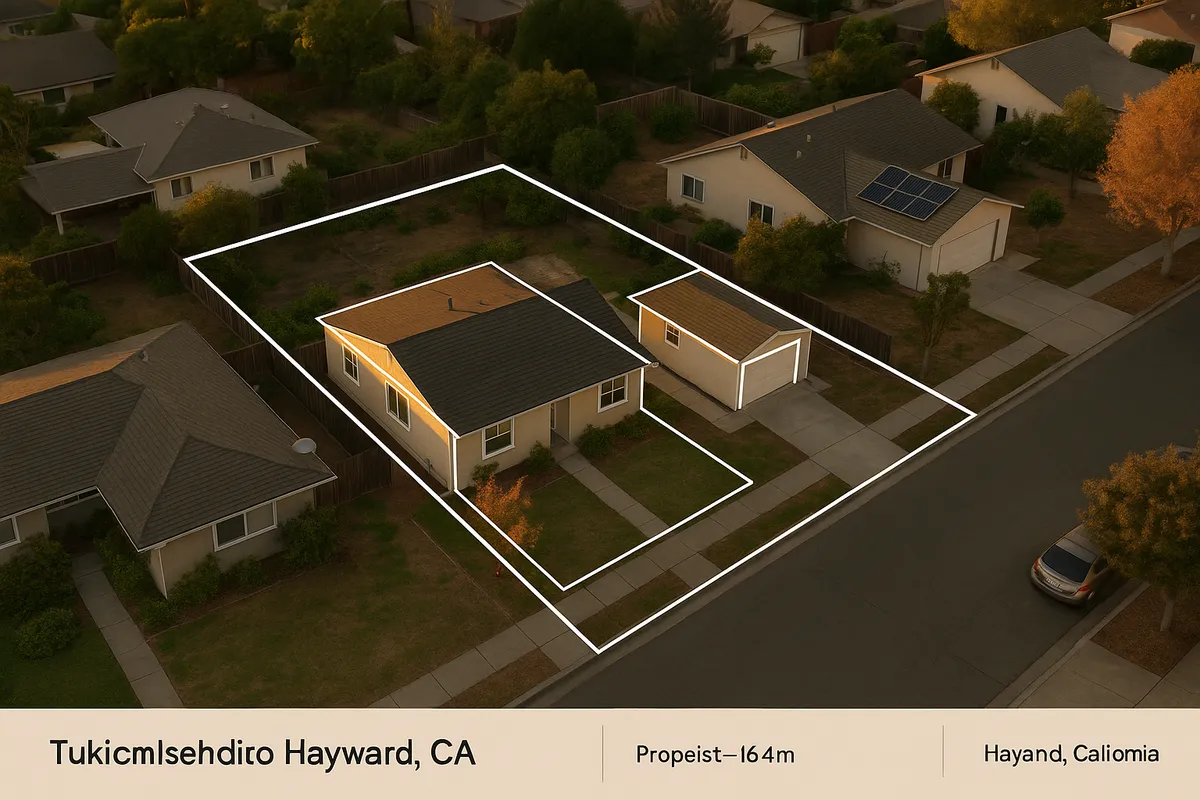
Residential Site Plans and Building Permits in Hayward, CA
Nestled in the heart of the East Bay along the shores of San Francisco Bay, Hayward is one of Alameda County's most dynamic cities, with a diverse mix of single-family neighborhoods, hillside properties, and a rapidly growing stock of accessory dwelling units (ADUs). Whether you are planning a backyard deck, converting a garage into a rental unit, or adding a room to your home, the City of Hayward requires a properly prepared site plan as part of nearly every residential building permit application. Getting your site plan right the first time saves money, prevents delays, and keeps your project on the right side of local code.
What Is a Site Plan and Why Does Hayward Require One?
A residential site plan is a scaled, bird's-eye drawing of your property that shows the lot boundaries, existing structures, proposed construction, setbacks from property lines, driveways, and other key features. Hayward's Building Division uses site plans to verify that proposed work complies with the city's zoning ordinance, California Building Code (CBC), and any applicable overlay regulations such as flood zones or hillside development standards.
Without an accurate site plan, plan checkers cannot confirm that your project meets setback requirements, lot coverage limits, or utility easement restrictions. A missing or incomplete site plan is one of the most common reasons permit applications are rejected or returned for correction in Hayward.
Common Residential Permit Triggers in Hayward
The following projects almost always require a building permit and an accompanying site plan in Hayward:
- Decks and patios: Any deck more than 30 inches above grade or attached to the house requires a permit.
- Accessory structures and sheds: Structures over 120 square feet, or any structure with electrical or plumbing, require a permit regardless of size.
- Swimming pools and spas: All in-ground pools and spas require a permit; above-ground pools over 18 inches deep typically do as well.
- Fences: Fences exceeding 6 feet in height (or 3.5 feet in the front yard) require a permit in most Hayward residential zones.
- Room additions: Any expansion of habitable square footage requires both a building permit and an updated site plan.
- ADUs and JADUs: Accessory dwelling units and junior ADUs are subject to Hayward's local ADU ordinance, aligned with California state ADU law.
- Driveways and impervious surfaces: New or significantly altered driveways may require a grading or encroachment permit, and must comply with stormwater management requirements.
- Retaining walls: Walls over 4 feet from the bottom of the footing to the top of the wall generally require a permit.
Hayward Zoning and Local Considerations
Hayward's zoning is administered under the Hayward Municipal Code, which divides the city into residential zones including RS (Single-Family Residential), RD (Duplex), and RM (Multi-Family Residential). Each zone carries its own setback, height, and lot coverage standards.
Several local factors make Hayward's permitting landscape unique:
- Hillside Development: Hayward's eastern hills are subject to additional grading regulations, geotechnical review requirements, and fire hazard severity zone rules. Properties in these areas may need a soils report or slope analysis in addition to a standard site plan.
- Flood Zones: Parts of western Hayward near the Bay are located within FEMA-designated Special Flood Hazard Areas. Projects in these zones must meet base flood elevation requirements. Check your property's flood zone status using the FEMA Flood Map Service Center.
- Stormwater and Impervious Surface: Hayward participates in the Alameda Countywide Clean Water Program, which means new impervious surfaces on residential lots may trigger C.3 stormwater requirements or require a simple site design measure to manage runoff.
- Historic Properties: A small number of Hayward properties are listed on local or state historic registers. Work on these properties may require review by the Planning Division before a building permit is issued.
- ADU-Friendly Regulations: In line with California state law, Hayward has streamlined ADU permitting significantly. Most ADUs under 800 square feet on single-family lots receive a ministerial (non-discretionary) approval, meaning no public hearing is required.
Typical Setback Requirements in Hayward
Setbacks vary by zoning district, but the following ranges are typical for single-family (RS) zones in Hayward:
- Front yard setback: 15 to 20 feet from the front property line
- Side yard setback: 5 feet minimum (interior side); corner lots may require a 10-foot street-side setback
- Rear yard setback: 20 feet is common, though some RS zones allow 15 feet
- Accessory structures: Detached ADUs and sheds may be permitted closer to rear and side property lines under state ADU law, sometimes as close as 4 feet
Always verify the exact setbacks for your specific parcel and zoning district with the Hayward Planning Division, as individual lots may have additional deed restrictions, easements, or overlay requirements that affect allowable placement.
How to Submit a Permit Application in Hayward
Hayward's Building Division processes residential permit applications both online and in person. Here is a general overview of the process:
- Determine your project scope and confirm whether a permit is required by contacting the Building Division or reviewing the Hayward Municipal Code.
- Prepare your site plan and construction documents. Your site plan should include property dimensions, north arrow, scale, all existing and proposed structures with dimensions, setbacks from all property lines, easements, utilities, and driveway location.
- Submit your application through the city's online permit portal or in person at the Hayward City Hall Permit Center. As of 2026, Hayward encourages electronic plan submittal for most residential projects.
- Pay the plan review fee at the time of submittal. Fees are based on project valuation and type.
- Await plan review. Over-the-counter review may be available for simple projects. More complex projects typically take 3 to 6 weeks for initial plan check. ADU applications processed under state law must receive a determination within 60 days.
- Respond to correction notices if the plan checker identifies deficiencies. Corrected plans are resubmitted for a second review.
- Obtain your permit and schedule inspections as work progresses.
For the most current fee schedules, portal links, and submittal checklists, visit the City of Hayward Building Division.
Common Reasons Permit Applications Are Rejected in Hayward
Plan checkers in Hayward frequently return applications for the following reasons:
- Missing or incorrect site plan: No scale bar, missing north arrow, unclear property line dimensions, or failure to show all existing structures.
- Setback violations: Proposed structure is shown too close to a property line for the applicable zone.
- Incomplete project description: Vague scope of work makes it impossible to determine which code sections apply.
- Missing energy compliance documents: California Title 24 energy calculations are required for most additions and new construction.
- No stormwater management plan: Projects that add significant impervious surface must address runoff.
- Unpermitted existing work: If a plan checker discovers existing unpermitted structures during review, those must often be resolved before the new permit is issued.
Create an Accurate Hayward Site Plan with Site Plan Creator
Preparing a compliant residential site plan does not have to be complicated or expensive. Site Plan Creator gives Hayward homeowners and contractors a fast, affordable way to produce professional, to-scale site plans that meet local plan checker expectations. Whether you are pulling a simple shed permit or submitting a full ADU application, Site Plan Creator walks you through every required element so your application is complete the first time. Start your Hayward site plan today and move your project forward with confidence.
Frequently Asked Questions
- Do I need a permit to build a deck in Hayward, CA?
- Yes, in most cases you need a building permit to build a deck in Hayward. The California Building Code, as adopted locally, requires a permit for any deck that is attached to the house or that rises more than 30 inches above grade. Your permit application must include a site plan showing the deck's dimensions, its distance from all property lines, and its relationship to the existing structure. Freestanding ground-level platforms under 200 square feet may be exempt, but it is always best to confirm with the Hayward Building Division before starting work. Unpermitted decks can create complications when you sell your home or file an insurance claim.
- How much does a building permit and site plan cost in Hayward?
- Permit fees in Hayward are based on the estimated valuation of the project and the type of work being done. For a small addition or accessory structure, fees can range from a few hundred dollars to over a thousand dollars once plan check, permit issuance, and inspection fees are combined. ADU permits have state-mandated fee caps for units under 750 square feet on single-family lots. As for the site plan itself, hiring a drafter or design professional can cost $300 to $1,500 or more depending on complexity. Using an online tool like Site Plan Creator can reduce that cost significantly while still producing a plan that meets Hayward's submittal requirements. Always request the current fee schedule from the Hayward Building Division before budgeting your project.
- How long does it take to get a building permit approved in Hayward?
- Permit approval timelines in Hayward depend on the project type and current workload at the Building Division. Simple over-the-counter permits for minor work can sometimes be issued the same day. Standard residential projects such as room additions or detached garages typically go through a plan check process that takes 3 to 6 weeks for the initial review. If corrections are required, each resubmittal adds additional time. ADU applications benefit from California state law, which requires the city to act within 60 days of a complete application. Submitting a thorough, accurate site plan and complete construction documents from the start is the single best way to avoid delays in Hayward.
- What does Hayward require on a residential site plan?
- A residential site plan submitted to the Hayward Building Division should include: the property address and assessor's parcel number (APN); a north arrow and graphic scale; lot dimensions and total lot area; the location, footprint, and dimensions of all existing structures on the property; the location and dimensions of the proposed project; setback distances from all property lines to existing and proposed structures; the location of driveways, walkways, and utility meters; any easements or rights-of-way on the property; and the street name. For projects near the Bay or in the hillside area, additional information such as flood zone designation or topographic contours may also be required. Site Plan Creator is designed to capture all of these elements in a clean, plan-checker-ready format.
- Can I draw my own site plan in Hayward, or do I need a licensed surveyor?
- For most standard residential permit applications in Hayward, you are not required to hire a licensed land surveyor or civil engineer to prepare the site plan. Homeowners and contractors can draw their own site plans as long as the plan is drawn to scale and includes all required information. However, if your project involves significant grading, a hillside lot, a property boundary dispute, or work in a flood zone, the city may require a survey or a stamped plan from a licensed professional. For straightforward projects like sheds, decks, fences, and ADUs, an accurately prepared site plan from a tool like Site Plan Creator is generally sufficient for Hayward's plan check process.
- What are the setback requirements for single-family homes in Hayward, CA?
- Setback requirements in Hayward vary by zoning district. In typical single-family residential (RS) zones, the front yard setback is generally 15 to 20 feet, interior side yard setbacks are commonly 5 feet, and rear yard setbacks are typically 15 to 20 feet. Corner lots usually require a larger street-side setback of around 10 feet. Detached accessory dwelling units (ADUs) may be permitted as close as 4 feet to the rear and interior side property lines under California state law. Accessory structures like sheds may have different setback rules depending on their size and whether they include living space. Always verify your specific parcel's setbacks with the Hayward Planning Division, since overlay zones and easements can alter these standard figures.
- Where do I submit my permit application and site plan in Hayward?
- Hayward accepts permit applications both online and in person. As of 2026, the city encourages electronic submittal for most residential projects through its online permit portal, which allows you to upload your site plan and supporting documents, pay fees, and track your application status. In-person submittals are accepted at the Hayward City Hall Permit Center at 777 B Street in Hayward. Counter hours vary, so it is a good idea to check the city's website or call the Building Division before visiting. For ADU applications, Hayward has a dedicated process aligned with California state streamlining requirements. Having a complete, well-organized submittal package including your site plan ready before you apply will speed up the process considerably.
- What happens if I build without a permit in Hayward?
- Building without a required permit in Hayward can result in serious consequences. The city's Building Division has the authority to issue a stop-work order, requiring all construction to halt immediately. You may be required to obtain a retroactive permit, which often involves exposing completed work for inspection and paying double the standard permit fees as a penalty. In some cases, unpermitted work that cannot be brought into compliance must be demolished at the owner's expense. Unpermitted structures can also complicate home sales, refinancing, and homeowner's insurance claims. California law requires sellers to disclose known unpermitted work to buyers. Avoiding these risks by obtaining the proper permits and submitting a complete site plan from the start is always the better path.
- What are the ADU rules for Hayward, CA homeowners?
- Hayward has adopted a local ADU ordinance that aligns with California's state ADU laws, making it relatively straightforward to add an accessory dwelling unit to a single-family or multi-family property. Most attached or detached ADUs up to 850 square feet (or up to 1,000 square feet with two bedrooms) are allowed by right on single-family lots without a public hearing. Junior ADUs (JADUs) up to 500 square feet can be created within the existing footprint of a home. Setbacks for new detached ADUs are a minimum of 4 feet from the rear and interior side property lines. The city must act on a complete ADU application within 60 days. A site plan showing the ADU's location, setbacks, and relationship to the primary dwelling is required for all ADU permit applications in Hayward.
- Does Hayward have special permit requirements for hillside or flood-prone properties?
- Yes. Hayward's eastern hillside neighborhoods are subject to additional development standards, including grading permit requirements, geotechnical (soils) report requirements, and compliance with the city's Hillside Development Overlay. Properties in these areas may also fall within a Very High Fire Hazard Severity Zone, which triggers California Building Code Chapter 7A requirements for fire-resistant construction materials. In western Hayward near San Francisco Bay, some parcels are within FEMA-designated Special Flood Hazard Areas (SFHAs). Projects in SFHAs must meet base flood elevation requirements, and the site plan must show the relationship of the proposed work to the Base Flood Elevation (BFE). Homeowners can check their flood zone status at the FEMA Flood Map Service Center at msc.fema.gov.
How to Create a Site Plan in Hayward
- Confirm Your Permit Requirements: Before drawing anything, determine whether your specific project in Hayward requires a building permit and site plan. Review the Hayward Municipal Code or call the Building Division at (510) 583-4000. Many projects, including decks over 30 inches high, ADUs, room additions, and pools, require a permit. Knowing exactly what is required upfront prevents wasted effort and ensures you prepare the right documents from the start.
- Gather Your Property Information: Collect your property's assessor's parcel number (APN), a copy of your recorded property survey or deed map, and any existing building plans if available. Identify your zoning district using the City of Hayward's online zoning map so you can look up the correct setbacks, height limits, and lot coverage maximums that apply to your parcel. Note any easements, flood zone designations, or hillside overlay conditions that may affect your project.
- Create Your Site Plan: Using your property dimensions and zoning information, produce a to-scale site plan that shows lot boundaries, all existing structures with dimensions, the proposed project with dimensions, setback distances from all property lines, driveways, utilities, and a north arrow. Site Plan Creator makes this process fast and accurate, producing a professional plan that meets Hayward Building Division expectations without the cost of hiring a separate drafter.
- Assemble Your Permit Package: In addition to your site plan, most Hayward residential permit applications require completed permit application forms, floor plans and elevations for the proposed work, California Title 24 energy compliance documentation for additions or new construction, and a project valuation estimate. ADU applications may require additional forms. Organize all documents clearly and label each sheet before submitting to avoid rejection for an incomplete package.
- Submit and Pay Fees: Submit your permit application and site plan through Hayward's online permit portal or in person at the Permit Center at 777 B Street. Pay the required plan check fee at the time of submittal. Fees are based on project valuation and type. After submittal, you will receive a tracking number to monitor your application status. If the plan checker issues a correction notice, respond promptly with revised documents to keep your project moving forward.
- Schedule Inspections and Close Your Permit: Once your permit is issued, post it on-site and begin construction according to the approved plans. Schedule required inspections through the Hayward Building Division as each phase of work is completed, such as foundation, framing, and final inspection. Do not cover any work before it is inspected and approved. After all inspections pass, the city issues a final approval and your permit is closed, confirming the work was done to code.