Site Plan Requirements in Hartford, CT (Permit Guide)
Hartford, Connecticut homeowners must submit a residential site plan for most construction projects, from decks and fences to accessory dwelling units. This guide explains what Hartford requires, where to submit your application, and how to avoid common rejection pitfalls.
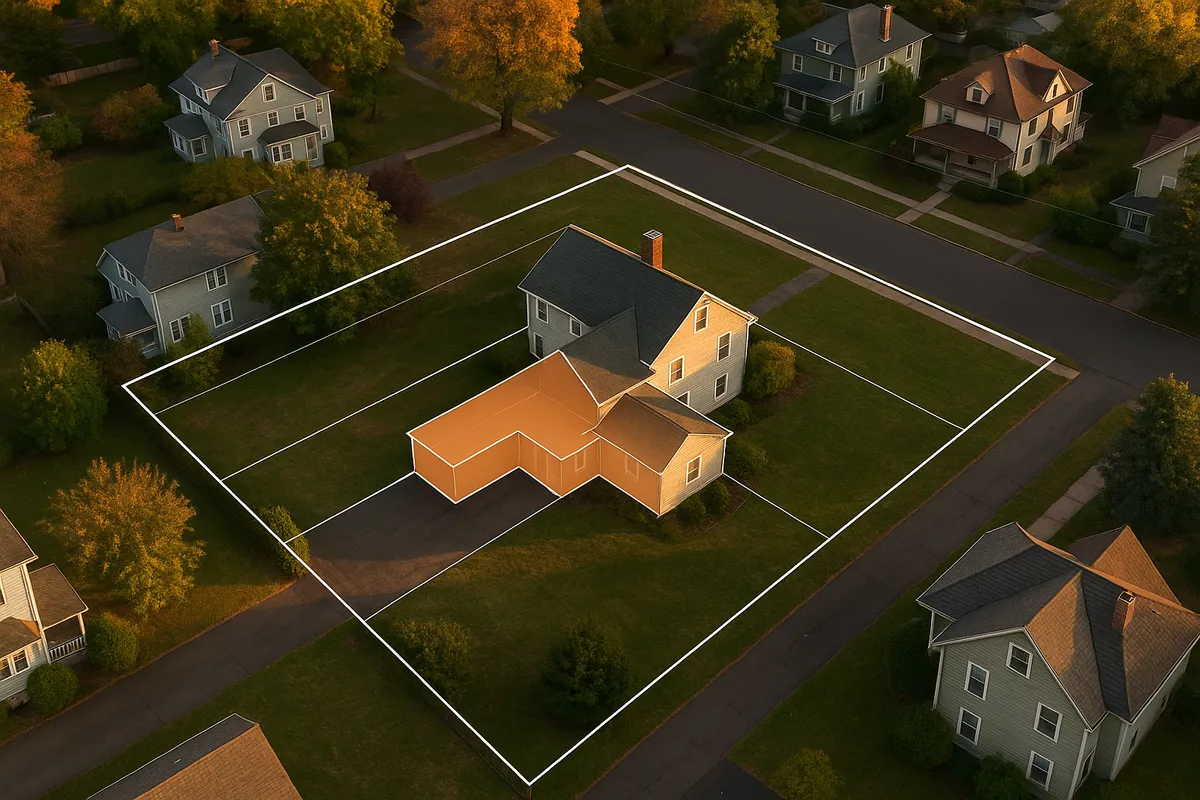
Residential Site Plan Requirements in Hartford, CT
Hartford, Connecticut is one of New England's oldest cities, and its building department reflects a long tradition of careful land-use oversight. Whether you own a Victorian triple-decker in the South End, a ranch home in Blue Hills, or a colonial in the West End, any structural improvement to your property almost certainly requires a permit - and that permit almost always starts with a site plan. Understanding Hartford's specific requirements before you break ground can save you weeks of delay, costly revisions, and the risk of stop-work orders.
What Is a Residential Site Plan and Why Does Hartford Require One?
A residential site plan is a scaled, bird's-eye drawing of your property that shows the lot boundaries, existing structures, proposed improvements, setbacks from property lines, driveways, utilities, and any relevant natural features such as slopes or drainage areas. Hartford's Building Department requires site plans because the city must verify that your project complies with the Hartford Zoning Regulations before issuing a building permit. Without this review, the city cannot confirm that a new deck, addition, or accessory structure respects required setbacks, impervious-surface limits, or flood zone restrictions - all of which are actively enforced in Hartford.
Connecticut state law also gives municipalities the authority to adopt and enforce local zoning codes under Connecticut General Statutes Title 8, which means Hartford's requirements carry the full weight of state-enabled law. Skipping the site plan step is not a shortcut - it is a liability.
Which Projects Require a Permit and Site Plan in Hartford?
Hartford's Department of Development Services reviews a wide range of residential projects. The following improvements typically trigger a building permit and require a site plan:
- Decks and porches: Any deck attached to the home or elevated more than 30 inches above grade requires a permit and a site plan showing setbacks from all property lines.
- Detached sheds and garages: Accessory structures over 200 square feet (and in some zones, over 100 square feet) require permits. Even smaller sheds may need zoning approval depending on placement.
- Swimming pools: Both in-ground and above-ground pools over 24 inches deep require a permit, a site plan, and proof of compliant fencing.
- Fences: Fences over six feet in height require a zoning permit. Corner lot fences and fences in historic districts face additional scrutiny.
- Home additions: Any expansion of the home's footprint - including sunrooms, bump-outs, and garage conversions - requires a full building permit with a site plan.
- Accessory Dwelling Units (ADUs): Connecticut passed legislation expanding ADU rights statewide, and Hartford has updated its local zoning to reflect these changes. ADUs require a site plan, utility review, and often a separate zoning application.
- Driveways: New driveways or significant expansions that alter impervious surface coverage require a permit and may trigger a stormwater review.
- Retaining walls: Walls over four feet in height (measured from the bottom of the footing) require a permit and engineered plans.
Hartford Zoning Districts and Local Quirks
Hartford is divided into several residential zoning districts, including R-1 through R-4 designations, as well as mixed-use zones that allow limited residential uses. Each district carries its own dimensional standards, and the differences matter significantly when planning a project.
A few Hartford-specific considerations worth knowing:
- Historic Districts: Hartford has multiple locally designated historic districts, including portions of Asylum Hill and the South End. Projects in these areas must receive a Certificate of Appropriateness from the Hartford Historic Properties Commission before a building permit is issued. This adds a review layer that can take four to six weeks.
- Flood Zones: Portions of Hartford along the Connecticut River and Park River are located in FEMA-designated Special Flood Hazard Areas (SFHAs). If your property is in or near a flood zone, your site plan must address base flood elevation, and some improvements may require an elevation certificate. Check your property's flood status using the FEMA Flood Map Service Center.
- Impervious Surface Limits: Many Hartford residential zones cap the total impervious surface (roofs, driveways, patios, and hardscape) at a percentage of the lot area. Adding a large patio or expanding a driveway can push a property over the limit, triggering a variance request.
- Tree Preservation: Hartford has a municipal urban tree canopy initiative. Removal of significant trees during construction may require notification or mitigation as part of the permit process.
Typical Setback Requirements in Hartford
Setbacks in Hartford vary by zoning district, but the following ranges represent typical residential requirements:
- Front yard setback: 15 to 30 feet from the front property line, depending on the district and the established building line on the block.
- Side yard setback: 5 to 10 feet per side for most single-family and two-family zones. Corner lots have a secondary front yard requirement on the street-facing side.
- Rear yard setback: 20 to 30 feet from the rear property line for principal structures. Accessory structures often have a reduced rear setback of 5 to 10 feet.
Always verify current setbacks with the Hartford Zoning Office before finalizing your site plan, as individual lots may have overlay requirements or nonconforming conditions that affect the applicable standards.
How to Submit a Permit Application in Hartford
Hartford's Department of Development Services (DDS) handles building permits and zoning review. Here is the typical submission process:
- Prepare your site plan and construction documents. Your site plan must be drawn to scale and include lot dimensions, structure locations, setback measurements, north arrow, and any proposed changes.
- Complete the permit application. Applications are available through the DDS office or on the city's website. Some permit types can be initiated online through Hartford's permitting portal.
- Submit your package. Applications can be submitted in person at the DDS office at 250 Constitution Plaza, Hartford, CT 06103, or electronically depending on project type.
- Pay the permit fee. Fees are based on the estimated cost of construction. Residential projects typically range from $75 to several hundred dollars, with larger additions costing more.
- Plan review. Simple projects may be reviewed within five to ten business days. More complex projects, historic district reviews, or flood zone projects can take four to eight weeks.
- Receive your permit and schedule inspections. Once approved, you will receive your permit and must schedule required inspections at key construction milestones.
Common Reasons Hartford Permit Applications Are Rejected
Understanding why applications get rejected can help you avoid delays:
- Missing or inaccurate setback dimensions: The site plan must clearly show the distance from every proposed structure to every property line.
- No north arrow or scale bar: Plans without these basic elements are returned immediately.
- Insufficient detail on the proposed work: Reviewers need to see what is being built, not just where. Include framing details, materials, and dimensions.
- Failure to address flood zone requirements: If the parcel is in a FEMA flood zone, the application must include flood-related documentation.
- Historic district review not completed: Submitting a building permit before obtaining a Certificate of Appropriateness in a historic district will result in an automatic hold.
- Impervious surface calculations missing: For projects that add hardscape, reviewers expect to see a lot coverage calculation.
Get Your Hartford Site Plan Right the First Time
Creating an accurate, code-compliant site plan does not have to be complicated. Site Plan Creator is designed specifically for homeowners and small contractors who need professional-quality site plans without hiring a surveyor or architect for every project. Our tool walks you through Hartford's specific requirements, helping you produce a clear, scaled drawing that satisfies the DDS plan review team. Start your Hartford site plan today at siteplancreator.com and move your project forward with confidence.
Frequently Asked Questions
- Do I need a permit to build a deck in Hartford, CT?
- Yes. In Hartford, any deck that is attached to the home or elevated more than 30 inches above finished grade requires a building permit. The permit application must include a site plan showing the deck's location on the lot, its dimensions, and the setback distances from all property lines. You will also need to submit construction drawings that show framing, ledger attachment, footing design, and railing details. Hartford's Building Division reviews these plans to ensure compliance with both the local zoning regulations and the Connecticut State Building Code. Projects in historic districts require an additional Certificate of Appropriateness from the Historic Properties Commission before the building permit is issued. Unpermitted decks can result in stop-work orders, fines, and required demolition.
- How long does it take to get a building permit approved in Hartford?
- Plan review timelines in Hartford vary by project complexity. For straightforward residential projects such as a small deck or shed, the Building Division typically completes its review within five to ten business days after a complete application is submitted. More complex projects, including home additions, ADUs, or any work involving flood zone compliance, can take three to six weeks. If your project is in one of Hartford's locally designated historic districts, you must first obtain a Certificate of Appropriateness from the Historic Properties Commission, which meets on a scheduled basis and can add four to six weeks to the overall timeline. Submitting a complete, accurate application with a properly drawn site plan is the single most effective way to avoid delays.
- What does Hartford require on a residential site plan?
- Hartford's Department of Development Services expects a residential site plan to include several key elements. The plan must be drawn to a recognizable scale (such as 1 inch equals 20 feet) and include a north arrow and scale bar. It should show all existing structures on the lot with their dimensions, the location and dimensions of the proposed improvement, and the measured setback distances from the proposed work to every property line. Lot dimensions and the total lot area should be labeled. If the project adds impervious surface, a lot coverage calculation is expected. For flood zone properties, the plan must note the base flood elevation. Any easements, rights-of-way, or utilities that affect the project area should also be identified.
- Can I draw my own site plan in Hartford, or do I need a licensed surveyor?
- For most standard residential permits in Hartford, you are not required to hire a licensed land surveyor or engineer to prepare the site plan. Homeowners and contractors can draw their own site plans as long as the drawing is accurate, to scale, and includes all required information. However, if you do not have a recent survey of your property, you will need one to accurately determine lot dimensions and property line locations. For larger or more complex projects, such as additions that push close to setback limits or ADUs, the city may request more detailed drawings. In flood zones, an elevation certificate prepared by a licensed surveyor is typically required. Tools like Site Plan Creator can help non-professionals produce compliant drawings efficiently.
- What are the setback requirements for residential properties in Hartford, CT?
- Setback requirements in Hartford depend on the specific zoning district your property is located in. For most single-family and two-family residential zones, the front yard setback ranges from 15 to 30 feet, side yard setbacks range from 5 to 10 feet per side, and rear yard setbacks range from 20 to 30 feet for principal structures. Accessory structures like sheds and detached garages often have reduced rear yard setbacks of 5 to 10 feet. Corner lots are subject to a secondary front yard setback on the street-facing side, which can significantly limit where an accessory structure can be placed. Always verify the exact setbacks for your zoning district with the Hartford Zoning Office before finalizing your plans, as nonconforming lot conditions can also affect the applicable standards.
- How much does a building permit cost in Hartford, CT?
- Building permit fees in Hartford are generally calculated based on the estimated value of the construction work. For smaller residential projects such as a shed or fence, fees typically start around $75 to $100. A mid-sized deck or detached garage might carry permit fees in the $150 to $300 range. Larger projects such as full home additions or ADUs can result in fees of several hundred dollars or more, depending on the declared construction value. There may also be separate zoning review fees, historic district review fees, or stormwater-related charges depending on the nature of the project. It is best to contact the Hartford Department of Development Services directly or check the city's current fee schedule for the most accurate figures before budgeting your project.
- Where do I submit a site plan and permit application in Hartford?
- Permit applications in Hartford are handled by the Department of Development Services (DDS), located at 250 Constitution Plaza in downtown Hartford. You can submit applications in person during business hours. Hartford has also implemented an online permitting portal for certain project types, allowing homeowners and contractors to initiate applications, upload documents, and track review status electronically. For complex projects or those requiring zoning board or historic district review, in-person or email submission may still be required. It is a good idea to call the DDS Building Division at (860) 757-9000 before your first visit to confirm what submission format is accepted for your specific project type and to ask whether a pre-application meeting might be helpful.
- What happens if I build without a permit in Hartford?
- Building without a required permit in Hartford can lead to serious consequences. The city's Building Division has the authority to issue a stop-work order, which halts all construction immediately. You may be required to expose completed work (such as removing drywall to inspect framing) so inspectors can verify code compliance after the fact. Hartford can also assess fines and penalties for unpermitted work, and the city may place a lien on the property if violations are not resolved. When you eventually sell the home, unpermitted work can complicate or derail the transaction, as buyers and their lenders often require proof of permits for improvements. In some cases, the city may require that unpermitted structures be demolished entirely if they cannot be brought into compliance.
- Does Hartford, CT allow accessory dwelling units (ADUs), and what do I need to build one?
- Yes. Connecticut passed legislation in recent years that significantly expanded ADU rights statewide, and Hartford's zoning regulations have been updated to allow accessory dwelling units in residential zones. To build an ADU in Hartford, you will need a building permit, a site plan showing the ADU's location on the lot and its setbacks from property lines, and documentation demonstrating compliance with parking, utility, and lot coverage requirements. ADUs must also meet the Connecticut State Building Code for habitable space, including minimum ceiling heights, egress windows, and ventilation. If the ADU involves converting an existing garage or basement, the scope of required work can be substantial. Contacting the Hartford DDS early in the planning process is strongly recommended to understand the full requirements for your specific situation.
- Does Hartford have any special rules for properties in a flood zone?
- Yes. Portions of Hartford near the Connecticut River and the Park River corridor fall within FEMA-designated Special Flood Hazard Areas (SFHAs). If your property is in one of these zones, any construction project that involves adding or expanding a structure requires additional documentation. You will typically need an elevation certificate prepared by a licensed land surveyor, and the project must demonstrate that finished floor elevations meet or exceed the base flood elevation established by FEMA. Substantial improvements to structures in a flood zone, generally defined as improvements exceeding 50 percent of the structure's market value, may trigger full compliance with current floodplain management standards. You can check your property's flood zone status using the FEMA Flood Map Service Center at msc.fema.gov before starting your permit application.
How to Create a Site Plan in Hartford
- Confirm Your Zoning and Setbacks: Before drawing anything, look up your property's zoning district using Hartford's online GIS mapping tool or by contacting the Department of Development Services Zoning Division. Identify the required front, side, and rear setbacks for your district and note any overlay requirements such as historic district designation or flood zone status. This information determines exactly where on your lot you can legally place a new structure or addition, and it must be reflected accurately on your site plan.
- Gather Your Property Survey and Lot Information: Locate your most recent property survey, which should show lot dimensions, property line locations, and any easements. If you do not have a survey, you may be able to obtain one from your closing documents or the Hartford land records office. Accurate lot dimensions are essential for drawing a to-scale site plan. Without them, your setback calculations will be unreliable and your application is likely to be returned for corrections by the Building Division reviewer.
- Draw Your Site Plan to Scale: Using your survey information and zoning setback requirements, create a scaled site plan that shows all existing structures, the proposed improvement, and the measured distance from the proposed work to every property line. Include a north arrow, a scale bar, lot dimensions, and a lot coverage calculation if your project adds impervious surface. Site Plan Creator can streamline this step significantly, producing a clean, professional drawing that meets Hartford's DDS review standards without requiring CAD software or drafting experience.
- Complete the Permit Application Package: Download the appropriate permit application form from the Hartford DDS website or pick one up in person at 250 Constitution Plaza. Attach your site plan, any required construction drawings (framing plans, elevations, or specifications depending on project type), and any supplemental documents such as a flood zone elevation certificate or historic district pre-approval. Double-check that every required field is filled in and that your contact information is current, as incomplete applications are a leading cause of delays.
- Submit and Pay the Permit Fee: Submit your complete application package to the Hartford Department of Development Services either in person or through the city's online permitting portal, depending on what is accepted for your project type. Pay the applicable permit fee at the time of submission. Keep a copy of everything you submit, including the fee receipt. If you are in a historic district, confirm that your Certificate of Appropriateness has been issued before submitting the building permit application, as the city will not process a building permit without it.
- Schedule Inspections and Close Out the Permit: Once your permit is approved and construction begins, contact the Building Division to schedule required inspections at each mandated milestone, such as footing, framing, and final inspection. Do not cover work that has not yet been inspected. After all inspections pass and any corrections are resolved, the permit is closed out. Keep your final inspection certificate with your home records, as it serves as proof that the work was completed legally and to code, which is valuable when refinancing or selling the property.