Site Plan Requirements in Gresham, OR (Permit Guide)
Gresham, Oregon homeowners need a site plan for most residential building permits, from decks and ADUs to fences and additions. This guide covers Gresham's permit triggers, setback rules, submission process, and how Site Plan Creator can help you get approved faster.
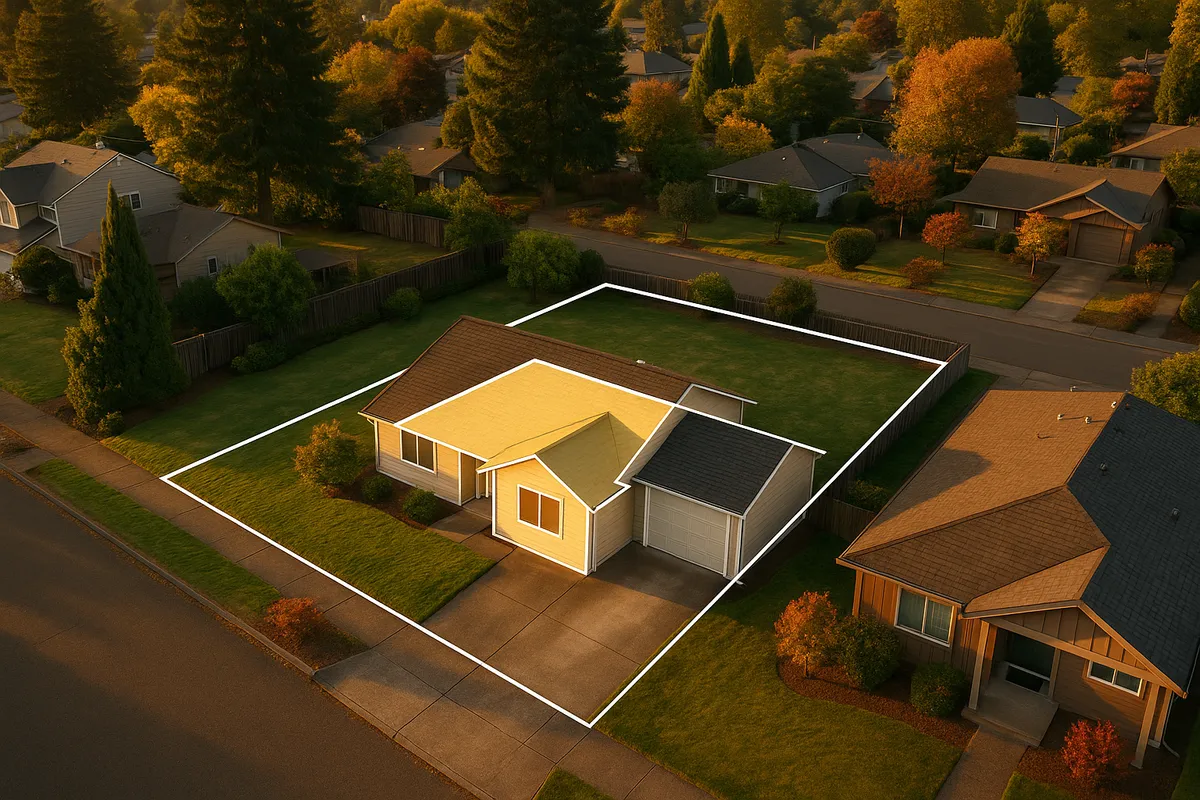
Residential Site Plans and Building Permits in Gresham, Oregon
Gresham is Oregon's fourth-largest city, sitting at the eastern edge of the Portland metro area in Multnomah County. The city has experienced steady residential growth over the past decade, and with that growth comes a robust building permit process designed to protect neighborhoods, manage stormwater, and ensure structures meet Oregon's seismic and fire safety standards. Whether you are adding a backyard deck, converting a garage into an accessory dwelling unit (ADU), or installing an in-ground pool, you will almost certainly need to submit a residential site plan to the City of Gresham's Development Services division before work begins. Understanding what Gresham requires, and preparing a clean, accurate site plan from the start, is the single most effective way to avoid costly delays.
What Is a Residential Site Plan and Why Does Gresham Require One?
A residential site plan is a scaled, bird's-eye drawing of your property that shows the lot boundaries, existing structures, proposed improvements, setbacks from property lines, driveways, utility easements, and any relevant natural features such as slopes or drainage swales. Gresham requires site plans because the city's planners and building inspectors need to verify that your project complies with local zoning codes, the Oregon Structural Specialty Code (OSSC), and any applicable overlay districts before issuing a permit.
The Oregon Building Codes Division sets the statewide baseline for construction standards, and Gresham adopts and sometimes supplements those standards through its own Community Development Code (CDC). A properly prepared site plan allows reviewers to confirm setbacks, lot coverage limits, impervious surface calculations, and proximity to easements or sensitive lands, all in a single document.
Permit Triggers: When Do You Need a Site Plan in Gresham?
Gresham follows Oregon state law and its own CDC to determine when a building permit and accompanying site plan are required. Common residential permit triggers include:
- Decks and patios: Any deck attached to the house, or a freestanding deck more than 30 inches above grade, requires a permit and site plan.
- Sheds and accessory structures: Detached structures larger than 200 square feet require a permit. Smaller sheds may still need zoning review if they are close to property lines.
- Accessory Dwelling Units (ADUs): Both attached and detached ADUs require a full permit package including a site plan, floor plans, and elevation drawings. Oregon's ADU-friendly state laws (ORS 197.312) have made ADUs increasingly popular in Gresham.
- Swimming pools and hot tubs: In-ground pools always require a permit. Above-ground pools over a certain depth (typically 24 inches) also trigger permit requirements.
- Fences: Fences over six feet in height in rear yards, or over three and a half feet in front yard vision-clearance areas, require a permit.
- Room additions and garage conversions: Any addition to the home's footprint or conversion of existing space to habitable area requires a full permit with site plan.
- Driveways and impervious surfaces: New or expanded driveways may require stormwater review, particularly if your lot drains toward a sensitive area or the expansion exceeds Gresham's impervious surface limits for your zone.
Gresham Zoning Quirks and Local Considerations
Gresham's Community Development Code divides the city into several residential zones, including R1 (single-family low density), R2, R2.5, R3, and higher-density residential designations. Each zone carries its own lot coverage maximums, height limits, and setback standards, so the first step for any project is confirming your zone on the Gresham Maps portal.
A few locally important considerations:
- Floodplain overlay: Portions of Gresham near the Columbia Slough, Johnson Creek, and other waterways fall within FEMA-designated Special Flood Hazard Areas. Projects in these areas require additional review and may need an elevation certificate. Check the FEMA Flood Map Service Center to see if your property is affected.
- Sensitive lands: Gresham's CDC includes protections for wetlands, steep slopes (over 25 percent), and riparian corridors. Development near these features triggers additional review and may require a land use application separate from the building permit.
- Tree preservation: Gresham regulates the removal of significant trees (generally 12 inches diameter at breast height or larger). If your project requires removing a significant tree, you may need a tree removal permit in addition to your building permit.
- Stormwater and impervious surface limits: Gresham is within the Clean Water Services (CWS) service area and applies impervious surface limits to manage runoff. Adding a large driveway, patio, or accessory structure can push your lot over the allowed impervious surface percentage, requiring mitigation measures such as a rain garden or permeable paving.
- Historic and neighborhood overlay districts: Some older Gresham neighborhoods have design review requirements that add a layer of review on top of standard building permits.
Typical Setback Requirements in Gresham
Setbacks in Gresham vary by zone and structure type. The ranges below are typical for standard single-family residential zones and are meant as a general guide. Always confirm your specific requirements with Gresham Development Services before designing your project.
- Front yard setback: Typically 15 to 20 feet from the front property line, depending on zone.
- Side yard setback: Generally 5 feet for interior side yards; corner lots have larger street-side setbacks, often 10 to 15 feet.
- Rear yard setback: Commonly 15 to 20 feet, though accessory structures may be allowed closer to the rear line (sometimes as little as 3 to 5 feet for small sheds).
- Garage setbacks: Detached garages and ADUs have their own setback rules and may qualify for reduced rear and side setbacks under Oregon's ADU statutes.
The Permit Submission Process in Gresham
Gresham Development Services handles all residential building permit applications. As of 2026, the city accepts applications both online and in person.
Step 1: Confirm Your Zoning and Requirements
Before drawing anything, look up your parcel on Gresham's online mapping tools and call or email Development Services to confirm the permit type, fee schedule, and any special overlay requirements for your project.
Step 2: Prepare Your Site Plan and Construction Documents
Your site plan must be drawn to scale (typically 1 inch = 20 feet for residential lots) and include: lot dimensions and total area, all existing and proposed structures with dimensions, distances from all structures to every property line, driveways and utility connections, north arrow and scale bar, and any easements or sensitive land boundaries.
Step 3: Submit Your Application
Gresham accepts permit applications through its online permit portal or in person at the Development Services counter at Gresham City Hall (1333 NW Eastman Parkway, Gresham, OR 97030). Online submission is generally faster and allows you to track review status in real time.
Step 4: Plan Review
Simple residential projects (sheds, decks, small additions) typically go through an over-the-counter or express review, which can be completed in a few days to two weeks. More complex projects, ADUs, or anything requiring land use review can take four to eight weeks or longer, especially if revisions are requested.
Step 5: Respond to Correction Notices
If reviewers issue a correction notice, you will need to revise and resubmit your site plan. Common revision requests include missing dimensions, incorrect setback calculations, insufficient stormwater information, or unclear structure labeling.
Common Reasons Gresham Permit Applications Get Rejected
- Site plan not drawn to scale or missing a scale bar
- Setback distances not clearly dimensioned from structures to all property lines
- Proposed structure encroaches into a required setback or easement
- Missing impervious surface calculation or lot coverage percentage
- No north arrow or street label on the site plan
- ADU application missing required floor plans or utility connection details
- Failure to address floodplain or sensitive lands overlay requirements
- Incomplete owner or contractor information on the permit application form
Get Your Gresham Site Plan Right the First Time
A rejected application costs time and money. Site Plan Creator is an online tool built specifically for homeowners and contractors who need a clean, accurate, permit-ready site plan without hiring a surveyor or architect for the drawing itself. You can enter your lot dimensions, place structures, add setback lines, and export a scaled PDF that meets Gresham's formatting requirements. Whether you are building a backyard ADU, adding a deck, or installing a pool, Site Plan Creator gives you the confidence to submit a professional site plan on your first attempt and keep your project moving forward.
Frequently Asked Questions
- Do I need a permit to build a deck in Gresham, OR?
- Yes, in most cases you need a building permit to build a deck in Gresham. Any deck that is attached to your home requires a permit regardless of height. A freestanding deck that is more than 30 inches above the adjacent grade also requires a permit and a site plan. The site plan must show the deck's dimensions, its distance from all property lines, and its relationship to the house and any other structures on the lot. Decks under 200 square feet and not attached to the house may qualify for a simplified review, but you should confirm with Gresham Development Services before starting work. Building without a permit can result in fines, required demolition, and complications when you sell your home.
- How much does a building permit and site plan review cost in Gresham?
- Permit fees in Gresham are calculated based on the valuation of the proposed work, the project type, and the number of review hours required. As of 2026, a simple residential permit such as a shed or small deck might cost a few hundred dollars in total fees, while a full ADU or room addition permit can run into the thousands when you factor in plan review fees, system development charges (SDCs), and inspection fees. There is no fixed fee for a site plan itself; the cost is bundled into the overall permit application fee. Gresham's fee schedule is available on the Development Services website, and staff can provide a fee estimate before you submit. Using a tool like Site Plan Creator to prepare your drawings can reduce or eliminate drafting costs.
- How long does it take to get a building permit approved in Gresham?
- Permit review timelines in Gresham depend heavily on project complexity. Simple projects such as sheds, decks, and small fences may qualify for over-the-counter or express review, which can be completed in a few business days to two weeks. Standard residential additions and garage conversions typically take three to six weeks for plan review. ADU applications, projects in sensitive lands or floodplain overlays, and anything requiring a land use decision can take six to twelve weeks or more. Submitting a complete, accurate application with a properly prepared site plan is the single best way to avoid revision cycles that add weeks to your timeline. Gresham's online permit portal lets you track your application status in real time.
- What does Gresham require on a residential site plan?
- Gresham Development Services requires that a residential site plan include: the lot's legal dimensions and total square footage, the location and dimensions of all existing structures on the property, the proposed new structure or improvement with its dimensions clearly labeled, the distance from every structure to each property line (setbacks), the location of driveways, walkways, and utility connections, any easements or right-of-way lines, a north arrow, a written scale and scale bar, and the street address. For projects near sensitive lands, wetlands, or FEMA floodplains, additional information such as flood zone designations or topographic contours may be required. ADU applications also need floor plans and elevation drawings in addition to the site plan.
- Can I draw my own site plan in Gresham, or do I need a licensed surveyor?
- For most standard residential permits in Gresham, you are not required to hire a licensed land surveyor or architect to prepare your site plan. Homeowners and contractors can draw their own site plans as long as the drawing is accurate, drawn to scale, and includes all required information. However, if you are unsure of your exact lot boundaries, it is wise to obtain a copy of your recorded plat or a boundary survey from the county. For more complex projects such as ADUs, additions, or anything in a sensitive lands overlay, Gresham may require drawings stamped by a licensed engineer or architect. An online tool like Site Plan Creator makes it straightforward for homeowners to produce a professional, scaled site plan without specialized software.
- What are the setback requirements for a house or addition in Gresham?
- Setbacks in Gresham vary by zoning district. In standard single-family zones (R1 and R2), front yard setbacks are typically 15 to 20 feet from the front property line. Interior side yard setbacks are generally 5 feet, while street-side setbacks on corner lots are usually 10 to 15 feet. Rear yard setbacks are commonly 15 to 20 feet for primary structures. Accessory structures such as sheds and detached garages may be allowed as close as 3 to 5 feet from rear and interior side property lines in some zones. ADUs have their own setback allowances under Oregon state law. Because setbacks differ by zone, project type, and lot configuration, always confirm your specific requirements with Gresham Development Services or look up your parcel on the city's online zoning map before finalizing your design.
- Where do I submit a permit application in Gresham, OR?
- As of 2026, Gresham accepts residential building permit applications both online and in person. Online submissions are made through the city's permit portal, accessible via the Gresham Development Services website. Online submission is generally preferred because it allows you to attach digital documents, pay fees electronically, and track your application status without visiting City Hall. In-person submissions can be made at the Development Services counter located at Gresham City Hall, 1333 NW Eastman Parkway, Gresham, OR 97030. Staff at the counter can answer questions about your application and sometimes provide over-the-counter review for simple projects. It is a good idea to call ahead at (503) 618-2525 to confirm counter hours and whether your project qualifies for express review.
- What happens if I build without a permit in Gresham?
- Building without a required permit in Gresham is a violation of the Oregon Structural Specialty Code and the city's Community Development Code. If unpermitted work is discovered, the city can issue a stop-work order, require you to obtain a retroactive permit (which typically costs more than a standard permit and may require destructive inspections to verify compliance), and levy fines. In serious cases, the city can require you to remove or demolish the unpermitted structure at your own expense. Unpermitted work can also create significant problems when you sell your home, as it may appear in title searches or be discovered during a buyer's inspection. Lenders and title companies often require resolution of permit violations before closing. It is always safer and less expensive to pull the permit before work begins.
- What are the rules for building an ADU in Gresham, OR?
- Gresham is an ADU-friendly city, consistent with Oregon's statewide ADU legislation under ORS 197.312, which requires cities to allow ADUs on any lot zoned for single-family residential use. You can build an attached ADU, a detached ADU, or convert an existing structure such as a garage into an ADU. Detached ADUs in Gresham are generally limited to a maximum floor area of 900 square feet or 75 percent of the primary dwelling's floor area, whichever is less, though rules can vary by zone. ADUs require a full permit package including a site plan, floor plans, and elevation drawings. System development charges (SDCs) for utilities apply but are often reduced for ADUs under Oregon law. Owner-occupancy requirements for ADUs were eliminated statewide, making ADU rentals more accessible for Gresham property owners.
- Does my property in Gresham fall in a floodplain, and how does that affect my permit?
- Some properties in Gresham, particularly those near Johnson Creek, the Columbia Slough, and other waterways, are located within FEMA-designated Special Flood Hazard Areas (SFHAs). If your property is in a floodplain, any new construction or substantial improvement requires additional review under Gresham's floodplain management regulations, which are tied to the National Flood Insurance Program (NFIP). You may need to provide an elevation certificate prepared by a licensed surveyor, and finished floor elevations must be set at or above the Base Flood Elevation (BFE). Floodplain review adds time and cost to the permit process. You can check whether your property is in a FEMA flood zone using the FEMA Flood Map Service Center at msc.fema.gov, or contact Gresham Development Services for a floodplain determination.
How to Create a Site Plan in Gresham
- Confirm Your Zone and Requirements: Start by looking up your parcel on Gresham's online GIS mapping tool to identify your zoning district, any overlay zones (floodplain, sensitive lands, historic), and the applicable setback and lot coverage standards. You can also call Gresham Development Services at (503) 618-2525 to speak with a planner who can confirm which permits and documents your specific project requires before you invest time in drawings.
- Gather Your Lot and Property Documents: Collect your recorded plat map, property deed, and any existing survey documents. These will give you accurate lot dimensions, easement locations, and boundary information needed to draw a correct site plan. If you do not have a survey and are unsure of exact boundaries, consider ordering a copy of your recorded plat from the Multnomah County Assessor's office or requesting a boundary survey from a licensed Oregon surveyor.
- Create Your Site Plan: Using Site Plan Creator or another scaled drawing tool, create a site plan that shows your lot boundaries with dimensions, all existing structures, the proposed improvement with dimensions, setback distances from every structure to each property line, driveways, utility connections, easements, a north arrow, and a written scale. For ADUs, you will also need floor plans and exterior elevations. Make sure all measurements are accurate and the drawing is to scale, typically 1 inch equals 20 feet for standard residential lots.
- Submit Your Permit Application: Submit your completed permit application, site plan, and any required supporting documents through Gresham's online permit portal or in person at the Development Services counter at City Hall (1333 NW Eastman Parkway). Pay the applicable fees at the time of submission. Online submission allows you to track review progress and receive correction notices electronically, which typically speeds up the overall process compared to paper submissions.
- Respond to Plan Review Comments: If Gresham's plan reviewers issue a correction notice, carefully read each comment and revise your site plan or supporting documents accordingly. Common corrections involve missing setback dimensions, unclear structure labeling, or insufficient stormwater information. Resubmit the revised documents promptly through the same portal. A complete, accurate initial submission reduces the likelihood of correction cycles and keeps your project on schedule.
- Receive Permit and Schedule Inspections: Once your permit is approved, you will receive your permit card or electronic permit number. Post the permit card at the job site as required by Oregon law. As construction progresses, schedule the required inspections through Gresham's inspection request line or online portal. Common residential inspections include footing, framing, electrical, plumbing, and final inspections. Do not cover work before the required inspection has been completed and approved.