Site Plan Requirements in Green Bay, WI (Permit Guide)
Green Bay homeowners navigating the city's building permit process need a properly prepared residential site plan for most improvement projects. This guide covers what Green Bay requires, typical setbacks, permit triggers, and how to submit your application to the City's Building Inspection Division.
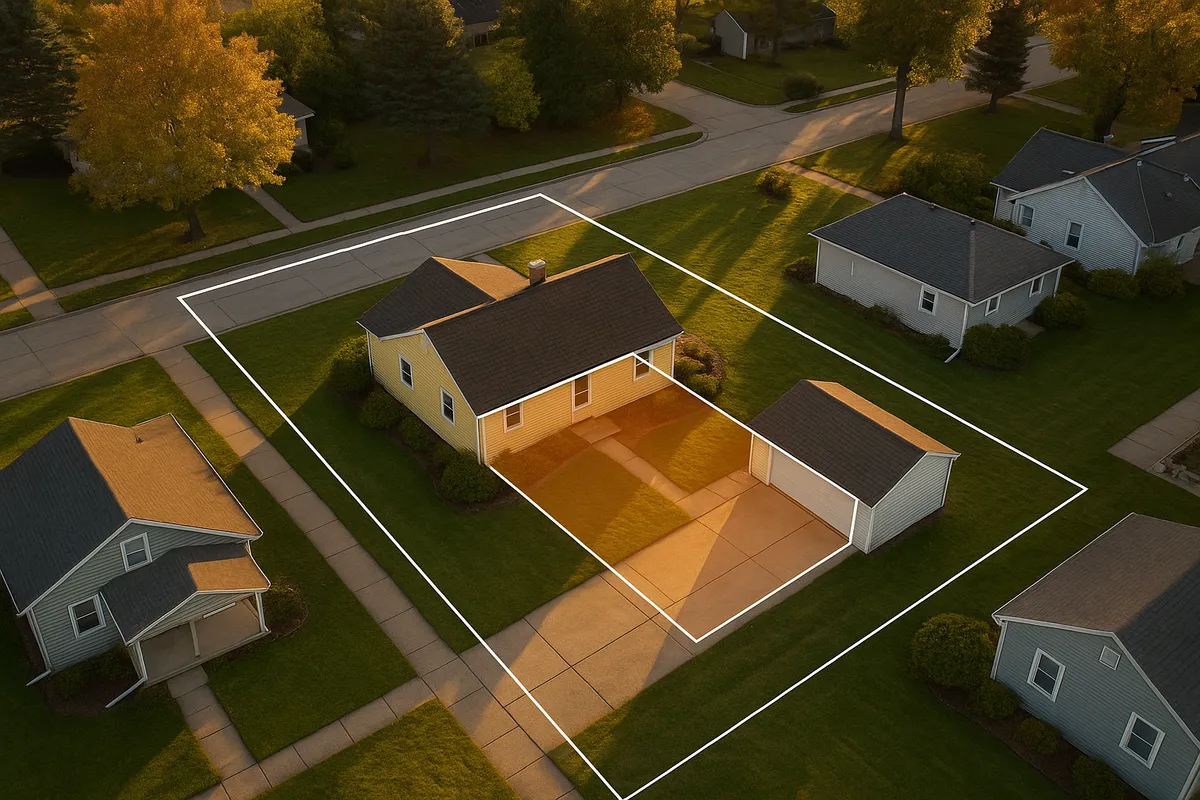
Building Permits and Site Plans in Green Bay, WI
Green Bay is one of Wisconsin's most storied cities, home to roughly 110,000 residents spread across established neighborhoods, riverfront properties, and growing suburban corridors. Whether you're adding a deck to a craftsman bungalow near the University of Wisconsin-Green Bay campus, converting a garage on the west side into a living space, or putting up a storage shed in the Allouez border area, the City of Green Bay requires a building permit and, in most cases, a site plan before any work begins. Understanding what the city expects upfront can save you weeks of back-and-forth with the Building Inspection Division and keep your project on schedule.
What Is a Residential Site Plan and Why Does Green Bay Require One?
A residential site plan is a scaled, overhead drawing of your property that shows the lot boundaries, existing structures, proposed improvements, driveways, easements, and distances from structures to property lines. Green Bay's Building Inspection Division uses site plans to verify that your project complies with the city's Zoning Ordinance, setback requirements, impervious surface limits, and any applicable overlay district rules.
Without an accurate site plan, a permit reviewer cannot confirm that a proposed deck, addition, or accessory structure meets code. Submitting an incomplete or inaccurate site plan is one of the top reasons permit applications are delayed or denied in Green Bay, so getting this document right the first time matters.
Residential Projects That Typically Require a Permit in Green Bay
The City of Green Bay's Building Inspection Division requires a permit for a wide range of residential improvements. Common triggers include:
- Decks and patios: Any attached deck or elevated patio structure requires a permit. Detached ground-level patios may be exempt if they meet specific area thresholds, but confirm with the city.
- Sheds and accessory structures: Sheds larger than 120 square feet generally require a permit and must meet setback requirements. Smaller sheds may still need zoning review.
- Swimming pools: In-ground and above-ground pools over 24 inches deep require a permit, along with barrier and fence requirements per Wisconsin state code.
- Fences: Fences over six feet in height typically require a permit. Location relative to corner sight-lines and easements is also reviewed.
- Home additions: Any addition to a home's footprint requires a full building permit and structural review.
- Accessory Dwelling Units (ADUs): Green Bay allows ADUs in certain residential zones. Both attached and detached ADUs require permits, site plan review, and must comply with owner-occupancy and size restrictions.
- Driveways: New driveways or significant expansions require a permit, particularly where they intersect a public right-of-way. Impervious surface limits also apply.
- Garage conversions: Converting an attached garage to living space requires a permit and must address insulation, egress, and zoning compliance.
For a full list of permit triggers, visit the City of Green Bay Building Inspection Division.
Green Bay Zoning and Local Considerations
Green Bay's zoning is administered through the City's Planning and Zoning Department, and the rules vary meaningfully by district. A few notable considerations for 2026:
- Flood zones: Portions of Green Bay along the Fox River and its tributaries fall within FEMA-designated Special Flood Hazard Areas. Properties in these zones face additional requirements, including elevation certificates and floodplain development permits. Check the FEMA Flood Map Service Center to see if your parcel is affected.
- Historic districts: Green Bay has several locally designated historic areas. Projects in these districts may require review by the Historic Preservation Commission before a building permit is issued.
- Impervious surface limits: Many residential zones cap the total percentage of a lot that can be covered by hard surfaces (roofs, driveways, patios, etc.). Adding a large shed, driveway extension, or patio can push a property over the limit, triggering additional review.
- Shoreland and wetland buffers: Properties near the Bay of Green Bay, the Fox River, or mapped wetlands are subject to Brown County and state shoreland-wetland zoning rules that layer on top of city requirements.
- Corner lots: Corner lot properties have modified setback rules for visibility and traffic safety. If your lot fronts two streets, consult the zoning office before placing any structure near the corner.
Typical Setback Requirements in Green Bay
Setbacks in Green Bay vary by zoning district, but the following ranges are typical for standard single-family residential (R-1 and R-2) zones:
- Front yard setback: 20 to 30 feet from the front property line (or matching the established block face)
- Side yard setback: 5 to 7 feet for interior lots; corner lots may require 10 to 15 feet on the street side
- Rear yard setback: 25 feet for principal structures; 5 to 10 feet for accessory structures such as sheds and garages
- Accessory structures: Generally must remain behind the front building line and meet reduced side and rear setbacks
These are general ranges. Your specific parcel may be subject to different rules based on its zoning designation, lot size, or overlay district. Always verify setbacks with the City of Green Bay Planning and Zoning Department before finalizing your site plan.
How to Submit a Permit Application in Green Bay
Green Bay has moved toward a hybrid submission model. Here is the typical process as of 2026:
- Determine your project scope. Identify whether your project requires a building permit, a zoning review, or both. Contact the Building Inspection Division at (920) 448-3300 if you are unsure.
- Prepare your site plan. Your site plan should show the lot dimensions, north arrow, scale, all existing structures, the proposed improvement with dimensions, distances to all property lines, easements, and driveways. A survey or assessor's plat can serve as the base.
- Complete the permit application. Download the appropriate application form from the city's website or pick one up at 100 N. Jefferson St. Some permit types can be initiated through the city's online portal.
- Submit your documents. Applications can be submitted in person at the Building Inspection Division or, for eligible project types, via the city's online permitting system. Include the site plan, application form, construction drawings, and any required supporting documents.
- Pay the permit fee. Fees are based on the estimated value of construction. The city's fee schedule is available on the Building Inspection Division website.
- Plan review and approval. Simple residential permits may be reviewed over the counter or within a few business days. More complex projects, or those requiring zoning variance review, can take two to four weeks or longer.
Common Reasons Green Bay Permit Applications Are Rejected
Understanding what trips up other applicants can help you avoid the same mistakes:
- Missing or inaccurate lot dimensions: The site plan must reflect actual surveyed or assessed lot boundaries, not estimates.
- Setback violations: Proposed structures placed too close to property lines are the most common rejection trigger.
- No north arrow or scale: Reviewers cannot evaluate distances without a clearly stated scale and orientation.
- Incomplete impervious surface calculations: If your project adds hard surface area, you must show total existing and proposed coverage.
- Missing easement notation: Utility and drainage easements must be shown; structures cannot encroach into easements.
- Flood zone non-compliance: Projects in FEMA flood zones submitted without the required elevation data are routinely returned.
Get Started with Site Plan Creator
Preparing a permit-ready site plan doesn't have to be complicated or expensive. Site Plan Creator is designed specifically for homeowners and small contractors who need a professional, accurate site plan without hiring a surveyor or architect for a simple residential project. Our tool walks you through every element Green Bay's Building Inspection Division expects to see, from lot boundaries and setbacks to structure dimensions and easements.
Start your Green Bay site plan today at siteplancreator.com and move your permit application forward with confidence.
Frequently Asked Questions
- Do I need a permit to build a deck in Green Bay, WI?
- Yes. The City of Green Bay requires a building permit for any attached deck, regardless of size, and for most detached elevated deck structures. When you apply, you will need to submit a site plan showing the deck's dimensions, its distance from all property lines, and its relationship to the existing house footprint. The permit also triggers a review for setback compliance under Green Bay's zoning ordinance. Decks in flood-prone areas along the Fox River corridor may require additional floodplain review. Skipping the permit can result in a stop-work order, fines, and complications when you sell the property, so it is always worth getting the paperwork in order before breaking ground.
- What does Green Bay require on a residential site plan?
- Green Bay's Building Inspection Division expects a site plan to include the full lot dimensions drawn to a stated scale, a north arrow, the location and dimensions of all existing structures on the property, the proposed new structure or improvement with its dimensions, and the measured distances from every structure to each property line. You should also show driveways, sidewalks, any recorded easements, and the street name. If your project adds impervious surface, include a calculation of total hard-surface coverage before and after the project. A survey or county assessor's plat is a good starting base, and tools like Site Plan Creator can help you layer in the required details accurately.
- How long does it take to get a building permit approved in Green Bay?
- For straightforward residential projects like sheds, fences, or simple decks, Green Bay's Building Inspection Division can often complete the review within a few business days, and some simple permits are handled over the counter. More complex projects, such as home additions, ADUs, or anything requiring a zoning variance or Historic Preservation Commission review, can take two to four weeks or more. Projects in FEMA Special Flood Hazard Areas along the Fox River or Bay shoreline may take additional time due to floodplain compliance review. Submitting a complete, accurate application with a clear site plan is the single most effective way to avoid delays.
- What are the typical setback requirements in Green Bay, WI?
- In Green Bay's standard single-family residential zones (R-1 and R-2), front yard setbacks typically range from 20 to 30 feet from the front property line, side yard setbacks are generally 5 to 7 feet for interior lots, and rear yard setbacks are usually 25 feet for the main house. Accessory structures like sheds and detached garages usually need to be at least 5 feet from the rear and side property lines and must sit behind the front building line. Corner lots have stricter street-side setbacks, often 10 to 15 feet. Always verify the exact setbacks for your specific zoning district with the City of Green Bay Planning and Zoning Department before finalizing any plans.
- Can I draw my own site plan in Green Bay, or do I need a licensed surveyor?
- For most standard residential permits in Green Bay, you are not required to hire a licensed surveyor or engineer to prepare the site plan. Homeowners and contractors can draw their own site plans as long as the document is accurate, drawn to scale, and includes all the information the Building Inspection Division requires. Using your county assessor's plat or a prior survey as a base is a practical approach. Tools like Site Plan Creator are designed to help non-professionals produce permit-ready drawings that meet city standards. However, if your project involves a variance, a flood zone, a historic district, or structural engineering, professional involvement is strongly recommended.
- How much does a building permit cost in Green Bay, WI?
- Green Bay calculates building permit fees based on the estimated value of construction. For smaller projects like a shed or fence, fees are typically modest, often ranging from around $50 to $150. A deck or garage addition might run $100 to $300 or more depending on the project value. Larger additions or ADUs can carry fees of several hundred dollars. There may also be separate zoning review fees or plan review surcharges for complex projects. The most accurate fee information is available directly from the City of Green Bay Building Inspection Division at (920) 448-3300 or on their website, as the fee schedule is updated periodically.
- What happens if I build without a permit in Green Bay?
- Building without a required permit in Green Bay can lead to serious consequences. The city's inspectors can issue a stop-work order requiring all construction to halt immediately. You may be required to obtain a retroactive permit, which often costs more than the original permit would have. In some cases, unpermitted work must be partially demolished so inspectors can verify code compliance before the work is re-approved. Unpermitted improvements can also create problems when you sell your home, as they may need to be disclosed to buyers or corrected before closing. Repeated or willful violations can result in monetary fines under Wisconsin state statutes and city ordinances.
- Does Green Bay, WI allow accessory dwelling units (ADUs)?
- Yes, Green Bay allows accessory dwelling units in certain residential zoning districts, reflecting broader Wisconsin efforts to expand housing options. Both attached ADUs (such as basement apartments) and detached ADUs (such as backyard cottages or garage conversions) may be permitted, subject to zoning district rules, lot size minimums, owner-occupancy requirements, and size caps. A full building permit and site plan review are required, and the ADU must comply with all applicable setbacks, parking requirements, and utility connection standards. Because ADU regulations have been evolving in Wisconsin, it is worth confirming current rules directly with the City of Green Bay Planning and Zoning Department before investing in design work.
- Does my Green Bay property fall in a flood zone, and how does that affect my permit?
- Parts of Green Bay along the Fox River, East River, and the Bay of Green Bay shoreline are located within FEMA-designated Special Flood Hazard Areas (SFHAs). If your property is in one of these zones, any new construction, addition, or substantial improvement triggers additional floodplain development permit requirements. You may need to provide an elevation certificate, design the structure to meet base flood elevation standards, and obtain approval from the city's floodplain administrator in addition to the standard building permit. You can check your property's flood zone status using the FEMA Flood Map Service Center at msc.fema.gov. Flood zone requirements add time and cost to projects, so identify this early in your planning process.
- Where do I submit a site plan and permit application in Green Bay?
- Permit applications and site plans can be submitted to the City of Green Bay Building Inspection Division, located at 100 N. Jefferson St., Green Bay, WI 54301. The office is open during regular business hours, and staff can answer questions about your specific project. As of 2026, the city also offers online permitting options for certain project types through its digital portal, which allows you to upload documents and track your application status without visiting in person. For projects that require zoning review or involve special overlay districts, coordination with the Planning and Zoning Department at the same address may also be needed. Call (920) 448-3300 to confirm the best submission method for your project type.
How to Create a Site Plan in Green Bay
- Confirm Your Permit Requirements: Contact the City of Green Bay Building Inspection Division at (920) 448-3300 or visit their website to confirm whether your specific project requires a building permit, a zoning review, or both. Identify your zoning district and check for any overlay considerations such as flood zones, historic districts, or shoreland buffers. Getting clarity on requirements before you start designing saves significant time and prevents costly revisions later in the process.
- Gather Your Property Documents: Obtain a copy of your property survey, assessor's plat, or deed map from Brown County's Register of Deeds or the city's GIS portal. This document provides your lot dimensions, boundary lines, and recorded easements, all of which must appear on your site plan. If you do not have a recent survey, the Brown County Assessor's office can often provide a plat map sufficient for most standard residential permit applications.
- Prepare Your Site Plan: Using your property documents as a base, create a scaled site plan that shows lot dimensions, north arrow, all existing structures with their dimensions, the proposed improvement with its dimensions, and the measured distances from every structure to each property line. Include driveways, easements, and any impervious surface calculations if your project adds hard coverage. Site Plan Creator simplifies this process with guided tools built around standard residential permit requirements.
- Complete and Submit Your Application: Download or pick up the appropriate permit application from the City of Green Bay Building Inspection Division. Attach your completed site plan, any required construction drawings or specifications, and the applicable permit fee based on the city's current fee schedule. Submit in person at 100 N. Jefferson St. or through the city's online permitting portal if your project type is eligible for digital submission. Double-check that all required fields are filled in and all attachments are included before submitting.
- Respond to Plan Review Comments: After submission, a plan reviewer will evaluate your application for compliance with Green Bay's zoning ordinance, building code, and any applicable overlay district rules. If corrections are needed, the reviewer will issue written comments. Respond promptly with a revised site plan or supporting documentation. Simple projects are often approved within a few business days; complex projects or those requiring variance review may take two to four weeks or longer.
- Schedule Inspections and Close Your Permit: Once your permit is approved, post it on-site as required and begin construction. Schedule all required inspections with the Building Inspection Division at key stages of your project, such as footing, framing, and final inspection. Do not cover work that has not yet been inspected. After passing the final inspection, your permit will be closed and your project is officially on record with the city, which protects you when it comes time to sell or refinance the property.