Site Plan Requirements in Glendale, CA (Permit Guide)
Glendale, California homeowners navigating the permit process need to understand local site plan requirements before breaking ground on any residential project. This guide covers everything from typical permit triggers and setback rules to submission procedures at the Glendale Building and Safety Division. Whether you are planning an ADU, a pool, or a simple fence, Site Plan Creator can help you get it right the first time.
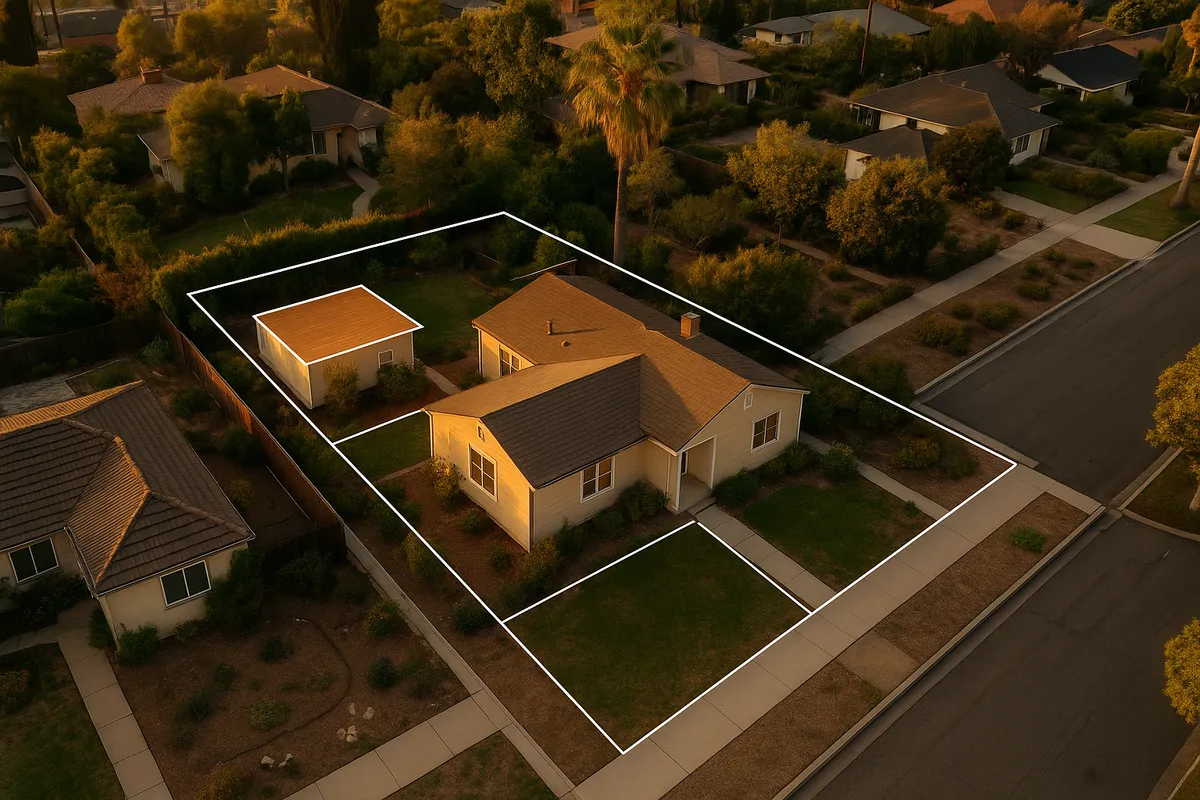
Residential Site Plans and Permits in Glendale, California
Nestled in the foothills of the Verdugo Mountains and bordered by Los Angeles, Burbank, and Pasadena, Glendale is one of the most densely populated cities in Los Angeles County. That density, combined with California's aggressive housing and wildfire legislation, makes the local permitting landscape more layered than in many other California cities. Whether you are converting a garage into an ADU, adding a deck to your hillside home, or installing a swimming pool in your backyard, the City of Glendale will almost certainly require a building permit - and that permit will require a properly prepared residential site plan.
Understanding what Glendale expects from your site plan before you submit can save you weeks of back-and-forth with the Building and Safety Division and help you avoid costly project delays.
What Is a Residential Site Plan and Why Does Glendale Require One?
A residential site plan (sometimes called a plot plan) is a scaled, bird's-eye drawing of your property that shows the lot boundaries, existing structures, proposed improvements, setbacks, easements, driveways, utilities, and any other features relevant to your project. It is the document that allows Glendale's plan checkers to verify that your proposed work complies with the city's zoning code, the California Building Code (CBC), and any applicable state laws.
Glendale requires a site plan with virtually every residential building permit application because the city must confirm that new construction or alterations respect setback requirements, do not exceed lot coverage limits, and do not encroach on easements or rights-of-way. Without an accurate site plan, a plan checker cannot approve your project - no matter how straightforward the work may seem.
Common Residential Permit Triggers in Glendale
The following projects typically require a building permit and an accompanying site plan in Glendale:
- Accessory Dwelling Units (ADUs) and Junior ADUs (JADUs): California state law has dramatically streamlined ADU approvals, but Glendale still requires a complete permit package including a site plan showing the ADU's footprint, setbacks, and utility connections.
- Room additions and home expansions: Any addition that increases the square footage of a home requires a full permit with site plan.
- Detached garages and accessory structures: Structures over 120 square feet (and sometimes smaller ones, depending on placement) require permits.
- Swimming pools and spas: Both in-ground and above-ground pools above a certain size trigger permit requirements, including barrier and setback compliance.
- Decks and patio covers: Raised decks more than 30 inches above grade and attached patio covers require permits.
- Fences and retaining walls: Fences over 6 feet in height and retaining walls over 4 feet (measured from the bottom of the footing) require permits in Glendale.
- Driveways and impervious surfaces: New or significantly altered driveways may require permits, particularly where stormwater management is a concern.
- Solar panels and battery storage systems: These require electrical and sometimes structural permits with a site plan showing panel placement.
If you are unsure whether your specific project triggers a permit, the Glendale Building and Safety Division can advise you before you invest time in preparing drawings.
Local Zoning Quirks and Notable Considerations in Glendale
Glendale has several local characteristics that make its permitting environment distinct from neighboring cities:
Hillside Development: A significant portion of Glendale sits in hillside terrain. Properties in designated Hillside Management Overlay zones face additional grading, drainage, and geotechnical review requirements. If your lot has a slope exceeding a certain percentage, you may need a soils report and engineered grading plan in addition to your site plan.
Wildfire Hazard Severity Zones: Large parts of Glendale, particularly in the northern foothills near the Verdugo Hills, are designated as Very High Fire Hazard Severity Zones (VHFHSZ) by the California Department of Forestry and Fire Protection (CAL FIRE). Projects in these zones must comply with Chapter 7A of the California Building Code, which imposes special requirements on roofing, siding, vents, and glazing. Your site plan must clearly indicate if your property falls within a VHFHSZ.
Historic Districts and Preservation: Glendale has several historically significant neighborhoods. If your property is a designated historic resource or falls within a historic district, alterations may require design review approval from the Historic Preservation Commission before a building permit is issued.
Stormwater and Low Impact Development (LID): Los Angeles County's MS4 stormwater permit requirements apply in Glendale. Projects that disturb a certain amount of impervious surface may trigger LID requirements, meaning your site plan may need to show bioretention areas, permeable paving, or other stormwater management features.
HOA Restrictions: Many Glendale neighborhoods have active homeowners associations with their own architectural review processes. HOA approval does not replace city permits, but failing to get HOA sign-off before starting work can lead to disputes and delays. Always check your CC&Rs in addition to city requirements.
Typical Setback Requirements in Glendale
Setbacks in Glendale vary by zoning district, but the following ranges are typical for standard single-family residential (R-1) zones:
- Front yard setback: 20 to 25 feet from the front property line
- Side yard setback: 5 feet minimum on each side (corner lots may have larger street-side setbacks of 10 feet or more)
- Rear yard setback: 15 to 20 feet from the rear property line
- Accessory structures: May be placed closer to rear and side property lines under certain conditions, but generally must maintain at least 5 feet from property lines
ADUs in Glendale benefit from California's state-mandated reduced setback rules: detached ADUs must maintain only 4 feet from the rear and side property lines in most cases. Always verify setbacks for your specific parcel and zoning designation, as hillside zones and other overlay districts can impose stricter requirements. You can look up your parcel's zoning on the City of Glendale's GIS portal.
The Permit Submission Process in Glendale
Step 1: Determine Your Project Scope and Zoning
Before preparing any drawings, confirm your property's zoning designation and check for any overlay zones (hillside, fire hazard, historic). This determines which standards apply to your project.
Step 2: Prepare Your Site Plan and Construction Documents
Your site plan must be drawn to scale (typically 1 inch = 20 feet for residential lots) and include lot dimensions, the location of all existing and proposed structures, setback dimensions, easements, north arrow, scale bar, and street names. Depending on project complexity, you may also need floor plans, elevations, and structural calculations.
Step 3: Submit Your Application
Glendale accepts permit applications through its online portal as well as in person at the Community Development Department at 633 East Broadway, Room 101, Glendale, CA 91206. Online submission is available for many project types and is generally faster. Submit your completed application, site plan, construction documents, and applicable fees.
Step 4: Plan Review
For straightforward residential projects, over-the-counter review may be available, with approval possible the same day or within a few business days. More complex projects - including ADUs, additions, and hillside work - typically go through a standard plan review cycle that can take 4 to 8 weeks, depending on current workload. California's AB 2234 requires local agencies to provide online permit tracking, so you can monitor your application status through Glendale's portal.
Step 5: Permit Issuance and Inspections
Once approved, you pay any remaining fees and receive your permit. Post the permit on-site before work begins. Schedule required inspections at each phase of construction through the city's inspection request system.
Common Reasons Applications Get Rejected in Glendale
- Site plan not drawn to scale or missing dimensions
- Setback violations, particularly in hillside or overlay zones
- Missing north arrow, scale bar, or property line information
- Failure to show existing structures on the property
- Incomplete stormwater or LID documentation for larger projects
- ADU plans that do not reflect current California state law requirements
- Missing soils or geotechnical report for hillside or grading projects
- Discrepancies between the site plan and the architectural floor plans
Avoiding these common errors before you submit is the single most effective way to speed up your approval timeline.
Get Your Glendale Site Plan Right the First Time
Preparing an accurate, code-compliant site plan does not have to be expensive or time-consuming. Site Plan Creator gives Glendale homeowners and contractors the tools to produce professional, to-scale residential site plans that meet city requirements - without hiring a surveyor or draftsperson for straightforward projects. Start your site plan today and walk into the Glendale Building and Safety Division with confidence.
For additional reference on California building codes, visit the California Building Standards Commission.
Frequently Asked Questions
- Do I need a permit to build a deck in Glendale, CA?
- Yes, in most cases you will need a building permit to build a deck in Glendale. The city requires a permit for any deck that is attached to the house or that is raised more than 30 inches above the adjacent grade. Your permit application must include a site plan showing the deck's location on the lot, its dimensions, setback distances from property lines, and its relationship to existing structures. Freestanding ground-level platforms that stay below the 30-inch threshold may be exempt, but it is always worth confirming with the Glendale Building and Safety Division before starting work. Unpermitted decks can create problems when you sell your home and may need to be removed or retroactively permitted at significant cost.
- How long does it take to get a building permit approved in Glendale, CA?
- Permit approval timelines in Glendale depend on the complexity of your project. Simple projects such as water heater replacements or small accessory structures may qualify for over-the-counter review and can be approved the same day or within a few business days. More involved residential projects, including room additions, ADUs, and hillside construction, typically go through a standard plan review cycle that takes 4 to 8 weeks from the date of a complete submittal. Glendale's online portal allows applicants to track review status in real time. Submitting a complete, accurate application with a properly prepared site plan is the most reliable way to avoid correction cycles that add weeks to your timeline.
- What needs to be on a residential site plan in Glendale?
- Glendale's Building and Safety Division expects a residential site plan to include the following elements: the lot boundaries with dimensions, the legal address and assessor's parcel number, a north arrow and graphic scale bar, the location and footprint of all existing structures on the property, the location and footprint of the proposed new construction or improvement, setback dimensions from all property lines to both existing and proposed structures, the location of easements and rights-of-way, driveway and utility locations, and street names adjacent to the lot. For projects in hillside zones or Very High Fire Hazard Severity Zones, additional notations about slope, drainage, and fire-resistive construction may also be required on the site plan or on accompanying sheets.
- Can I draw my own site plan in Glendale, or do I need a licensed architect or surveyor?
- For many straightforward residential projects in Glendale, you are not legally required to hire a licensed architect, engineer, or surveyor to prepare your site plan. California law and Glendale's local rules allow homeowners to prepare and submit their own drawings for certain project types. However, the site plan must be accurate, drawn to scale, and include all required information. For more complex work, such as structural additions, hillside grading, or new construction, the city will require plans to be signed and stamped by a licensed California architect or engineer. Using a tool like Site Plan Creator can help non-professionals produce accurate, professional-looking site plans that meet Glendale's submittal standards for eligible project types.
- What are the setback requirements for a single-family home in Glendale, CA?
- In Glendale's standard R-1 single-family residential zones, typical setback requirements are 20 to 25 feet for the front yard, 5 feet for each interior side yard, 10 feet or more for the street-side yard on corner lots, and 15 to 20 feet for the rear yard. These numbers can vary significantly based on your specific zoning designation and whether your property falls within a hillside management overlay, a historic district, or another special zone. Detached ADUs benefit from California's state-mandated 4-foot rear and side setback rules. Always verify the exact setbacks for your parcel by checking with the Glendale Planning Division or reviewing your property's zoning designation before finalizing your site plan.
- Where do I submit a permit application and site plan in Glendale, CA?
- Glendale accepts residential permit applications both online and in person. The in-person location is the Community Development Department at 633 East Broadway, Room 101, Glendale, CA 91206. For many project types, Glendale's online permitting portal allows you to upload your site plan and construction documents, pay fees, and track review status without visiting City Hall. Online submission is generally recommended because it is faster and allows you to respond to plan check corrections electronically. For complex or first-time projects, visiting the public counter in person can be helpful because staff can answer questions and sometimes provide preliminary feedback on your site plan before a formal submittal.
- What happens if I build without a permit in Glendale, CA?
- Building without a required permit in Glendale can lead to serious consequences. The city can issue a stop-work order requiring all construction to halt immediately. You may be required to obtain a retroactive permit, which typically involves paying double the standard permit fee and having an inspector evaluate work that may already be covered by drywall or other finishes, sometimes requiring demolition to allow inspection access. Unpermitted work can also complicate or kill a home sale, because lenders and buyers will often require unpermitted additions to be permitted or removed. In cases of significant violations, the city can also pursue code enforcement action. It is always less expensive and less stressful to pull the permit before you start.
- What are the ADU rules in Glendale, CA, and do I need a site plan?
- Glendale follows California's state ADU laws, which allow most single-family lots to add at least one ADU and one Junior ADU. Detached ADUs can be up to 1,200 square feet and must maintain 4-foot rear and side setbacks in most situations. Garage conversions to ADUs are generally allowed without meeting standard setbacks, as long as the existing structure is legally compliant. A complete building permit application is required for all ADU types, and a site plan is a mandatory part of that application. The site plan must show the ADU's footprint, its relationship to the primary dwelling, setback distances, utility connections, and parking (if required). Glendale has an online ADU resource page and the city aims to process ministerial ADU applications within the state-mandated 60-day window.
- Do I need a permit to install a swimming pool in Glendale, CA?
- Yes, installing a swimming pool in Glendale requires a building permit. Both in-ground pools and above-ground pools that hold water to a depth of 18 inches or more are subject to permit requirements. Your permit application must include a site plan showing the pool's location on the lot, its dimensions, setback distances from property lines and the house, the location of the equipment pad, and barrier or fencing details. California law requires all new pools to have specific anti-entrapment drain covers and at least one of several approved drowning-prevention safety features, such as an approved fence, pool alarm, or safety cover. These requirements must be documented in your permit package.
- How much does a site plan or building permit cost in Glendale, CA?
- Permit fees in Glendale are calculated based on the valuation of the proposed work and the type of project. For a modest residential project such as a patio cover or small addition, permit fees might range from a few hundred to a few thousand dollars. Larger projects such as ADUs or significant additions can carry permit fees of several thousand dollars or more, especially when plan check fees, school fees, and other development impact fees are included. The site plan itself is not a separate city fee, but you may pay to have a professional prepare it. Using Site Plan Creator can significantly reduce that cost for eligible project types. For an accurate fee estimate, contact the Glendale Building and Safety Division or use the city's online fee calculator if available.
How to Create a Site Plan in Glendale
- Research Your Zoning and Overlays: Before drawing anything, look up your Glendale property's zoning designation and check for overlay zones such as Hillside Management, Very High Fire Hazard Severity Zone, or historic district status. These overlays can impose additional requirements on your project that must be reflected in your site plan and permit package. You can find this information through the Glendale Planning Division or the city's online GIS mapping tool.
- Prepare an Accurate Site Plan: Create a scaled site plan that shows your lot boundaries with dimensions, all existing structures, the proposed improvement's footprint and location, setback distances from all property lines, easements, driveways, utilities, and a north arrow with scale bar. For hillside or fire hazard zone properties, include any required slope, drainage, or fire-resistive notations. Site Plan Creator can help you produce a professional, to-scale drawing that meets Glendale's submittal standards.
- Compile Your Full Permit Package: Gather all documents required for your specific project type. In addition to the site plan, most Glendale residential permits require floor plans, elevations, and a completed permit application form. ADU projects may need energy compliance documentation. Hillside or grading projects may require a soils report. Review the Glendale Building and Safety Division's submittal checklist for your project type to ensure nothing is missing before you submit.
- Submit Online or In Person: Submit your permit application through Glendale's online portal for the fastest processing, or bring your complete package to the Community Development Department at 633 East Broadway, Room 101. Pay the required plan check fee at the time of submittal. For simple projects, over-the-counter approval may be available the same day. For complex projects, standard review takes 4 to 8 weeks. Use the city's online tracking tool to monitor your application status.
- Respond to Plan Check Corrections: If the plan checker identifies deficiencies in your application, you will receive a correction list. Address each item carefully, revise your site plan or other documents as needed, and resubmit. Common corrections involve missing setback dimensions, incomplete stormwater documentation, or discrepancies between the site plan and floor plans. Responding promptly and thoroughly to each correction is the fastest path to permit issuance.
- Obtain Your Permit and Schedule Inspections: Once your application is approved, pay any remaining fees to receive your building permit. Post the permit on the job site in a visible location before any work begins. As construction progresses, schedule required inspections through Glendale's inspection request system. Common inspection milestones include foundation, framing, rough mechanical and electrical, and final inspection. Do not cover any work until it has passed the required inspection.