Site Plan Requirements in Gilbert, AZ (Permit Guide)
Gilbert, Arizona homeowners must submit a site plan with most residential building permit applications, from backyard pools and ADUs to room additions and fences. This guide covers Gilbert's permit triggers, setback rules, plan review timelines, and how to prepare a compliant site plan the first time.
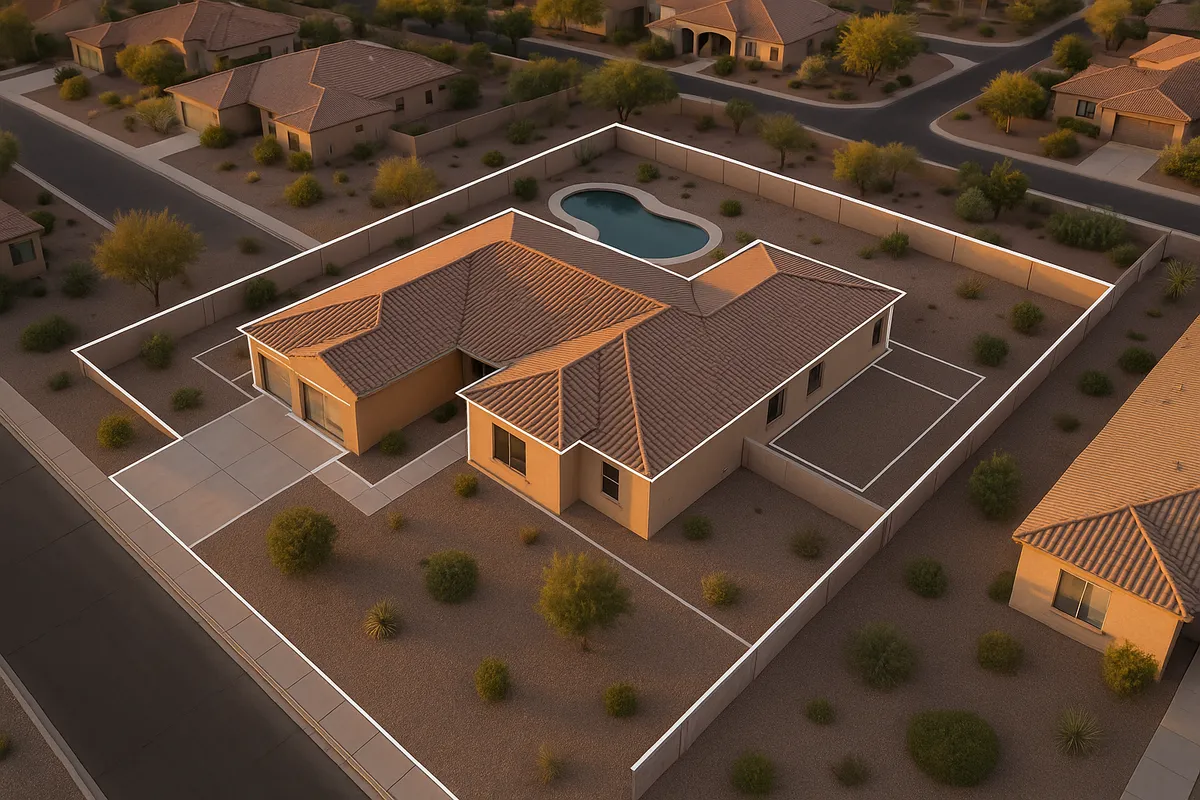
Residential Site Plans and Permits in Gilbert, AZ
Gilbert, Arizona has transformed from a small farming community into one of the fastest-growing towns in the United States, and its building department has grown right along with it. As of 2026, Gilbert's Development Services division processes thousands of residential permit applications each year, covering everything from backyard swimming pools and detached garages to accessory dwelling units and full-scale home additions. Whether you are a longtime Gilbert resident or a new homeowner in one of the town's many master-planned communities, understanding the site plan requirement is the first step toward a smooth, successful permit experience.
What Is a Residential Site Plan and Why Does Gilbert Require One?
A residential site plan is a scaled, bird's-eye drawing of your property that shows the lot boundaries, existing structures, proposed construction, setbacks, driveways, easements, and any relevant drainage or utility features. Gilbert's Development Services requires a site plan because reviewers need to confirm that your proposed project complies with the Town's Unified Development Code (UDC), zoning district standards, and adopted building codes before a permit is issued.
Without an accurate site plan, plan reviewers cannot verify setbacks, lot coverage, or conflicts with recorded easements. Submitting a complete, to-scale site plan is one of the single most effective ways to avoid costly correction cycles and permit delays.
Residential Projects That Require a Permit (and a Site Plan) in Gilbert
Gilbert's building permit thresholds are set by the Town's UDC and the adopted 2018 International Building Code. The following residential projects almost always require a permit and an accompanying site plan:
- Decks and patios: Any attached or detached deck or covered patio structure, including ramadas and pergolas with a solid roof.
- Swimming pools and spas: All in-ground and above-ground pools deeper than 18 inches require a permit, barrier plan, and site plan.
- Sheds and accessory structures: Detached structures larger than 200 square feet require a permit; smaller sheds may still require zoning review.
- Fences and walls: Block walls and fences over a certain height (typically 3 feet in the front yard or 6 feet elsewhere) require a permit.
- Room additions: Any addition to the home's conditioned living space requires full plan review including a site plan.
- Accessory Dwelling Units (ADUs): Gilbert adopted ADU-friendly regulations in line with Arizona state law, and all ADU applications require a site plan showing the primary residence, ADU footprint, parking, and setbacks.
- Driveways: New driveway curb cuts or significant expansions may require a right-of-way permit and a site plan showing the driveway approach.
- Garage conversions: Converting an attached or detached garage to living space requires a permit and updated site plan.
Gilbert Zoning Quirks and Local Considerations
Gilbert is divided into several residential zoning districts (R1-6, R1-7, R1-8, R1-10, R1-35, and others), and each district carries its own lot coverage limits, height restrictions, and setback standards. A few locally important considerations to keep in mind in 2026:
- HOA overlay: A large percentage of Gilbert's residential neighborhoods are governed by homeowners associations. HOA approval is separate from town permit approval, but many Gilbert reviewers will flag obvious HOA-conflict issues. Always check with your HOA before submitting to the town.
- Floodplain awareness: Portions of Gilbert near the Gila River corridor and the San Tan area fall within FEMA-designated Special Flood Hazard Areas. If your property is in or near a floodplain, you may need a floodplain development permit in addition to a standard building permit. Check your parcel on the FEMA Flood Map Service Center.
- Impervious surface limits: Gilbert's drainage standards limit the percentage of a lot that can be covered by impervious surfaces. Your site plan must reflect existing and proposed impervious coverage so reviewers can confirm compliance.
- Solar and energy features: Arizona's strong solar market means many Gilbert homeowners add rooftop solar or battery systems. These require separate electrical permits but the site plan may need to note roof-mounted equipment.
- Lot coverage maximums: Most single-family residential districts in Gilbert cap total lot coverage (all structures combined) at 40-50%, depending on the zoning district. Check the UDC for your specific district.
Typical Setback Ranges in Gilbert
Setbacks in Gilbert vary by zoning district, but the following ranges are representative for standard single-family residential lots:
- Front yard setback: 20 to 25 feet from the front property line (garage faces may require 20 feet minimum from the back of sidewalk)
- Side yard setback: 5 to 10 feet, depending on lot width and zoning district
- Rear yard setback: 15 to 25 feet, with some districts allowing accessory structures closer to the rear line
- Corner lot side yard (street side): Often 15 to 20 feet, mirroring front yard standards on the secondary street frontage
Always verify setbacks against the current Gilbert Unified Development Code for your specific parcel and zoning district, as planned area developments and specific plan areas may have different standards.
How to Submit a Permit Application in Gilbert
Gilbert's Development Services Department has invested heavily in digital permitting infrastructure. Here is the typical process as of 2026:
- Determine your project type and permit category using the Town's online permit guide or by calling Development Services.
- Prepare your site plan and supporting documents. Your site plan should be drawn to scale, show north arrow, lot dimensions, all existing and proposed structures, setback dimensions, easements, and driveway location.
- Create or log into your eTRAKiT account on the Gilbert online permitting portal. Most residential permits are submitted electronically through this platform.
- Upload your application, site plan, and any required construction drawings. Pay the applicable plan review fee at submission.
- Monitor your application status online. Gilbert's plan review timelines for straightforward residential projects (pools, sheds, simple additions) typically run 5 to 15 business days. More complex projects such as ADUs or large additions may take 3 to 6 weeks.
- Respond promptly to correction comments. If a reviewer sends a correction letter, address all items and resubmit. Each correction cycle adds time to your overall timeline.
- Schedule inspections after permit issuance. All permitted work requires one or more inspections before the permit can be finaled.
Common Reasons Gilbert Permit Applications Get Rejected
Plan reviewers in Gilbert consistently flag the same categories of errors. Avoiding these will save you weeks:
- Site plan not drawn to scale or missing a scale bar
- Missing or incorrect setback dimensions from proposed structure to all property lines
- Lot coverage calculation not included or exceeding the district maximum
- Pool or spa plans missing required barrier/fence details and gate specifications
- ADU applications missing parking space dimensions or notes on utility connections
- Easements shown on the recorded plat not reflected on the site plan
- Floodplain notation missing on properties within or adjacent to a Special Flood Hazard Area
- Inconsistencies between the site plan and the floor plan or elevation drawings
Get Your Gilbert Site Plan Right the First Time
Preparing a permit-ready site plan does not have to be complicated or expensive. Site Plan Creator (siteplancreator.com) is built specifically for homeowners and small contractors who need a professional, to-scale residential site plan without hiring a full-service architect or surveyor. Our intuitive tools let you input your lot dimensions, place structures, add setback annotations, and export a clean PDF ready for Gilbert's Development Services portal. Thousands of Arizona homeowners have used Site Plan Creator to get through plan review faster and with fewer correction cycles. Start your Gilbert site plan today and move your project forward with confidence.
Frequently Asked Questions
- Do I need a permit to build a pool in Gilbert, AZ?
- Yes. All in-ground swimming pools and spas in Gilbert require a building permit, and above-ground pools deeper than 18 inches are also subject to permit requirements. Your application must include a site plan showing the pool location, setbacks from all property lines and existing structures, and a barrier or fence plan that complies with Arizona's pool safety laws. Gilbert requires a minimum 5-foot barrier around all residential pools, and self-closing, self-latching gates are mandatory. Typical plan review for a pool permit in Gilbert runs 10 to 15 business days for a complete application. Submitting an accurate, to-scale site plan from the start is the most effective way to avoid correction cycles and delays.
- How long does it take to get a building permit approved in Gilbert, AZ?
- Plan review timelines in Gilbert depend on project complexity. For straightforward residential projects such as a storage shed, fence, or simple patio cover, Gilbert's Development Services typically completes the first review within 5 to 10 business days when a complete application is submitted. More complex projects, including room additions, ADUs, and pools, generally take 10 to 20 business days for the first review cycle. If a correction letter is issued, each resubmittal adds additional review time. As of 2026, Gilbert offers electronic permit submission through its eTRAKiT portal, which speeds up intake and status tracking. Submitting a thorough, error-free application with a properly drawn site plan is the single best way to minimize total approval time.
- What does Gilbert, AZ require on a residential site plan?
- Gilbert's Development Services expects a residential site plan to include the following elements: the lot boundaries with dimensions, a north arrow, a written and graphic scale, the location and footprint of all existing structures on the property, the proposed structure's footprint with dimensions, setback distances measured from the proposed structure to all property lines, the location of driveways and walkways, recorded easements, and any drainage features or retention areas. For pools, a barrier plan must also be included. For ADUs, the site plan must show parking spaces and utility connection points. The plan should be legible and drawn to a standard engineering scale such as 1 inch equals 20 feet or 1 inch equals 30 feet.
- What are the setback requirements for a backyard structure in Gilbert?
- Setback requirements in Gilbert vary by zoning district and structure type, so checking the Gilbert Unified Development Code for your specific parcel is essential. As a general guide for standard single-family residential zones, front yard setbacks range from 20 to 25 feet, interior side yard setbacks are typically 5 to 10 feet, and rear yard setbacks range from 15 to 25 feet. Accessory structures such as detached sheds or garages may be permitted closer to the rear property line in some districts, sometimes as close as 5 feet. Corner lots must also maintain a secondary street-side setback that often mirrors the front yard standard. Planned area developments and specific plan areas within Gilbert may have different standards.
- Can I draw my own site plan for a Gilbert permit, or do I need a licensed surveyor?
- For most standard residential projects in Gilbert, including pools, sheds, fences, and patio covers, you are not required to hire a licensed land surveyor or engineer to prepare the site plan. Homeowners and contractors can draw their own site plans provided they are accurate, drawn to scale, and include all required elements. However, the plan must reflect your actual lot dimensions, which you can typically find on your recorded plat or county assessor records. For larger or more complex projects such as room additions or ADUs, structural drawings prepared by a licensed architect or engineer may be required in addition to the site plan. Online tools like Site Plan Creator make it straightforward to produce a professional, permit-ready site plan without professional drafting experience.
- How much does a building permit cost in Gilbert, AZ?
- Gilbert's permit fees are based on the valuation of the proposed construction and the project type. As of 2026, plan review fees for residential projects are typically calculated as a percentage of the building permit fee, which itself is tied to the estimated construction value using a standard fee schedule. For a typical backyard pool, total permit fees often range from $400 to $900 depending on pool size and features. A simple patio cover or shed permit may cost $150 to $400. Room additions and ADUs carry higher fees proportional to their construction value. Gilbert also charges separate fees for electrical, plumbing, and mechanical permits when applicable. Check the current fee schedule on Gilbert's Development Services website or call (480) 503-6700 for an estimate specific to your project.
- Where do I submit a permit application in Gilbert, AZ?
- As of 2026, Gilbert accepts most residential permit applications electronically through its eTRAKiT online permitting portal, accessible via the Development Services section of the Town's official website at gilbertaz.gov. Applicants create an account, select the permit type, upload the site plan and supporting documents, and pay the plan review fee online. In-person submissions are also accepted at the Development Services counter located at 90 E. Civic Center Drive in Gilbert during regular business hours. For simple over-the-counter permits such as water heater replacements, same-day approval may be possible in person. Electronic submission is strongly recommended for projects requiring a site plan, as it provides a digital paper trail and allows online status tracking throughout the review process.
- What happens if I build without a permit in Gilbert, AZ?
- Building without a required permit in Gilbert is a serious violation that can result in a stop-work order, significant fines, and a requirement to either bring the unpermitted work into full compliance or demolish it. Gilbert's code enforcement officers actively respond to complaints and may discover unpermitted work during inspections of adjacent permitted projects. Unpermitted structures can also create complications when you sell your home, as title companies and buyers' lenders frequently flag open or missing permits during escrow. In some cases, Gilbert may require a licensed inspector to assess unpermitted work at the owner's expense before issuing a retroactive permit. The safest and most cost-effective approach is always to obtain the required permit before work begins.
- What are the ADU rules in Gilbert, AZ, and do I need a site plan?
- Arizona state law, updated in recent years, requires municipalities including Gilbert to permit accessory dwelling units on single-family lots that meet minimum size thresholds. Gilbert's ADU regulations allow detached and attached ADUs subject to setback, height, and lot coverage standards that align with the underlying zoning district. As of 2026, ADUs in Gilbert must comply with the Town's UDC provisions, and a complete building permit application is required. The application must include a site plan showing the primary residence footprint, the proposed ADU footprint, all setback dimensions, required parking spaces (typically one space per unit), and utility connection points. Owner-occupancy requirements have been relaxed under Arizona law, making ADUs an increasingly popular option for Gilbert homeowners seeking rental income or multigenerational living arrangements.
- Does my Gilbert property need a floodplain permit in addition to a building permit?
- Some Gilbert properties, particularly those near the Gila River corridor or in the San Tan area, fall within FEMA-designated Special Flood Hazard Areas (SFHAs). If your parcel is in or adjacent to an SFHA, you may be required to obtain a floodplain development permit from Gilbert's Floodplain Administrator in addition to a standard building permit. Your site plan must note the FEMA flood zone designation, the Base Flood Elevation (BFE) if applicable, and show how the proposed construction meets floodplain development standards. You can check your property's flood zone status using the FEMA Flood Map Service Center at msc.fema.gov. Gilbert's Development Services staff can also help you determine whether a floodplain permit applies to your specific project.
How to Create a Site Plan in Gilbert
- Confirm Your Permit Requirements: Before drawing anything, confirm whether your specific project in Gilbert requires a building permit and site plan. Review the Town's permit threshold guide on the Gilbert Development Services website or call (480) 503-6700. Identify your zoning district using Gilbert's online GIS map, which will tell you the setback standards, lot coverage limits, and height restrictions that apply to your parcel. This step prevents wasted effort on a site plan that does not match your actual zoning requirements.
- Gather Your Property Documents: Collect your recorded plat map (available through the Maricopa County Recorder's Office), your property survey if one exists, and any HOA CC&Rs that may apply. The plat map provides legally accurate lot dimensions, easement locations, and right-of-way widths that must be reflected on your site plan. If your property is in a planned area development, download the specific plan document from Gilbert's website, as it may contain unique setback or design standards that override the standard UDC.
- Draw Your To-Scale Site Plan: Using your lot dimensions and property documents, create a site plan drawn to a standard engineering scale such as 1 inch equals 20 feet. Show all existing structures, the proposed project footprint, setback dimensions from the proposed structure to every property line, the driveway, easements, and a north arrow. For pools, add the barrier or fence location and gate details. For ADUs, include parking spaces and utility connection notes. Site Plan Creator (siteplancreator.com) provides an intuitive online tool designed specifically for this step, allowing you to produce a professional, permit-ready PDF without CAD software.
- Submit Through Gilbert's eTRAKiT Portal: Create or log into your eTRAKiT account on Gilbert's online permitting portal. Select the appropriate permit type, complete the application form, and upload your site plan along with any required construction drawings, energy calculations, or contractor license information. Pay the plan review fee at submission. Double-check that all uploaded files are legible and that the site plan PDF is not compressed to the point of unreadability, as illegible plans are a common cause of immediate rejection.
- Respond to Correction Comments: Monitor your application status through the eTRAKiT portal. If Gilbert's plan reviewers issue a correction letter, read every comment carefully and address each item before resubmitting. Common corrections involve missing setback dimensions, incorrect lot coverage calculations, or absent easement notations. Resubmit all revised documents together rather than piecemeal to avoid additional review cycles. Prompt, thorough responses to correction comments are the fastest path to permit issuance.
- Schedule Inspections and Final the Permit: Once Gilbert issues your permit, post it at the job site and begin construction. Schedule required inspections through the eTRAKiT portal or by phone as work reaches each inspection milestone, such as footing, framing, rough mechanical, and final. Do not cover work that requires inspection before the inspector has signed off. After all inspections pass, Gilbert will final your permit, which is the official record that your project was completed in compliance with the approved plans and applicable codes.