Site Plan Requirements in Gainesville, FL (Permit Guide)
Gainesville, Florida homeowners need a site plan for most residential construction projects, from backyard additions to new pools and ADUs. This guide covers local permit triggers, setback rules, zoning quirks, and how to navigate the City of Gainesville's plan review process. Site Plan Creator makes it easy to generate a code-compliant site plan from your home.
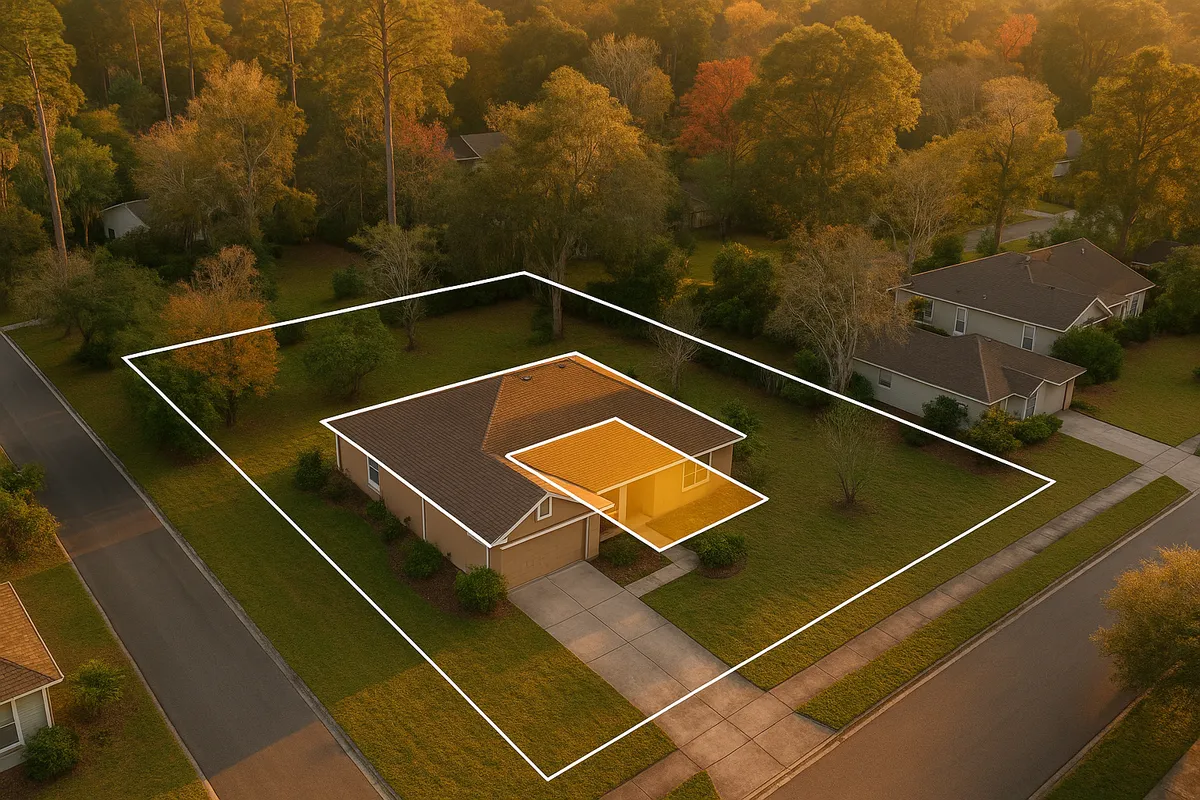
Residential Site Plans and Building Permits in Gainesville, FL
Gainesville is one of Florida's most dynamic mid-sized cities, home to the University of Florida, a thriving arts scene, and a mix of historic neighborhoods and newer suburban developments. Whether you are adding a screened porch to a Craftsman bungalow near Duckpond or building a backyard ADU in a newer subdivision off Archer Road, the City of Gainesville requires a properly prepared site plan before issuing most residential building permits. Getting that site plan right from the start saves you time, money, and the frustration of a rejected application.
What Is a Residential Site Plan and Why Does Gainesville Require One?
A residential site plan is a scaled, bird's-eye drawing of your property that shows the location of existing and proposed structures, property lines, setbacks, easements, driveways, and other relevant features. Gainesville's Building Inspection Division requires site plans to verify that proposed construction complies with the city's Unified Land Development Code (ULDC), state building codes, and applicable zoning district regulations.
Site plans protect neighborhoods by ensuring new construction does not encroach on neighboring properties, block drainage patterns, or violate setback minimums. They also give city reviewers the information they need to confirm that your project meets Florida Building Code requirements, which are among the most comprehensive in the country due to the state's hurricane and flood exposure.
Residential Projects That Typically Require a Permit (and Site Plan) in Gainesville
The following project types almost always require a building permit and an accompanying site plan in Gainesville:
- Additions and room expansions: Any addition to living space, including sunrooms, enclosed patios, and garage conversions.
- Detached accessory structures: Sheds and workshops over 100 square feet typically require a permit. Smaller structures may still need one if they are within setback areas.
- Decks and covered patios: Wood or composite decks attached to the home, as well as freestanding decks above a certain height, require permits.
- Swimming pools and spas: All in-ground pools and most above-ground pools require a permit, a site plan showing pool location and required barriers, and an electrical inspection.
- Fences: Fences over six feet in height generally require a permit. Even shorter fences may require one in certain zoning districts or historic overlay areas.
- Driveways and impervious surfaces: Expanding or adding a driveway, or significantly increasing impervious surface coverage, may trigger a permit and stormwater review.
- Accessory Dwelling Units (ADUs): Gainesville allows ADUs in most residential zoning districts, but they require a full building permit and a site plan showing the ADU's footprint, setbacks, and utility connections.
- Roofing and structural repairs: Major roofing replacements and structural alterations require permits, though a full site plan may not always be required for roofing alone.
When in doubt, contact the City of Gainesville Building Inspection Division before starting any project.
Gainesville Zoning Quirks and Local Considerations
Gainesville's zoning landscape has several features that set it apart from other Florida cities:
Historic Districts: Gainesville has several designated historic districts, including the Duckpond, Pleasant Street, and Porters neighborhoods. Projects in these areas require review by the Historic Preservation Board in addition to standard building permits. Site plans must often reflect the historic character of the streetscape, and certain materials or design features may be restricted.
University of Florida Adjacency: Neighborhoods near UF often fall under overlay zoning districts that limit short-term rentals, regulate ADU occupancy, and impose additional design standards. Check your parcel's zoning classification carefully before planning any project.
Tree Protection: Gainesville has a robust tree ordinance. Removing or significantly impacting protected trees (generally those with a diameter at breast height of 10 inches or more) requires a separate tree removal permit and may require mitigation planting. Your site plan should identify any protected trees within or adjacent to the construction area.
Floodplain and Stormwater: Portions of Gainesville lie within FEMA-designated Special Flood Hazard Areas (SFHAs). If your property is in a flood zone, construction must comply with the city's floodplain management regulations, and your site plan must show base flood elevation data. Review your flood zone status at the FEMA Flood Map Service Center.
Impervious Surface Limits: Gainesville's ULDC limits the percentage of a lot that can be covered by impervious surfaces (roofs, driveways, patios, etc.) to protect stormwater quality and reduce runoff into local waterways like Hogtown Creek and Paynes Prairie.
Typical Setback Requirements in Gainesville
Setback requirements in Gainesville vary by zoning district, but the following ranges are typical for single-family residential (RSF) zones:
- Front setback: 20 to 25 feet from the front property line
- Side setback: 5 to 7.5 feet from each side property line
- Rear setback: 20 to 25 feet from the rear property line
- Accessory structures (sheds, ADUs): Often reduced rear and side setbacks of 5 feet are permitted, but this varies by zoning district
Corner lots, lots adjacent to alleys, and parcels in planned unit developments (PUDs) may have different setback requirements. Always verify your specific parcel's setbacks through the city's zoning map or by contacting the Alachua County Property Appraiser's office. For Florida statewide building code context, consult the Florida Building Commission.
The Gainesville Permit Submission Process
Step 1: Determine Your Zoning and Requirements
Before preparing your site plan, look up your property's zoning classification using the City of Gainesville's online GIS tools or by contacting the Building Inspection Division. Confirm setbacks, allowable lot coverage, and any overlay district requirements.
Step 2: Prepare Your Site Plan
Your site plan must typically include:
- Property boundaries and dimensions
- Location of all existing and proposed structures with dimensions
- Distances from structures to all property lines (setbacks)
- Easements and rights-of-way
- Driveway and parking areas
- Utility connections (water, sewer, electrical)
- Any protected trees or wetlands within or adjacent to the project area
- North arrow and scale
Site Plan Creator allows Gainesville homeowners and contractors to produce professional, to-scale site plans quickly using an intuitive online tool, without needing to hire a surveyor for straightforward residential projects.
Step 3: Submit Your Application
Gainesville accepts building permit applications through its online permitting portal as well as in person at the Building Inspection Division office. Online submission is strongly encouraged for faster processing. You will need to upload your site plan, completed permit application forms, and any supporting documents (construction drawings, product specifications, etc.).
Step 4: Plan Review
Plan review timelines in Gainesville vary by project complexity. Simple projects like sheds or fences may be reviewed within 5 to 10 business days. More complex projects such as additions, pools, or ADUs can take 3 to 6 weeks, especially if multiple departments (zoning, fire, utilities) must review the application. Expedited review may be available for an additional fee.
Step 5: Permit Issuance and Inspections
Once approved, you will receive your permit and can begin construction. Gainesville requires inspections at specific milestones (foundation, framing, electrical, final), and a final inspection is required to close out the permit.
Common Reasons Gainesville Permit Applications Get Rejected
- Site plan is not drawn to scale or lacks a scale bar
- Proposed structure encroaches on required setbacks
- Missing or incorrect property line dimensions
- No notation of protected trees or easements
- Impervious surface coverage exceeds the zoning district maximum
- Flood zone properties missing base flood elevation data
- Incomplete permit application forms or missing contractor license information
Start Your Gainesville Site Plan Today
Navigating Gainesville's permit process does not have to be overwhelming. Site Plan Creator gives Gainesville homeowners, contractors, and investors an easy way to produce accurate, professional site plans that meet local requirements. Enter your property details, place your structures, and download a permit-ready site plan in minutes. Spend less time on paperwork and more time building the home improvements you have been planning.
Frequently Asked Questions
- Do I need a permit to build a shed in Gainesville, FL?
- Yes, in most cases. The City of Gainesville requires a building permit for detached accessory structures, including sheds, that exceed 100 square feet in floor area. Even smaller sheds may require a permit if they are located within required setback areas or in a historic overlay district. When you apply, you will need to submit a site plan showing the shed's proposed location, its distance from all property lines, and any nearby protected trees. Sheds in standard residential zones typically must maintain a minimum 5-foot setback from side and rear property lines, though your specific zoning district may differ. Contact the Building Inspection Division at (352) 334-5050 to confirm requirements for your parcel before purchasing materials or breaking ground.
- How much does a building permit and site plan cost in Gainesville, FL?
- Permit fees in Gainesville are calculated based on the estimated construction value of your project and the type of work being done. For a typical residential addition or accessory structure, permit fees often range from a few hundred dollars to over a thousand dollars for larger projects. Plan review fees are typically included in the base permit fee, though expedited review may carry an additional charge. The site plan itself is a separate cost: hiring a surveyor or architect to prepare one can cost $500 to $2,000 or more depending on complexity. Using an online tool like Site Plan Creator can significantly reduce that cost for straightforward residential projects. Always confirm current fee schedules directly with the City of Gainesville Building Inspection Division, as fees are updated periodically.
- How long does it take to get a building permit approved in Gainesville?
- Plan review timelines in Gainesville depend on the complexity of your project and the current workload of the Building Inspection Division. Simple projects such as fences, small sheds, or minor repairs may be reviewed within 5 to 10 business days. More involved projects, including room additions, swimming pools, and accessory dwelling units, typically take 3 to 6 weeks because they require review by multiple departments including zoning, fire safety, and utilities. If your property is in a historic district, additional review by the Historic Preservation Board can add several more weeks to the timeline. Submitting a complete, accurate application with a properly prepared site plan is the single best way to avoid delays caused by requests for additional information or corrections.
- What does Gainesville require on a residential site plan?
- A residential site plan submitted to the City of Gainesville must typically include the following elements: property boundaries with dimensions, the location and dimensions of all existing and proposed structures, setback distances from every structure to each property line, driveways and parking areas, utility connections (water, sewer, and electrical service points), easements and rights-of-way, any protected trees with their trunk diameter noted, and a north arrow with a stated scale. For properties in FEMA flood zones, the site plan must also include base flood elevation data. Historic district properties may need to show additional context such as neighboring structures or streetscape elements. The Building Inspection Division may request revisions if any of these elements are missing or unclear, so a thorough, to-scale drawing is essential.
- Can I draw my own site plan in Gainesville, or do I need a licensed surveyor?
- For many standard residential projects in Gainesville, you are not required to hire a licensed surveyor or engineer to prepare your site plan. Homeowners and contractors can draw their own site plans, provided the drawing is accurate, to scale, and includes all required elements. However, if your project involves complex grading, stormwater management, or is located in a flood zone, a certified survey or engineering plan may be required. Properties in historic districts may also have stricter documentation requirements. Using a tool like Site Plan Creator allows you to produce a professional-looking, dimensionally accurate site plan without specialized drafting skills. If you are unsure whether your project requires a professional, contact the Building Inspection Division before submitting your application.
- What are the setback requirements for residential properties in Gainesville, FL?
- Setback requirements in Gainesville vary by zoning district. In standard single-family residential (RSF) zones, typical setbacks are 20 to 25 feet from the front property line, 5 to 7.5 feet from each side property line, and 20 to 25 feet from the rear property line. Accessory structures such as sheds and ADUs often qualify for reduced rear and side setbacks of around 5 feet, but this depends on your specific zoning classification. Corner lots and properties adjacent to alleys may have different requirements. Gainesville's Unified Land Development Code (ULDC) governs these rules, and your parcel's exact setbacks can be confirmed through the city's online GIS portal or by contacting the Building Inspection Division. Always verify before designing your project.
- What happens if I build without a permit in Gainesville, FL?
- Building without a required permit in Gainesville can lead to serious consequences. The city's Building Inspection Division has the authority to issue a stop-work order, which halts all construction immediately until the proper permits are obtained. You may be required to obtain an after-the-fact permit, which often involves additional fees and inspections, and in some cases you may be required to remove or modify unpermitted work if it does not meet code. Unpermitted structures can also create problems when you sell your home, as lenders and title companies routinely flag unpermitted work during real estate transactions. In Florida, local governments can also impose fines for code violations. It is always safer and more cost-effective to obtain the proper permits before starting any project.
- Are ADUs (accessory dwelling units) allowed in Gainesville, FL, and what do I need to build one?
- Yes, Gainesville allows accessory dwelling units (ADUs) in most single-family residential zoning districts, reflecting Florida's broader push to increase housing availability near the University of Florida and throughout the city. To build an ADU in Gainesville, you will need a full building permit and a site plan showing the ADU's footprint, setbacks from all property lines, utility connections, and parking provisions. ADUs must comply with the Unified Land Development Code, including maximum size limits (typically up to 750 to 1,000 square feet depending on the district), height restrictions, and design compatibility standards. If your property is in a historic overlay district, the ADU design may be subject to Historic Preservation Board review. Contact the Building Inspection Division to confirm current ADU regulations for your specific parcel and zoning classification.
- Does my Gainesville property's location in a flood zone affect my permit application?
- Yes, significantly. Portions of Gainesville lie within FEMA-designated Special Flood Hazard Areas (SFHAs), particularly near Hogtown Creek, Paynes Prairie, and other low-lying waterways. If your property is in a flood zone, any new construction or substantial improvement must comply with the city's floodplain management ordinance, which is based on FEMA guidelines. This typically means the lowest floor of habitable space must be elevated to or above the base flood elevation (BFE). Your site plan must include flood zone designation and BFE data. Substantial improvements (generally defined as improvements costing more than 50% of the structure's market value) trigger full floodplain compliance. You can check your flood zone status at the FEMA Flood Map Service Center at msc.fema.gov before applying for your permit.
- Do I need a permit to install a fence in Gainesville, FL?
- In Gainesville, fences over six feet in height generally require a building permit. Even fences at or below six feet may require a permit depending on your zoning district, the fence's location on the lot, or whether your property is in a historic overlay district. For historic district properties, fence materials, height, and design may be subject to Historic Preservation Board approval. Your permit application will typically require a simple site plan showing the fence's proposed location relative to property lines and any easements. Corner lot fences are subject to additional visibility triangle requirements to ensure traffic safety. Before installing any fence, check with the City of Gainesville Building Inspection Division to confirm whether a permit is required for your specific situation and property location.
How to Create a Site Plan in Gainesville
- Research Your Zoning and Requirements: Start by looking up your property's zoning classification using the City of Gainesville's online GIS portal or by calling the Building Inspection Division at (352) 334-5050. Confirm your zoning district's setbacks, maximum lot coverage, and any overlay district rules that apply, such as historic district or flood zone requirements. Knowing these rules before you design your project prevents costly redesigns later.
- Prepare Your Site Plan: Create a to-scale site plan that shows your property boundaries, all existing structures, the proposed project footprint, setback distances, driveways, utility connections, easements, and any protected trees. Use Site Plan Creator to generate a professional, permit-ready site plan quickly and accurately. Make sure your drawing includes a north arrow, a scale bar, and all required dimensions to avoid rejection by Gainesville's plan reviewers.
- Complete Your Permit Application: Download and fill out the appropriate permit application forms from the City of Gainesville Building Inspection Division's website. You will need to provide your contractor's license number (if applicable), a description of the work, the estimated construction value, and your contact information. Gather all supporting documents, including construction drawings, product specifications, and your completed site plan, before submitting.
- Submit Your Application Online or In Person: Gainesville accepts permit applications through its online permitting portal and in person at the Building Inspection Division office at 306 NE 6th Ave. Online submission is recommended for faster processing. Upload all required documents in the formats specified by the portal. After submission, you will receive a case number to track your application's status through the review process.
- Respond to Review Comments and Obtain Your Permit: Plan reviewers may request corrections or additional information during the review period. Respond promptly and resubmit any revised documents to keep your application moving forward. Once all departments approve your application, you will receive your building permit. Post the permit visibly at your job site as required by Florida law before beginning construction.
- Schedule Inspections and Close Out the Permit: Gainesville requires inspections at key construction milestones, such as foundation, framing, electrical rough-in, and final completion. Schedule each inspection through the Building Inspection Division's online portal or by phone. A final inspection and approval are required to officially close out your permit and confirm that the completed work meets all applicable codes. Keep your permit and inspection records for future reference, especially when selling the property.