Site Plan Requirements in Frisco, TX (Permit Guide)
Frisco, Texas is one of the fastest-growing cities in the country, and its building department has detailed site plan requirements for nearly every residential project. Whether you're adding a pool, deck, shed, or accessory dwelling unit, understanding Frisco's permit process can save you time and money. This guide walks you through everything you need to know.
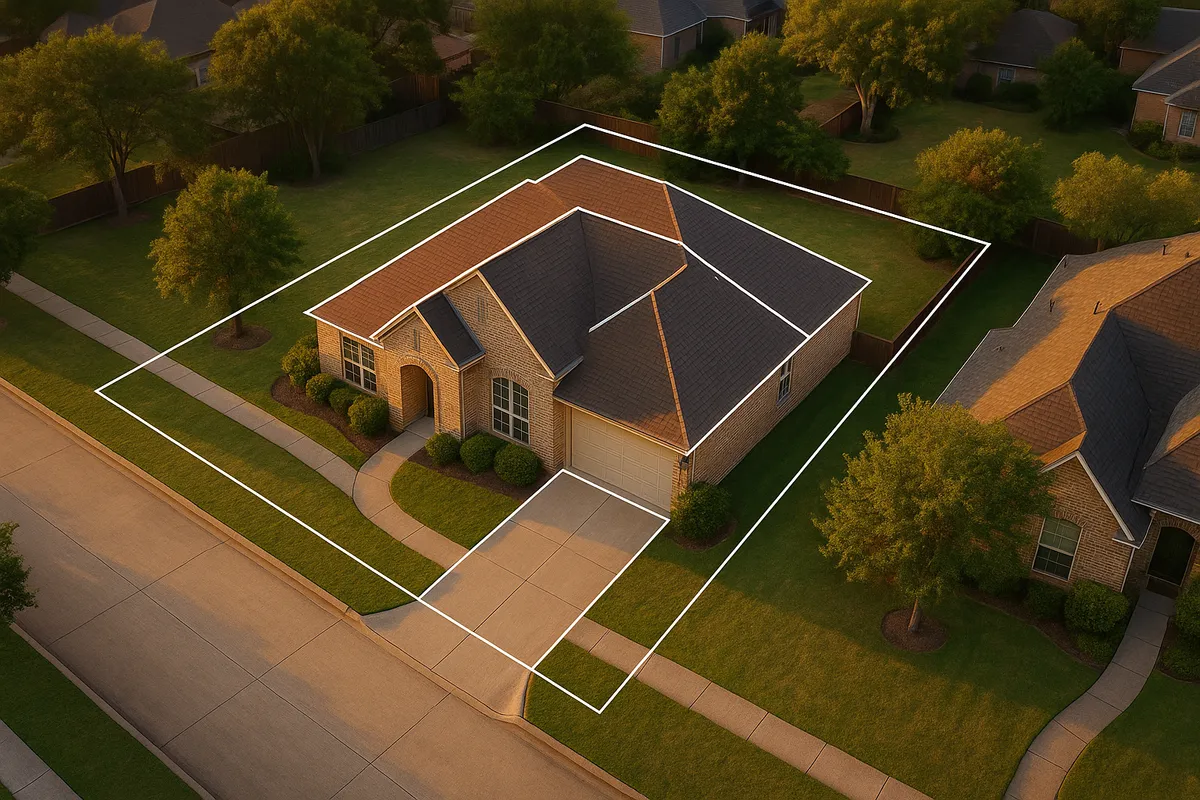
Residential Site Plans and Permits in Frisco, TX
Frisco, Texas has transformed from a small farming community into one of the most dynamic suburbs in the Dallas-Fort Worth Metroplex, with a population that has grown exponentially over the past two decades. That rapid growth has made the city's Development Services department one of the busiest in North Texas, processing thousands of residential permit applications every year. Whether you're planning a backyard pool, a new deck, an accessory dwelling unit, or a room addition, Frisco requires a properly prepared site plan as part of your permit application. Getting that site plan right the first time is the difference between a smooth approval and weeks of costly back-and-forth with city reviewers.
What Is a Residential Site Plan and Why Does Frisco Require One?
A residential site plan is a scaled, bird's-eye drawing of your property that shows the boundaries of your lot, the location of existing structures, and the proposed location of any new construction. Frisco's Development Services department uses your site plan to verify that your project complies with the city's zoning ordinance, building setbacks, impervious surface limits, drainage requirements, and utility easements before issuing a permit.
Without an accurate site plan, reviewers cannot confirm that your project fits within the allowable building envelope, which means your application will be returned for corrections. Frisco operates under the International Building Code and International Residential Code as adopted and locally amended by the city, so your site plan must reflect those standards.
Which Residential Projects Require a Permit in Frisco?
Frisco requires permits for a wide range of residential improvements. The following projects almost always trigger a permit and site plan requirement:
- Decks and patios: Any deck attached to the home or elevated more than 30 inches above grade requires a building permit and site plan showing setbacks from property lines.
- Swimming pools and spas: In-ground and above-ground pools over a certain size require a permit, site plan, electrical inspection, and barrier/fence compliance review.
- Fences: Fences over six feet in height require a permit. Even standard six-foot privacy fences in Frisco must comply with visibility triangle rules near driveways and intersections.
- Storage sheds and accessory structures: Sheds larger than 200 square feet typically require a permit and must meet setback requirements. Smaller structures may still need to comply with zoning rules.
- Room additions: Any addition to the footprint or living space of a home requires a full building permit, structural review, and a site plan showing the new footprint.
- Accessory Dwelling Units (ADUs): Frisco has adopted regulations allowing ADUs on qualifying single-family lots. These projects require a permit, site plan, and compliance with specific lot coverage and setback rules.
- Driveways and impervious surfaces: Expanding or replacing a driveway may require a permit and must comply with Frisco's impervious surface coverage limits, which are designed to manage stormwater runoff.
- Garage conversions: Converting an attached garage to living space requires a permit and must meet energy, egress, and insulation code requirements.
Frisco Zoning and Local Considerations
Frisco's zoning is managed through its Unified Development Code (UDC), which divides the city into residential districts with different standards. Most single-family neighborhoods fall under SF-7, SF-10, or similar designations, each with its own lot coverage limits and setback requirements.
A few local considerations are especially important for Frisco homeowners:
- HOA requirements: A large percentage of Frisco neighborhoods are governed by homeowners associations. HOA approval is separate from city permits and is often required before or alongside your permit application. Always check with your HOA before submitting to the city.
- Floodplain awareness: Portions of Frisco lie within FEMA-designated Special Flood Hazard Areas, particularly near Panther Creek and other drainage corridors. Projects in or near these areas may require a floodplain development permit in addition to a standard building permit. You can check your property's flood zone status at the FEMA Flood Map Service Center.
- Impervious surface limits: Frisco enforces impervious cover maximums on residential lots to protect its stormwater system. Adding a pool deck, patio, or driveway extension could push your lot over the allowable limit, so calculating your existing coverage before designing your project is essential.
- Tree preservation: Frisco has a tree preservation ordinance that protects heritage trees above a certain caliper. Removing or damaging a protected tree without authorization can result in significant fines.
Typical Setback Requirements in Frisco
Setbacks define how close a structure can be to your property lines. In Frisco, setbacks vary by zoning district and structure type, but the following ranges are typical for standard single-family residential zones:
- Front yard setback: 20 to 25 feet from the front property line
- Side yard setback: 5 to 7 feet from each side property line (may be greater on corner lots)
- Rear yard setback: 10 to 20 feet from the rear property line
- Accessory structures: Often have reduced setbacks (as little as 5 feet from rear and side lines) but cannot be placed in front yards
Always verify the exact setbacks for your specific zoning district by consulting the Frisco Unified Development Code or contacting Development Services directly, as planned developments (PDs) may have customized standards that override the base district rules.
How to Submit a Permit Application in Frisco
Frisco processes residential permit applications through its online permitting portal, which allows homeowners and contractors to submit documents, pay fees, and track review status without visiting City Hall in person.
- Gather your documents. Prepare a scaled site plan, construction drawings, product specifications (for mechanical or electrical work), and any HOA approval letters if required.
- Create an account and start your application. Visit the Frisco Development Services portal and register or log in to begin your permit application.
- Upload your site plan and supporting documents. Ensure your site plan includes your lot dimensions, property lines, existing structures, proposed structures, setback dimensions, north arrow, and scale bar.
- Pay the permit fee. Fees vary based on project type, valuation, and square footage. Residential permit fees in Frisco typically range from under $100 for simple projects to several hundred dollars for pools or additions.
- Wait for plan review. Standard residential plan review in Frisco typically takes 5 to 15 business days, depending on project complexity and current application volume. Incomplete applications are returned quickly, which is why accuracy on the first submission matters.
- Respond to correction notices. If reviewers identify issues, you will receive a correction list through the portal. Address each item and resubmit promptly to avoid delays.
- Schedule inspections. Once your permit is issued, you must schedule required inspections at key stages of construction through the city's inspection scheduling system.
Common Reasons Permit Applications Are Rejected in Frisco
Frisco's plan reviewers are thorough, and incomplete or inaccurate applications are a leading cause of delays. The most common rejection reasons include:
- Site plan is not drawn to scale or lacks a scale bar
- Missing dimensions for proposed structures or setbacks
- Proposed structure encroaches into a required setback or utility easement
- Impervious surface calculations are missing or exceed allowable limits
- Drainage or grading information is absent for larger projects
- Structural details or engineering stamps are missing for decks, additions, or pools
- Application does not address floodplain requirements when the property is in or near a flood zone
Get Your Frisco Site Plan Right the First Time
Preparing an accurate, code-compliant site plan doesn't have to be complicated. Site Plan Creator is designed specifically for homeowners and contractors who need professional-quality site plans without hiring a surveyor or architect for every project. Our easy-to-use tool lets you input your lot dimensions, place structures, and generate a scaled site plan that meets the documentation standards Frisco's Development Services department expects. Start your project with confidence and avoid the delays that come from rejected applications.
Frequently Asked Questions
- Do I need a permit to build a deck in Frisco, TX?
- Yes. In Frisco, any deck attached to your home or elevated more than 30 inches above grade requires a building permit. Your permit application must include a site plan showing the deck's dimensions, its distance from all property lines, and its relationship to the existing house footprint. The deck must comply with setback requirements for your zoning district, which typically means staying at least 5 to 10 feet from rear and side property lines depending on the structure type. Frisco reviews deck permits under the International Residential Code as locally amended. If your deck includes electrical components such as lighting or a hot tub connection, a separate electrical permit is also required. Plan review for a straightforward deck permit typically takes 5 to 10 business days.
- How much does a building permit cost in Frisco, TX?
- Permit fees in Frisco are calculated based on the type of project and its assessed valuation or square footage. For simple residential projects like a small shed or fence, fees may be under $100. Mid-range projects such as a deck or fence replacement typically fall in the $150 to $400 range. Larger projects like swimming pools, room additions, or accessory dwelling units can carry permit fees of $500 to over $1,000 when you factor in plan review fees, inspection fees, and any required engineering review. Frisco's Development Services department publishes a fee schedule on its website, and fees are paid at the time of application submission through the online permitting portal. Always verify current fees directly with the city, as schedules are updated periodically.
- How long does it take to get a residential permit approved in Frisco?
- Standard residential plan review in Frisco typically takes 5 to 15 business days for straightforward projects such as decks, fences, pools, and small additions. More complex projects, including accessory dwelling units or larger structural additions, may take longer if they require engineering review or floodplain analysis. One of the biggest causes of delays is an incomplete or inaccurate application. If your site plan is missing dimensions, lacks a scale, or shows a setback violation, reviewers will issue a correction notice and the clock resets when you resubmit. Submitting a complete and accurate application on the first attempt is the most effective way to minimize your total approval timeline in Frisco.
- What does Frisco require on a residential site plan?
- Frisco's Development Services department requires that a residential site plan include several key elements. Your plan must show the full lot boundary with dimensions, the location and footprint of all existing structures on the property, and the proposed location and dimensions of any new construction. You must also include setback dimensions from the proposed structure to each property line, a north arrow, a written scale and graphic scale bar, and the addresses or lot and block numbers identifying the property. For projects near drainage areas or in flood zones, you may also need to show grading, finished floor elevations, and proximity to FEMA-mapped floodplain boundaries. Utility easements must be shown if they affect the building area.
- Can I draw my own site plan for a permit in Frisco, or do I need a licensed surveyor?
- For many standard residential projects in Frisco, you are not required to hire a licensed surveyor or engineer to produce your site plan. Homeowners and contractors can prepare their own site plans for projects like decks, fences, sheds, and pools, provided the plan is drawn to scale and includes all required information. However, if your project involves structural work such as a room addition or a large deck with complex framing, Frisco may require engineered drawings stamped by a licensed Texas engineer. For properties with unclear boundaries or disputed lot lines, hiring a licensed surveyor to produce a boundary survey before drawing your site plan is strongly recommended. Tools like Site Plan Creator can help you produce a properly scaled, professional-looking site plan for common residential permit applications.
- What are the typical setback requirements for residential properties in Frisco, TX?
- Setbacks in Frisco vary by zoning district, but most standard single-family zones require a front yard setback of 20 to 25 feet, side yard setbacks of 5 to 7 feet, and a rear yard setback of 10 to 20 feet. Corner lots often have larger side setbacks along the street-facing side. Accessory structures like sheds and detached garages typically have reduced setbacks, often 5 feet from the rear and side property lines, but cannot be placed in the front yard. If your neighborhood is part of a Planned Development (PD) zoning district, the PD ordinance may specify different setbacks that override the base zoning standards. Always confirm your specific setbacks by checking the Frisco Unified Development Code or contacting Development Services before finalizing your project design.
- Where do I submit a permit application in Frisco, TX?
- Frisco processes most residential permit applications through its online permitting portal, accessible through the Development Services section of the city's official website at friscotexas.gov. Applicants create an account, complete the application form, upload the required documents including the site plan, and pay fees electronically. In-person submissions may be accommodated at the Development Services office located at 6101 Frisco Square Blvd, but the city strongly encourages online submission for faster processing. Once submitted, you can track the review status of your application, receive correction notices, and schedule inspections all through the same portal. Having your documents organized and your site plan complete before starting the online application will make the submission process significantly faster.
- What happens if I build without a permit in Frisco, TX?
- Building without a required permit in Frisco can result in serious consequences. The city's code enforcement officers can issue a stop-work order, requiring all construction to halt immediately until a permit is obtained. You may also face monetary fines for each day of unpermitted work. Beyond fines, unpermitted structures can create major problems when you sell your home, as title companies and lenders often require permits to be retroactively obtained or unpermitted work to be removed before closing. Retroactive permits, sometimes called after-the-fact permits, typically require opening walls or exposing work for inspection, which can be expensive. In some cases, the city may require that unpermitted structures be demolished entirely. It is always less costly and less stressful to obtain the proper permits before starting construction.
- Are ADUs allowed in Frisco, TX, and what are the rules?
- Frisco does allow accessory dwelling units (ADUs) on qualifying single-family residential lots, but the rules include several important restrictions. ADUs must comply with the city's Unified Development Code, which sets limits on the maximum size of the ADU relative to the primary dwelling, requires the ADU to meet the same setbacks as the primary structure or reduced accessory structure setbacks depending on its configuration, and mandates that the property owner occupy either the primary home or the ADU. Detached ADUs and garage conversions are both possible, but each has different code requirements. A building permit, site plan, and in some cases a zoning review are required before construction begins. Given the complexity of ADU regulations, consulting with Frisco Development Services early in your planning process is highly recommended.
- Does my Frisco property's HOA need to approve my project before the city will issue a permit?
- The City of Frisco does not require HOA approval as a condition of issuing a building permit, but that does not mean you can skip the HOA process. A large majority of Frisco neighborhoods are governed by homeowners associations that have their own architectural review requirements, and many HOAs require approval before any exterior construction begins. Building without HOA approval can result in fines, required removal of the structure, and legal disputes with your association, even if the city has issued a valid permit. It is best practice to submit your project plans to your HOA's architectural review committee and receive written approval before or concurrent with your city permit application. Keep in mind that HOA approval and city permit approval are completely separate processes with different timelines.
How to Create a Site Plan in Frisco
- Confirm Your Permit Requirements: Before drawing anything, determine whether your specific project in Frisco requires a building permit and site plan. Review the Frisco Unified Development Code or contact Development Services at (972) 292-5301 to confirm what documentation is needed for your project type. Check your zoning district to understand applicable setbacks, lot coverage limits, and any Planned Development overlays that may apply to your property. If your property is near a creek or drainage corridor, check FEMA flood maps to determine if a floodplain development permit is also required.
- Prepare Your Site Plan: Create a scaled site plan that shows your full lot boundary with dimensions, all existing structures, the proposed new structure or improvement, setback distances from property lines, a north arrow, and a scale bar. Your plan should also show utility easements and any relevant drainage features. Site Plan Creator makes this step straightforward for homeowners and contractors by providing an easy-to-use drawing tool that produces a properly scaled, permit-ready site plan without requiring CAD software or a surveyor.
- Gather Supporting Documents: In addition to your site plan, Frisco typically requires construction drawings showing structural details, elevations, and materials for projects like decks, additions, and pools. For projects involving electrical, plumbing, or mechanical work, separate trade permits and plans may be needed. If your project is in a neighborhood with an HOA, obtain written architectural approval before submitting to the city. Compile all documents into organized digital files formatted according to the city's upload requirements before starting your online application.
- Submit Your Application Online: Log in to the Frisco Development Services online permitting portal at friscotexas.gov and complete your permit application. Upload your site plan and all supporting documents, verify that your project description is accurate, and pay the required permit fee electronically. Double-check that every required field is complete and every required document is attached before submitting, as incomplete applications are returned without review, resetting your timeline.
- Respond to Plan Review Comments: After submission, Frisco's plan reviewers will examine your application and either approve it or issue a correction notice listing items that must be addressed. Monitor your portal account regularly for status updates. If corrections are required, revise your site plan or documents to address each comment specifically and resubmit as quickly as possible. Prompt, thorough responses to correction notices are the most effective way to minimize total review time and get your permit issued faster.
- Schedule and Pass Inspections: Once your permit is issued, post it at the job site and begin construction only in accordance with the approved plans. Schedule required inspections through Frisco's inspection scheduling system at key milestones, such as footing, framing, rough-in, and final inspection. Do not cover or conceal work before the relevant inspection is completed and approved. After all inspections pass and the final inspection is signed off, your project is officially complete and code-compliant in Frisco.