Site Plan Requirements in Fort Wayne, IN (Permit Guide)
Fort Wayne homeowners need a site plan for most residential building permits, from decks and fences to additions and ADUs. This guide covers Fort Wayne's permit triggers, setback rules, submission process, and how Site Plan Creator can help you get approved faster.
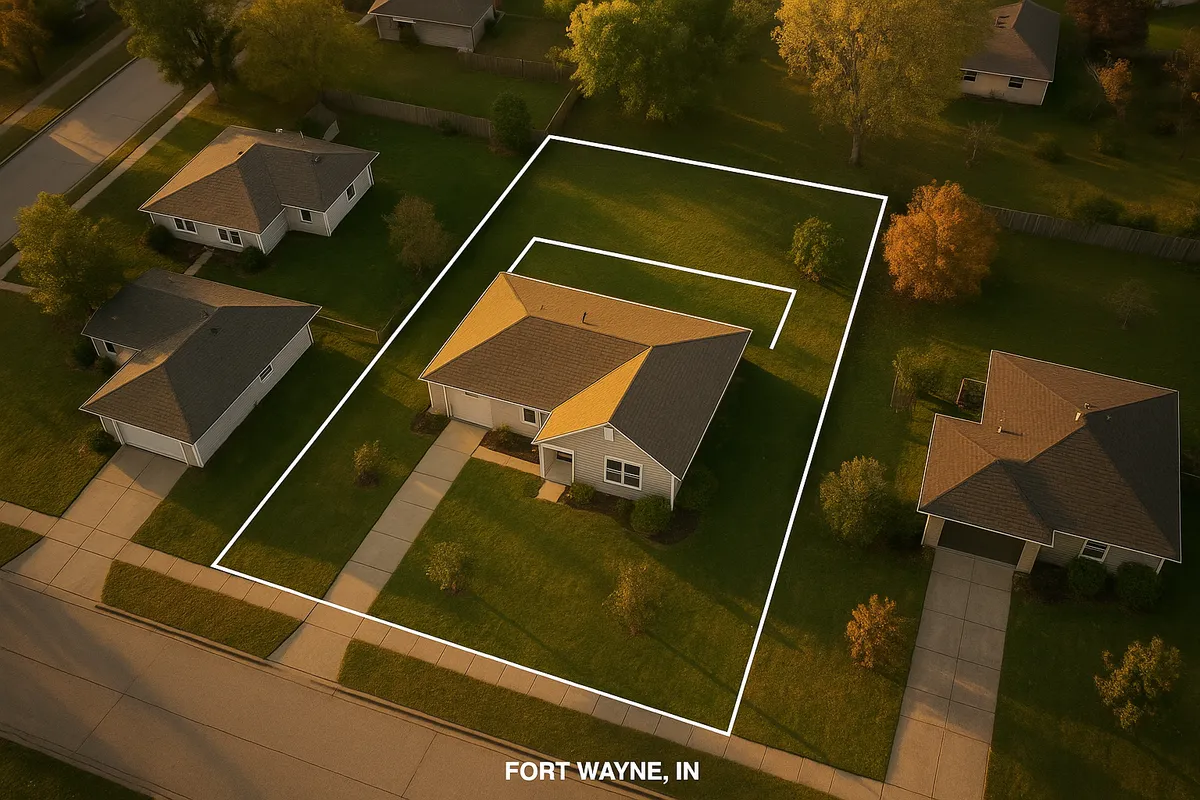
Residential Site Plans and Permits in Fort Wayne, Indiana
Fort Wayne is Indiana's second-largest city and one of the fastest-growing metros in the Midwest. Whether you own a craftsman bungalow near the historic West Central neighborhood, a ranch home in Aboite Township, or a newer build in the Dupont Road corridor, chances are that any meaningful improvement to your property will require a building permit and a professionally prepared site plan. The City of Fort Wayne's Building and Development Services department enforces the Indiana Building Code and local zoning ordinances to ensure that new structures, additions, and accessory uses are safe, properly sited, and compatible with surrounding properties. Understanding what triggers a permit and what your site plan must show is the first step toward a smooth approval process.
What Is a Residential Site Plan and Why Does Fort Wayne Require One?
A residential site plan is a scaled, bird's-eye drawing of your property that shows the lot boundaries, existing structures, proposed improvements, setback distances, easements, driveways, and other site features. Fort Wayne requires a site plan as part of most building permit applications so that plan reviewers can verify compliance with the Unified Development Ordinance (UDO) and the Indiana Residential Code before any work begins.
Without a site plan, the city cannot confirm that your proposed deck, shed, pool, or addition will meet minimum setback distances, impervious surface limits, or floodplain restrictions. A complete, accurate site plan is the single most effective way to avoid delays and rejections during the plan review process.
Permit Triggers: What Requires a Permit in Fort Wayne?
The following residential projects almost always require a building permit and a site plan in Fort Wayne:
- Decks and patios: Any attached deck or elevated platform typically requires a permit. Ground-level patios under a certain square footage may be exempt, but always confirm with the Building and Development Services office.
- Detached sheds and accessory structures: Structures over 200 square feet generally require a permit. Smaller sheds may still need zoning approval depending on placement.
- Swimming pools: Both in-ground and above-ground pools over 24 inches deep require a permit and must meet barrier and setback requirements.
- Fences: Fences over 6 feet in height typically require a permit. Placement near easements, corner lots, and sight-triangle areas requires careful review.
- Additions and room expansions: Any addition to a home's footprint requires a full permit package including a site plan.
- Accessory Dwelling Units (ADUs): Fort Wayne's UDO allows ADUs in certain residential zoning districts. A site plan is required to demonstrate compliance with lot coverage, setbacks, and parking requirements.
- Driveways and curb cuts: New driveways or expansions that require a curb cut on a public street require a separate right-of-way permit in addition to any zoning review.
- Garage conversions: Converting an attached garage to living space or an ADU requires a permit and may trigger updated site plan requirements.
Fort Wayne Zoning Quirks and Local Considerations
Fort Wayne's Unified Development Ordinance divides the city into a range of residential zoning districts, from R1 (low-density single-family) through higher-density residential classifications. A few local factors deserve special attention:
Floodplain and stormwater: Portions of Fort Wayne lie within FEMA-designated Special Flood Hazard Areas, particularly near the St. Marys, St. Joseph, and Maumee rivers. Properties in these zones must comply with the city's floodplain management regulations, and any new construction or substantial improvement may require an Elevation Certificate. You can check your flood zone status at the FEMA Flood Map Service Center.
Historic districts: The West Central, Bloomingdale, and other historic neighborhoods in Fort Wayne may have additional design review requirements administered through the Historic Preservation Commission. Exterior changes visible from the street can require a Certificate of Appropriateness before a building permit is issued.
HOA covenants: Many newer subdivisions in Fort Wayne have homeowners association (HOA) covenants that impose stricter setbacks, material requirements, or approval processes than city code. Always check your HOA documents before submitting to the city.
Impervious surface limits: Certain zoning districts cap the percentage of a lot that can be covered by hard surfaces. Adding a large patio, driveway expansion, or accessory structure can push a property over the limit, requiring stormwater mitigation measures.
Typical Setback Ranges in Fort Wayne
Setback requirements vary by zoning district, but the following ranges are representative of common residential zones in Fort Wayne:
- Front yard setback: 20 to 30 feet from the front property line (varies by district and street classification)
- Side yard setback: 5 to 10 feet per side for principal structures; accessory structures may be allowed closer to side lot lines in some districts
- Rear yard setback: 20 to 25 feet for principal structures; accessory structures often have a reduced rear setback of 3 to 5 feet
- Corner lots: Additional setbacks apply to the street-facing side yard, often matching or approaching the front yard setback requirement
Always verify your specific setbacks using the Fort Wayne Unified Development Ordinance or by contacting the Planning and Zoning division directly, as setbacks can differ based on your exact zoning classification and any applicable overlay districts.
The Fort Wayne Permit Submission Process
Fort Wayne processes most residential building permits through its Building and Development Services department. Here is a general overview of the process:
- Determine your zoning district and applicable requirements by looking up your parcel on the city's online GIS or contacting Planning and Zoning.
- Prepare your permit application and site plan. The site plan must be drawn to scale and include lot dimensions, structure footprints, setback measurements, easements, north arrow, and scale bar.
- Submit your application. Fort Wayne accepts permit applications online through its citizen self-service portal as well as in person at the Building and Development Services office at Citizens Square.
- Pay the permit fee. Fees are based on the valuation of the project and the type of work. Residential permit fees typically range from modest flat fees for simple accessory structures to several hundred dollars for larger additions.
- Plan review. Simple residential projects may be reviewed within 5 to 10 business days. More complex projects, or those requiring zoning variance or floodplain review, can take several weeks.
- Permit issuance and inspections. Once approved, you receive your permit and can begin work. Inspections are required at key stages (footings, framing, final) and must be scheduled through the city's inspection scheduling system.
For the most current fee schedules and submittal checklists, visit the City of Fort Wayne Building and Development Services page. Indiana's statewide building code framework is administered by the Indiana Fire Prevention and Building Safety Commission.
Common Reasons Fort Wayne Permit Applications Get Rejected
Plan reviewers in Fort Wayne frequently flag the following issues:
- Missing or incorrect setback dimensions: Failing to label the distance from the proposed structure to all property lines is one of the most common errors.
- No scale or inconsistent scale: A site plan must be drawn to a stated scale (such as 1 inch = 20 feet) and the dimensions must match the graphic.
- Easements not shown: Utility and drainage easements recorded on your plat must appear on the site plan. Structures cannot encroach on easements.
- Lot coverage not calculated: If your district has an impervious surface or lot coverage limit, you must show the calculation.
- Floodplain issues not addressed: Properties in or near a floodplain must include additional documentation.
- Incomplete project description: The permit application must clearly describe the scope of work, materials, and intended use.
- Missing signatures or notarization: Some applications require owner signatures and, in certain cases, notarized affidavits.
Get Your Fort Wayne Site Plan Right the First Time
Preparing a compliant site plan does not have to be complicated or expensive. Site Plan Creator is an online tool built specifically for homeowners and small contractors who need a professional, permit-ready site plan without hiring a surveyor or architect for a straightforward residential project. You enter your property dimensions, place your existing and proposed structures, and the tool generates a scaled, labeled site plan you can download and submit to Fort Wayne's Building and Development Services office.
Whether you are building a backyard deck in Georgetown Square, adding a storage shed in Waynedale, or converting a garage into an ADU near downtown Fort Wayne, Site Plan Creator helps you produce the documentation you need to move your project forward with confidence. Start your site plan today at siteplancreator.com and avoid the back-and-forth of a rejected application.
Frequently Asked Questions
- Do I need a permit to build a deck in Fort Wayne, IN?
- Yes. In Fort Wayne, any attached deck or raised platform structure requires a building permit from the Building and Development Services department. Your permit application must include a site plan showing the deck's dimensions, its distance from all property lines, and its relationship to the existing home. Ground-level patios that are not attached to the house and do not require structural footings may sometimes be exempt, but the threshold can depend on your specific zoning district. It is always best to call Building and Development Services at (260) 427-1100 or check their online portal before starting work, because building without a required permit can result in stop-work orders, fines, and mandatory removal of the unpermitted structure.
- How much does a building permit and site plan cost in Fort Wayne?
- Permit fees in Fort Wayne are generally calculated based on the declared valuation of the project. Simple accessory structure permits (such as a small shed) may carry a flat fee in the range of $50 to $150, while permits for additions, pools, or ADUs can run several hundred dollars or more depending on project value. Plan review fees are often included in the base permit fee for straightforward residential projects. Creating your own site plan using an online tool like Site Plan Creator can significantly reduce costs compared to hiring a surveyor or draftsperson for basic projects. Always verify current fees with Fort Wayne's Building and Development Services office, as fee schedules are updated periodically.
- How long does it take to get a building permit approved in Fort Wayne?
- For straightforward residential projects in Fort Wayne, such as a shed, fence, or simple deck, plan review typically takes 5 to 10 business days after a complete application is submitted. More complex projects, including home additions, ADUs, or anything requiring a variance or floodplain review, can take several weeks. Applications that are incomplete or contain errors in the site plan are returned for correction, which restarts the review clock. Submitting a complete, accurate, and properly scaled site plan from the start is the most effective way to minimize your wait time. Fort Wayne also offers an online submission portal that can speed up the intake process compared to in-person drop-off.
- What does Fort Wayne require on a residential site plan?
- Fort Wayne's Building and Development Services generally requires a residential site plan to include: the legal description or address of the property, lot boundary dimensions, the location and footprint of all existing structures on the lot, the location and dimensions of the proposed structure, setback distances from the proposed structure to all property lines, the location of any recorded easements, a north arrow, a graphic scale and written scale (such as 1 inch = 20 feet), and the driveway location. For projects near floodplains, base flood elevation data may also be required. More complex projects, such as ADUs or major additions, may need additional details like grading plans or impervious surface calculations.
- Can I draw my own site plan in Fort Wayne, or do I need a licensed surveyor?
- For most standard residential projects in Fort Wayne, such as a deck, shed, pool, or fence, you are not required to hire a licensed surveyor or engineer to produce your site plan. Homeowners and contractors can create their own site plans as long as the drawing is accurate, drawn to scale, and includes all the information required by Building and Development Services. Online tools like Site Plan Creator are designed specifically for this purpose, allowing you to produce a professional, permit-ready site plan without specialized drafting skills. However, for larger or more complex projects, or if your property has unusual boundaries or floodplain issues, consulting a licensed surveyor or civil engineer is strongly recommended.
- What are the setback requirements for residential properties in Fort Wayne?
- Setback requirements in Fort Wayne vary by zoning district and structure type. In common single-family residential districts, front yard setbacks typically range from 20 to 30 feet from the front property line. Side yard setbacks for principal structures are generally 5 to 10 feet, while rear yard setbacks are commonly 20 to 25 feet. Accessory structures like sheds may be permitted closer to rear and side lot lines, sometimes as little as 3 feet, depending on the district. Corner lots face additional setbacks on the street-facing side. Always verify your exact setbacks through Fort Wayne's Unified Development Ordinance or by contacting the Planning and Zoning division, since overlay districts and plat conditions can create site-specific variations.
- Where do I submit a site plan and permit application in Fort Wayne?
- Fort Wayne accepts residential building permit applications both online and in person. The online submission portal is available through the city's citizen self-service system on the Fort Wayne website, allowing you to upload your site plan, application forms, and supporting documents without visiting City Hall. In-person submissions are accepted at the Building and Development Services office located at Citizens Square, 200 E. Berry Street, Suite 405, Fort Wayne, IN 46802. Online submission is generally faster for intake and is recommended for straightforward residential projects. You can reach the office by phone at (260) 427-1100 to confirm current submission requirements and office hours before your visit.
- What happens if I build without a permit in Fort Wayne?
- Building without a required permit in Fort Wayne is a violation of the Indiana Building Code and local ordinances. If an unpermitted structure is discovered, the city can issue a stop-work order immediately halting any ongoing construction. You may be required to apply for a retroactive permit, pay doubled or penalty fees, and potentially remove or modify work that does not comply with code. Unpermitted structures can also create serious problems when you try to sell your home, since title searches and home inspections often reveal permit history. In some cases, lenders and insurers may refuse to cover unpermitted improvements. The safest and most cost-effective approach is always to obtain the proper permit before work begins.
- Does my property in Fort Wayne fall in a floodplain, and how does that affect my permit?
- Portions of Fort Wayne lie within FEMA-designated Special Flood Hazard Areas, particularly along the St. Marys, St. Joseph, and Maumee rivers and their tributaries. If your property is in or near a floodplain, any new construction or substantial improvement may require additional documentation, including an Elevation Certificate prepared by a licensed surveyor. Fort Wayne participates in the National Flood Insurance Program (NFIP), and the city's floodplain administrator reviews permit applications for properties in these zones. You can check your property's flood zone status using the FEMA Flood Map Service Center at msc.fema.gov. Floodplain review adds time to the permit process, so factor this in when planning your project timeline.
- Are ADUs allowed in Fort Wayne, and what site plan is required?
- Accessory Dwelling Units (ADUs) are permitted in certain residential zoning districts in Fort Wayne under the Unified Development Ordinance. Eligible property owners can add a detached backyard cottage, a basement apartment, or convert an attached garage into a secondary living unit, subject to zoning district rules. A complete site plan is required as part of the ADU permit application, showing the lot dimensions, the location of the primary dwelling, the proposed ADU footprint, all setback distances, parking spaces, and utility connections. Lot coverage limits and minimum lot size requirements also apply. Because ADU regulations can be nuanced, it is advisable to contact Fort Wayne's Planning and Zoning division early in the process to confirm your property's eligibility before investing in detailed plans.
How to Create a Site Plan in Fort Wayne
- Confirm Your Zoning and Requirements: Start by identifying your property's zoning district using Fort Wayne's online GIS parcel viewer or by contacting the Planning and Zoning division. Your zoning district determines your setbacks, lot coverage limits, permitted uses, and whether your project requires a variance or special approval. Also check whether your property is in a FEMA floodplain or a historic overlay district, as these add steps to the review process. Gathering this information upfront prevents surprises later and ensures your site plan is tailored to your specific parcel.
- Gather Your Property Documents: Collect your property survey or plat, which shows your lot's legal boundaries, dimensions, and any recorded easements. If you do not have a survey, your deed, mortgage survey, or the Allen County Assessor's records may provide usable dimensions. You will need accurate lot dimensions and the locations of existing structures to create a compliant site plan. Having these documents on hand before you start drawing saves significant time and reduces the risk of errors that could lead to application rejection.
- Create Your Site Plan: Using Site Plan Creator or another drafting tool, produce a scaled site plan that includes your lot boundaries, all existing structures, the proposed project footprint, setback dimensions from all property lines, easements, the driveway, a north arrow, and a written and graphic scale. Make sure all dimensions are accurate and legible. Fort Wayne plan reviewers check that the site plan matches the permit application description, so consistency between your drawing and your written project scope is essential for a smooth review.
- Submit Your Permit Application: Submit your completed permit application, site plan, and any required supporting documents to Fort Wayne's Building and Development Services either through the online citizen self-service portal or in person at Citizens Square, 200 E. Berry Street. Pay the applicable permit fee at the time of submission. Double-check your submittal checklist to ensure nothing is missing, since incomplete applications are returned without review, adding days or weeks to your timeline. Online submission is generally faster and allows you to track your application status digitally.
- Respond to Review Comments and Schedule Inspections: After plan review, you may receive correction comments requesting clarification or revisions to your site plan or application. Address these promptly and resubmit. Once your permit is approved and issued, post it visibly at the job site as required. Schedule required inspections (such as footing, framing, and final inspections) through Fort Wayne's inspection scheduling system at each key stage of construction. Passing all required inspections and receiving a final approval closes out your permit and ensures your project is legally documented.