Site Plan Requirements in Fort Lauderdale, FL (Permit Guide)
Fort Lauderdale homeowners need a site plan for most residential construction projects, from pools and additions to fences and ADUs. This guide explains what Fort Lauderdale requires, typical setbacks, local zoning quirks, and how to navigate the city's permit process efficiently.
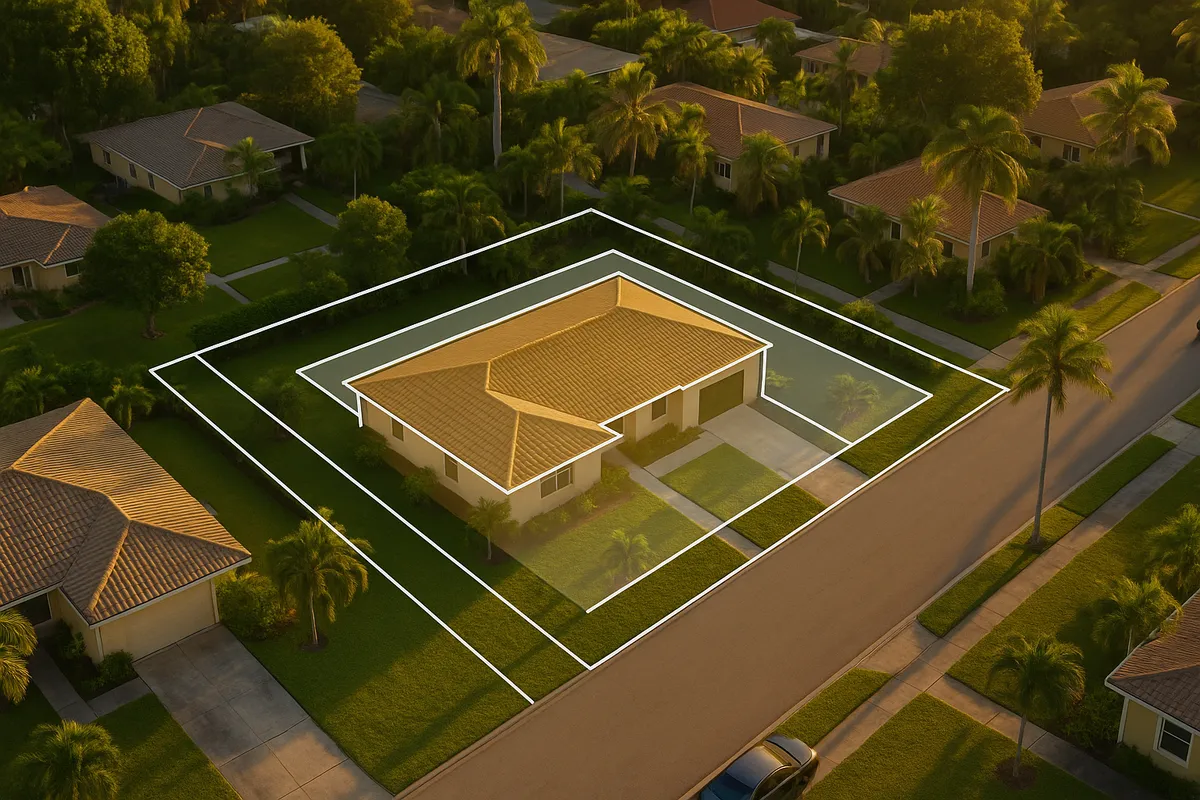
Residential Site Plans and Building Permits in Fort Lauderdale, FL
Fort Lauderdale is one of South Florida's most dynamic cities, known for its intricate canal system, coastal neighborhoods, and a housing stock that ranges from mid-century bungalows in Tarpon River to modern waterfront estates in Las Olas Isles. Whether you're planning a backyard pool, converting a garage into a guest suite, or adding a second story to your home, the City of Fort Lauderdale requires a properly prepared site plan before issuing a building permit. With Broward County's high property values, active code enforcement, and the ever-present reality of FEMA flood zones, getting your site plan right from the start is not just a formality - it's a critical step that protects your investment and keeps your project on schedule.
What Is a Residential Site Plan and Why Does Fort Lauderdale Require One?
A residential site plan is a scaled, bird's-eye drawing of your property that shows the exact location of existing and proposed structures, driveways, fences, pools, and landscaping relative to property lines. Fort Lauderdale's Building Services Division requires a site plan as part of virtually every permit application because it allows plan reviewers to verify that your project complies with the city's Land Development Regulations (LDR), zoning setbacks, lot coverage limits, impervious surface rules, and flood elevation requirements.
Without an approved site plan, the city cannot confirm that a new addition won't encroach on a required setback, that a new pool won't exceed the maximum lot coverage, or that a driveway expansion won't create drainage problems in a neighborhood already prone to flooding. Fort Lauderdale's position on the Atlantic coast and its extensive canal network mean that stormwater management is a top priority, and site plans are one of the city's primary tools for enforcing those standards.
Projects That Typically Require a Permit and Site Plan in Fort Lauderdale
Fort Lauderdale's Building Services Division requires permits - and in most cases, an accompanying site plan - for a wide range of residential projects, including:
- Swimming pools and spas: Any in-ground or above-ground pool requires a permit. Site plans must show pool placement, required setbacks (typically 5 feet from side and rear property lines), and pool barrier/fence details.
- Decks and patios: Attached decks and raised platforms generally require permits. Ground-level concrete patios may require a permit if they affect drainage or impervious surface limits.
- Sheds and accessory structures: Sheds over 100 square feet typically require a permit. Even smaller sheds may need one if they are attached to the main structure or located in a flood zone.
- Room additions and second stories: Any expansion of living space requires full permit review, including structural, electrical, and site plan documentation.
- Accessory Dwelling Units (ADUs): Fort Lauderdale allows ADUs on qualifying single-family lots, subject to size limits, setback requirements, and utility connection rules. A detailed site plan is mandatory.
- Fences: Fences over 6 feet in height require a permit. In some zoning districts and waterfront properties, height limits are lower. Corner lots have specific visibility triangle requirements.
- Driveways: Expanding or repaving a driveway with impervious material requires a permit and may trigger a review of stormwater runoff.
- Roofing and HVAC: While site plans are less commonly required for these, permits are still mandatory in Fort Lauderdale.
Fort Lauderdale Zoning Quirks and Local Considerations
Fort Lauderdale has several local factors that make its permitting environment more complex than many inland Florida cities:
FEMA Flood Zones: A significant portion of Fort Lauderdale lies within FEMA-designated Special Flood Hazard Areas (SFHAs), particularly AE and VE zones along the coast and canals. Projects in these zones must meet Base Flood Elevation (BFE) requirements, which can affect foundation design, finished floor heights, and the placement of mechanical equipment. You can check your property's flood zone status at the FEMA Flood Map Service Center.
Impervious Surface and Lot Coverage Limits: Fort Lauderdale's LDR caps the percentage of a lot that can be covered by impervious surfaces (roofs, driveways, patios, pools). In many RS (Residential Single-Family) districts, total lot coverage for all structures is limited to 40-50%, and impervious surface coverage can be similarly restricted. Adding a pool deck or driveway extension can push a property close to or over these limits.
Waterfront and Riparian Setbacks: Properties along the city's famous canals and the Intracoastal Waterway face additional setback requirements from the mean high-water line. Docks and seawalls are regulated separately and may require Broward County or Florida DEP approvals in addition to city permits.
Historic Districts: Fort Lauderdale has designated historic districts, including portions of Sailboat Bend and the Rio Vista area. Projects in these districts may require review by the Historic Preservation Board before a building permit is issued.
HOA Overlays: Many Fort Lauderdale neighborhoods have active homeowners associations with their own design standards. HOA approval is separate from city permitting but is often required before construction can begin.
Typical Residential Setback Ranges in Fort Lauderdale
Setbacks in Fort Lauderdale vary by zoning district, lot size, and the type of structure being built. The following are general ranges for single-family residential (RS) zones:
- Front setback: 20 to 25 feet from the front property line
- Side setback (interior lots): 5 to 7.5 feet per side
- Side setback (corner lots): 10 to 15 feet on the street-facing side
- Rear setback: 15 to 25 feet from the rear property line
- Accessory structures (sheds, detached garages): Reduced setbacks often apply, typically 5 feet from side and rear lines, but not permitted in the front yard
- Pools: Minimum 5 feet from side and rear property lines in most RS districts
Always verify current setbacks for your specific parcel and zoning district with the City of Fort Lauderdale's Development Services department, as the LDR is periodically updated.
How to Submit a Permit Application in Fort Lauderdale
Fort Lauderdale has invested in digital infrastructure for permit submissions. Here is the typical process for a residential project:
- Determine your zoning and flood zone. Use the city's online GIS tools and the FEMA flood map to understand what regulations apply to your parcel before you prepare any drawings.
- Prepare your site plan and construction documents. Your site plan must show property dimensions, all existing and proposed structures with dimensions, setbacks from all property lines, north arrow, scale, and any special notations required by the LDR (such as flood zone data or impervious surface calculations).
- Submit through the online portal. Fort Lauderdale uses an online permitting portal for most residential permit applications. You can access permit services through the City of Fort Lauderdale Building Services page.
- Pay applicable fees. Permit fees are calculated based on the valuation of the work. Plan review fees are typically assessed separately at the time of submission.
- Respond to plan review comments. First-time approvals are not guaranteed. Reviewers may issue comments requesting corrections or additional information. Responding promptly reduces delays.
- Receive your permit and schedule inspections. Once approved, you receive your permit, post it on-site, and schedule required inspections at each phase of construction.
Plan review timelines for residential projects in Fort Lauderdale typically range from 2 to 6 weeks for straightforward permits, though complex projects or those requiring multiple department reviews (zoning, fire, public works) can take longer. Express review options may be available for an additional fee.
For Florida's statewide building code framework, refer to the Florida Building Commission, which oversees the Florida Building Code adopted by all jurisdictions in the state.
Common Reasons Fort Lauderdale Permit Applications Get Rejected
Understanding why applications fail can save you weeks of back-and-forth with the city's plan review staff. The most common rejection reasons include:
- Incomplete or unscaled site plans: Drawings must be to scale and show all required dimensions and setbacks.
- Missing flood zone data: Projects in FEMA flood zones must include BFE information and demonstrate compliance.
- Setback violations: Proposed structures shown too close to property lines are a leading cause of rejection.
- Exceeding lot coverage or impervious surface limits: Calculations must be shown on the plan.
- Missing signatures or certifications: Some projects require a licensed surveyor, engineer, or architect to sign and seal documents.
- Inconsistent information: Discrepancies between the site plan, floor plans, and permit application forms trigger immediate review comments.
Start Your Fort Lauderdale Site Plan with Site Plan Creator
Preparing a permit-ready site plan for your Fort Lauderdale property does not have to be complicated or expensive. Site Plan Creator gives homeowners, contractors, and designers an intuitive online tool to produce professional, scaled site plans that meet local building department standards. Whether you're planning a pool in Coral Ridge, an ADU in Progresso Village, or a deck addition in Victoria Park, Site Plan Creator helps you get your drawings right the first time - saving you time, money, and frustration at the permit counter.
Frequently Asked Questions
- Do I need a permit to build a pool in Fort Lauderdale?
- Yes, any swimming pool or spa installation in Fort Lauderdale requires a building permit, regardless of whether it is in-ground or above-ground. As part of the permit application, you must submit a site plan showing the pool's location on the lot, its distance from all property lines, and the required pool barrier or fence. In most single-family residential zones, pools must be set back at least 5 feet from side and rear property lines. If your property is in a FEMA Special Flood Hazard Area, which is common in Fort Lauderdale given its coastal location and canal network, you will also need to demonstrate that the pool and surrounding deck comply with Base Flood Elevation requirements. Failure to obtain a permit can result in fines, a stop-work order, and complications when you sell the property.
- How long does it take to get a building permit approved in Fort Lauderdale?
- For straightforward residential projects in Fort Lauderdale, such as a fence, shed, or simple deck, plan review typically takes 2 to 4 weeks after a complete application is submitted. More complex projects, including room additions, ADUs, pools in flood zones, or anything requiring review by multiple departments (zoning, fire, public works), can take 4 to 8 weeks or longer. Fort Lauderdale offers an online permitting portal that allows applicants to track the status of their review and respond to comments digitally, which can help speed up the process. Submitting a complete, accurate site plan the first time is the single best way to avoid delays. Incomplete applications or plans with setback errors are the most common causes of extended timelines.
- What needs to be on a site plan for a Fort Lauderdale building permit?
- Fort Lauderdale's Building Services Division requires site plans to include the following elements at a minimum: the property's legal dimensions and lot size, the location and footprint of all existing structures (house, garage, sheds), the location and footprint of all proposed structures or improvements, distances from all structures to every property line (setbacks), a north arrow, a stated drawing scale, the street address and parcel identification number, and any flood zone notations if the property is in a FEMA-designated area. For projects involving impervious surfaces such as driveways or pool decks, you must also include an impervious surface coverage calculation. Some projects, particularly those in historic districts or waterfront areas, may require additional documentation or signatures from a licensed professional.
- Can I draw my own site plan in Fort Lauderdale, or do I need a licensed surveyor?
- For many routine residential permits in Fort Lauderdale, such as fences, small sheds, or simple patio covers, you are not required to hire a licensed surveyor or engineer to prepare the site plan. However, the plan must still be accurate, to scale, and include all required information. For larger or more complex projects, including room additions, ADUs, structural work, or anything in a FEMA flood zone, Fort Lauderdale may require that plans be signed and sealed by a licensed Florida architect, engineer, or surveyor. When in doubt, contact the Building Services Division before you invest time in preparing drawings. Using an online tool like Site Plan Creator can help you produce a professional, scaled site plan that meets the city's standards for simpler permit applications.
- What are the setback requirements for fences in Fort Lauderdale?
- In Fort Lauderdale, fences up to 6 feet in height are generally permitted in side and rear yards without a permit, but fences over 6 feet require a building permit. Front yard fences are subject to stricter height limits, typically no more than 4 feet in most residential zones. Corner lots have additional restrictions related to sight visibility triangles at intersections, which limit fence height near the street corners to ensure driver safety. Waterfront properties along Fort Lauderdale's canals or the Intracoastal Waterway may face additional restrictions on fence placement near the water's edge. If your neighborhood has an HOA, the association may impose height or material requirements that are stricter than the city's minimums. Always check with the city's Zoning Division for your specific parcel before installing any fence.
- What are the rules for building an ADU in Fort Lauderdale?
- Fort Lauderdale permits Accessory Dwelling Units (ADUs) on qualifying single-family residential lots, in line with Florida's statewide push to expand housing options. To qualify, the primary lot must meet minimum size requirements, and the ADU must comply with the city's Land Development Regulations regarding setbacks, height, and lot coverage. ADUs are typically limited in size relative to the main dwelling, often capped at around 750 to 1,000 square feet depending on the zoning district. A detailed site plan showing the ADU's location, setbacks, parking provisions, and utility connections is required as part of the permit application. Garage conversions to ADUs are permitted in some zones but may require additional review. Because ADU regulations have been actively updated in recent years, confirm current standards with Fort Lauderdale's Development Services department before designing your unit.
- How much does a building permit cost in Fort Lauderdale?
- Building permit fees in Fort Lauderdale are calculated based on the estimated value of the construction work, using a fee schedule established by the city. As a general reference, fees for a typical residential project might range from a few hundred dollars for a simple fence or shed to several thousand dollars for a pool, addition, or ADU. Plan review fees are assessed separately and are typically a percentage of the permit fee. Additional fees may apply for projects requiring zoning review, fire department review, or public works review. Fort Lauderdale also charges a state surcharge on all permits, which goes to the Florida Building Commission. For an accurate fee estimate, use the fee calculator on the city's online permitting portal or contact the Building Services Division directly before submitting your application.
- What happens if I build without a permit in Fort Lauderdale?
- Building without a required permit in Fort Lauderdale is a serious violation that can have significant consequences. The city's Code Enforcement Division actively investigates unpermitted construction, often in response to neighbor complaints or during routine inspections. If unpermitted work is discovered, the city can issue a stop-work order, require you to demolish the structure or restore the property to its original condition, and assess substantial fines that can accrue daily. You may also be required to obtain an after-the-fact permit, which often involves more extensive inspections and documentation than a standard permit. Unpermitted work also creates problems when you sell your home, as title companies and buyers' inspectors routinely flag open permits and code violations. In flood-prone Fort Lauderdale, unpermitted work can also void your flood insurance coverage.
- Does my Fort Lauderdale property need a flood elevation certificate for a permit?
- If your Fort Lauderdale property is located in a FEMA Special Flood Hazard Area (SFHA), which includes AE and VE flood zones that cover large portions of the city, you will likely need a flood elevation certificate as part of your permit application for new construction or substantial improvements. A flood elevation certificate documents the elevation of your structure's lowest floor relative to the Base Flood Elevation (BFE) established by FEMA. This document is prepared by a licensed Florida surveyor and is required to demonstrate compliance with the National Flood Insurance Program (NFIP) regulations that Fort Lauderdale has adopted. The certificate is also important for determining your flood insurance premium. You can check your property's flood zone designation at the FEMA Flood Map Service Center at msc.fema.gov.
- Where do I submit a permit application in Fort Lauderdale?
- Fort Lauderdale accepts permit applications through its online permitting portal, which is the preferred and most efficient submission method for most residential projects. You can access the portal and find application forms through the City of Fort Lauderdale Building Services Division website. In-person submissions are also accepted at the Building Services offices located at 700 NW 19th Avenue in Fort Lauderdale. For complex projects or those requiring pre-application meetings, it is advisable to contact the Development Services department in advance to confirm what documents are needed and whether an in-person consultation is recommended. The online portal allows you to track your application status, receive reviewer comments, upload revised documents, and pay fees electronically, making it the most convenient option for most applicants.
How to Create a Site Plan in Fort Lauderdale
- Research Your Zoning and Flood Zone: Before drawing anything, look up your Fort Lauderdale parcel's zoning district using the city's online GIS mapping tool and check your flood zone status at the FEMA Flood Map Service Center. Knowing whether your property is in an RS-8 zone or a FEMA AE flood zone will determine what setbacks, lot coverage limits, and elevation requirements apply to your project. This step prevents costly redesigns later.
- Prepare a Scaled Site Plan: Create a scaled site plan that shows your lot dimensions, all existing structures with their distances from property lines, and the proposed improvement with its setbacks clearly labeled. Include a north arrow, scale bar, street address, and any required flood zone notations. For projects in FEMA flood zones, add Base Flood Elevation data. Tools like Site Plan Creator make it easy to produce a professional, permit-ready drawing without hiring a surveyor for simpler projects.
- Gather Supporting Documents: In addition to your site plan, Fort Lauderdale typically requires a completed permit application form, a project description, construction drawings or product specifications (for pools, fences, sheds, or additions), proof of property ownership, and contractor licensing information if you are using a licensed contractor. For ADUs or additions, structural, electrical, and mechanical drawings may also be required. Having everything ready before submission prevents delays.
- Submit Online and Pay Fees: Log into Fort Lauderdale's online permitting portal and upload your complete application package. The portal will calculate your permit fees based on the project's estimated construction value. Plan review fees are assessed at submission. Double-check that all documents are legible, correctly labeled, and complete before finalizing your submission. Incomplete applications are returned without review, restarting your timeline.
- Respond to Plan Review Comments: Fort Lauderdale's plan reviewers will examine your site plan and supporting documents for compliance with the Land Development Regulations, Florida Building Code, and flood zone requirements. If corrections are needed, you will receive written comments through the portal. Respond promptly and address every comment thoroughly. Partial responses or resubmissions that miss a comment will trigger another review cycle and extend your timeline.
- Receive Permit and Schedule Inspections: Once your application is approved, download and print your permit, post it visibly on the job site, and schedule required inspections through the city's inspection scheduling system. Fort Lauderdale requires inspections at specific construction milestones, such as foundation, framing, and final. Work must not proceed past an inspection point until the inspector has signed off. After all inspections pass, you will receive a Certificate of Completion or Occupancy.