What Is an Easement on a Property and How It Shows on a Site Plan
Easements are one of the most misunderstood aspects of property ownership, yet they directly affect what you can build and where. This guide explains what an easement is, the most common types homeowners encounter, and exactly how easements should appear on a professional site plan for permits.
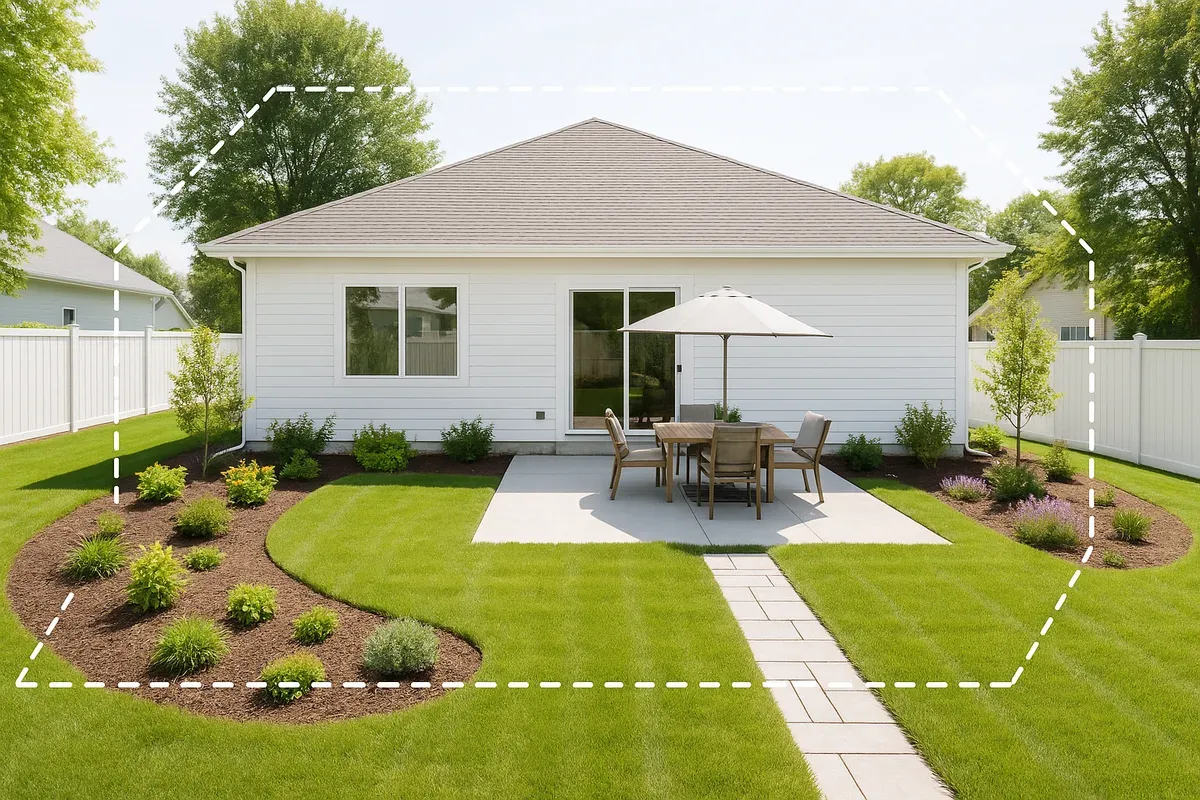
<h2>Understanding Easements: Why Every Property Owner Needs to Know This</h2>
<p>You found your dream property, closed on the deal, and now you're ready to build that garage, add a fence, or put in a pool. Then your contractor mentions something about an easement running along the back of your lot, and suddenly the project feels a lot more complicated. Sound familiar?</p>
<p>Easements are among the most frequently misunderstood elements of property ownership. They are invisible on the ground, often buried in title documents, and yet they carry real legal weight that can stop a construction project in its tracks, trigger costly removal orders, or create disputes with neighbors and utility companies. Understanding what an easement is, what types exist, and how they must be represented on a site plan is not just useful knowledge. It is essential knowledge for any homeowner, developer, or contractor navigating the permit process.</p>
<p>This guide breaks down everything you need to know about easements, from the legal basics to the practical details of how a utility easement or access easement should appear on a permit-ready site plan.</p>
<hr>
<h2>What Is an Easement on a Property?</h2>
<p>An <strong>easement</strong> is a legal right that allows a person, company, or government entity to use a portion of someone else's property for a specific, defined purpose. The property owner retains ownership of the land, but the easement holder has a legally protected right to use that portion of it.</p>
<p>Think of it this way: you own the land, but someone else has a claim on how part of it can be used. That claim runs with the land, meaning it transfers to new owners when the property is sold. You cannot simply ignore an easement because you did not create it or were not aware of it at closing.</p>
<p>Easements are created through several mechanisms:</p>
<ul>
<li><strong>Written agreements</strong> recorded in the county deed records</li>
<li><strong>Plat maps</strong> that establish easements at the time of subdivision</li>
<li><strong>Prescriptive use</strong> (similar to adverse possession, when someone uses land openly for a statutory period)</li>
<li><strong>Necessity</strong> (when a landlocked parcel requires access across an adjacent property)</li>
<li><strong>Condemnation</strong> by a government or utility authority</li>
</ul>
<p>Because easements are recorded legal instruments, they show up in title searches and should be disclosed during a <a href="/real-estate">real estate</a> transaction. However, many buyers do not fully understand the implications until they try to build something.</p>
<hr>
<h2>The Most Common Easement Types <a href="/homeowners">Homeowners</a> Encounter</h2>
<p>Not all easements work the same way. The type of easement on your property determines who can use it, what they can do there, and what restrictions apply to you as the landowner.</p>
<h3>Utility Easements</h3>
<p>This is by far the most common type of easement on residential property. Utility easements grant power companies, gas providers, water and sewer authorities, and telecommunications companies the right to install, maintain, and access underground or overhead infrastructure.</p>
<p>Utility easements typically run along the rear or sides of lots and are established when a subdivision is platted. They are often 10 to 20 feet wide, though widths vary. Within a utility easement, you generally cannot:</p>
<ul>
<li>Build permanent structures (garages, sheds, additions)</li>
<li>Install in-ground pools or concrete slabs that would obstruct access</li>
<li>Plant trees with deep root systems that could damage buried lines</li>
</ul>
<p>Fences are sometimes permitted within utility easements, but the utility company retains the right to remove them to access the infrastructure, often without compensation to the homeowner.</p>
<h3>Drainage Easements</h3>
<p>Drainage easements allow stormwater to flow across a property through a defined corridor. They are common in areas with engineered drainage systems, retention ponds, or natural drainage channels. Municipalities and homeowners associations often hold drainage easements to ensure stormwater management infrastructure remains functional.</p>
<p>Building within a drainage easement is almost always prohibited because structures can obstruct water flow and create flooding liability.</p>
<h3>Access Easements (Right-of-Way Easements)</h3>
<p>Access easements give a neighboring property owner, the public, or a government entity the right to cross your land. A classic example is a shared driveway easement between two adjacent lots, or a private road easement that provides a landlocked parcel with access to a public street.</p>
<p>Public right-of-way easements are what allow roads, sidewalks, and bike paths to exist on land that may technically be privately owned. These easements are critically important to understand when calculating setbacks, because local zoning codes often measure setbacks from the right-of-way line, not the physical edge of the pavement.</p>
<h3>Conservation Easements</h3>
<p>Conservation easements are voluntary agreements between a landowner and a land trust or government agency that permanently restrict development on a property to protect natural, agricultural, or scenic resources. They are common on rural and agricultural properties and can significantly limit what can be built.</p>
<p>If you purchase property with a conservation easement, you inherit those restrictions. They do not expire and they do not disappear when the land changes hands.</p>
<h3>Easements by Necessity</h3>
<p>When a parcel of land has no legal access to a public road, a court can establish an easement by necessity across an adjacent property. These are less common in developed suburban areas but arise frequently in rural subdivisions and older land splits.</p>
<h3>Solar and View Easements</h3>
<p>These are negotiated between neighbors and protect one property's access to sunlight or a particular view. They are more common in certain western states and in communities where solar energy systems are prevalent. A solar easement might prevent a neighbor from building a structure or planting trees above a certain height.</p>
<hr>
<h2>Why Easements Matter for Permits and Site Plans</h2>
<p>Here is where the rubber meets the road for anyone pulling a <a href="/construction-permit-site-plans">building permit</a>. Local building departments and planning offices require that easements be accurately shown on a site plan before they will approve a permit. This is not bureaucratic box-checking. It serves a genuine purpose: the reviewer needs to confirm that your proposed construction does not encroach into an easement area.</p>
<p>If your site plan omits an existing easement and the permit is approved based on that incomplete information, you could still face enforcement action later. Utility companies and easement holders can require removal of any structure built within their easement, regardless of whether a building permit was issued.</p>
<p>According to the <a href="https://www.planning.org" rel="nofollow noopener" target="_blank">American Planning Association</a>, accurate representation of encumbrances like easements is a fundamental component of responsible land use planning. Building departments rely on this information to protect both property owners and the public infrastructure that serves entire neighborhoods.</p>
<hr>
<h2>How Easements Appear on a Site Plan</h2>
<p>A professional, permit-ready site plan needs to show easements clearly and accurately. Here is what that looks like in practice.</p>
<h3>Locating Easement Information</h3>
<p>Before you can draw an easement on a site plan, you need to know where it is and what type it is. The best sources for this information are:</p>
<ol>
<li><strong>Your property deed and title report</strong>: The deed often references easements by recording number or describes them in the legal description.</li>
<li><strong>The recorded plat map</strong>: If your property is in a subdivision, the original plat map filed with the county recorder will show all easements established at the time of platting. You can usually find these on your county assessor or recorder's website.</li>
<li><strong>A survey</strong>: A boundary survey or ALTA/NSPS land title survey will show all easements on the property. If you are pulling a permit for a significant project, having a current survey is strongly recommended.</li>
<li><strong>Utility company records</strong>: For utility easements not clearly defined in the plat, the relevant utility company may have records of the easement corridor.</li>
</ol>
<h3>Drawing Easements on a Site Plan</h3>
<p>Once you have the easement location and dimensions, here is how it should appear on your site plan:</p>
<ul>
<li><strong>Dashed or dotted lines</strong>: Easements are conventionally drawn with dashed or dotted lines to distinguish them from solid property boundary lines. This is a standard drafting convention recognized by building departments.</li>
<li><strong>Labeled clearly</strong>: Each easement should be labeled with its type (for example, "10' Utility Easement" or "15' Drainage Easement") and, where available, the recording reference number.</li>
<li><strong>Dimensioned accurately</strong>: The width of the easement should be dimensioned and its position relative to the property line should be clearly shown.</li>
<li><strong>Offset from property lines</strong>: Most easements run parallel to a property boundary. Show the distance from the property line to the edge of the easement and the total easement width.</li>
<li><strong>Shown in relation to proposed construction</strong>: The site plan must clearly show that proposed structures, additions, or improvements are outside the easement area (or, if a variance is being sought, that the encroachment is explicitly noted).</li>
</ul>
<h3>Setbacks vs. Easements: Understanding the Difference</h3>
<p>This is a point of frequent confusion. Setbacks and easements are not the same thing, though both restrict where you can build.</p>
<ul>
<li><strong>Setbacks</strong> are zoning requirements that dictate how far a structure must be from a property line, right-of-way, or other defined boundary. They are established by local zoning ordinances.</li>
<li><strong>Easements</strong> are private or public legal encumbrances on the land that restrict use within a specific corridor.</li>
</ul>
<p>A property might have a 20-foot rear setback and a 10-foot utility easement running along the rear property line. In that case, the easement is contained within the setback zone, and both restrictions apply simultaneously. In other cases, an easement might extend beyond the setback zone, effectively creating a larger no-build area than zoning alone would require.</p>
<p>Your site plan needs to show both setback lines and easement lines as separate, clearly labeled elements.</p>
<hr>
<h2>Reading Easements on a Plat Map</h2>
<p>For most homeowners in platted subdivisions, the plat map is the primary source of easement information. Learning to read a plat map is a valuable skill.</p>
<p>On a typical residential plat, you will see:</p>
<ul>
<li><strong>"U.E." or "Utility Easement"</strong>: Usually shown as a shaded or hatched strip along the rear and side lot lines</li>
<li><strong>"D.E." or "Drainage Easement"</strong>: Often along the rear of lots or following a natural drainage path</li>
<li><strong>"B.S.L." or "Building Setback Line"</strong>: The minimum setback required by the subdivision's governing documents, which may be stricter than zoning</li>
<li><strong>"R.O.W." or "Right-of-Way"</strong>: The public right-of-way for streets, which is wider than the paved surface</li>
</ul>
<p>Plat maps are public records. In most counties, you can access them through the county recorder, assessor, or GIS mapping portal. The Federal Emergency Management Agency's flood map portal is another useful resource when your property is near a floodplain, as flood zones often overlap with drainage easements.</p>
<hr>
<h2>Real-World Scenarios: Easements and Your Building Project</h2>
<p>Let's walk through a few practical scenarios that illustrate why easements matter so much during the permit process.</p>
<h3>Scenario 1: The Backyard Garage</h3>
<p>A homeowner wants to build a detached garage in the rear of their lot. Their zoning allows accessory structures with a 5-foot rear setback. However, the plat shows a 10-foot utility easement running along the rear property line. The homeowner must keep the garage at least 10 feet from the rear property line (due to the easement), not 5 feet (as zoning alone would allow). The site plan must show both the setback line and the easement, and the garage footprint must clear both.</p>
<h3>Scenario 2: The Pool Installation</h3>
<p>A family wants to install an in-ground pool. A drainage easement runs diagonally across the rear corner of their lot. The pool cannot be placed within the drainage easement, which means the pool design must be adjusted to avoid that corridor entirely. The site plan must show the drainage easement with its dimensions and demonstrate that the pool shell, decking, and equipment pad are all outside the easement boundary.</p>
<h3>Scenario 3: The Fence Dispute</h3>
<p>A homeowner installs a 6-foot privacy fence along the rear property line, not realizing a utility easement runs there. The electric utility needs to access a buried transformer and requires the fence to be removed. Because the fence was built within the easement, the utility company has the legal right to remove it, and the homeowner bears the cost of reinstallation. A proper site plan review before the project would have flagged this issue.</p>
<h3>Scenario 4: The ADU Addition</h3>
<p>A property owner wants to add an <a href="/adu-feasibility-software">accessory dwelling unit</a> (ADU) to their property. The proposed location for the ADU footprint overlaps with a 15-foot utility easement along the side property line. The building department rejects the permit application because the site plan shows the structure encroaching into the easement. The owner must either redesign the ADU to fit outside the easement or apply for a formal easement vacation (a legal process to extinguish or relocate the easement, which requires approval from the easement holder).</p>
<hr>
<h2>How to Handle Easements When Preparing a Site Plan</h2>
<p>If you are preparing a site plan for a permit application, here is a practical checklist for handling easements correctly.</p>
<ol>
<li><strong>Pull your plat map</strong>: Get a copy from your county recorder's office or online GIS portal. Identify all easements shown on the plat.</li>
<li><strong>Review your deed and title report</strong>: Look for any easements referenced in the legal description or listed as exceptions in the title commitment.</li>
<li><strong>Check with local utilities</strong>: For utility easements, contact the relevant utility companies to confirm the location and width if it is not clearly defined in the plat.</li>
<li><strong>Obtain a survey if needed</strong>: For larger projects or complex easement situations, a licensed surveyor can locate easements on the ground and provide accurate dimensions.</li>
<li><strong>Draw easements on your site plan</strong>: Use dashed lines, label each easement with its type and width, and dimension its location relative to the property lines.</li>
<li><strong>Show proposed improvements in relation to easements</strong>: Make sure every proposed structure, addition, or improvement is clearly shown outside the easement corridors.</li>
<li><strong>Note any easement conflicts</strong>: If your proposed project comes close to an easement boundary, add a note on the site plan clarifying the clearance distance.</li>
<li><strong>Consult with the building department</strong>: If you are unsure whether a proposed improvement is permissible within or near an easement, call the local building or planning department before submitting. Many departments will do a pre-application review.</li>
</ol>
<p>For guidance on building code compliance and site plan requirements, the <a href="https://www.iccsafe.org" rel="nofollow noopener" target="_blank">International Code Council (ICC)</a> publishes model codes adopted by most jurisdictions, which include provisions related to site plan requirements and setback compliance.</p>
<hr>
<h2>Easement Vacations and Relocations</h2>
<p>Sometimes an easement conflicts with a legitimate development need, and the property owner wants to have it removed or moved. This process is called an <strong>easement vacation</strong> or easement extinguishment.</p>
<p>The process typically involves:</p>
<ul>
<li><strong>Identifying the easement holder</strong>: You must negotiate with the party that holds the easement right (the utility company, the municipality, or a neighboring property owner).</li>
<li><strong>Demonstrating that the easement is no longer needed</strong>: If a utility line has been rerouted, for example, the easement serving the old route may be vacatable.</li>
<li><strong>Filing a formal vacation application</strong>: Most jurisdictions require a formal legal process, often involving a surveyor, a title company, and recording a new document with the county.</li>
<li><strong>Paying associated fees</strong>: Utility companies may charge relocation fees if infrastructure must be moved as part of the vacation.</li>
</ul>
<p>Easement vacations can take months and are not guaranteed. It is always better to design around an easement than to assume a vacation will be approved.</p>
<hr>
<h2>Common Mistakes Homeowners Make With Easements</h2>
<p>Avoiding these pitfalls can save you significant time, money, and legal headaches.</p>
<ul>
<li><strong>Assuming the easement is not a big deal</strong>: Easement holders have legal remedies, including requiring removal of encroachments at your expense.</li>
<li><strong>Relying on a verbal assurance</strong>: A neighbor or even a utility representative telling you verbally that "it should be fine" is not a legal release of easement rights.</li>
<li><strong>Not checking for easements before purchasing</strong>: Always review the title commitment carefully and ask your real estate attorney to explain any easements listed as exceptions.</li>
<li><strong>Submitting a site plan without easements shown</strong>: Building departments will catch this and return your application, delaying your project.</li>
<li><strong>Planting large trees in utility easements</strong>: Root systems can damage buried infrastructure, and utility companies can require removal of vegetation within their easement corridor.</li>
<li><strong>Assuming a survey shows all easements</strong>: A standard boundary survey shows the property lines but may not locate all recorded easements. An ALTA survey is more comprehensive.</li>
</ul>
<hr>
<h2>Conclusion: Easements Are Not Optional on a Site Plan</h2>
<p>Easements are a fundamental part of property law and a non-negotiable element of any professional site plan. Whether you are dealing with a utility easement along the back of your lot, a drainage easement cutting through your yard, or an access easement shared with a neighbor, these legal encumbrances must be accurately represented on your site plan before you submit for a permit.</p>
<p>Ignoring easements does not make them go away. It creates risk: rejected permit applications, costly construction changes, and potential legal disputes with utility companies or neighboring property owners. Understanding what an easement is, where it is located, and how it interacts with your proposed project is the foundation of responsible property planning.</p>
<p>The good news is that creating a permit-ready site plan that properly shows easements, setbacks, building footprints, and property boundaries does not require expensive CAD software or a professional draftsman for every project. <strong><a href="/">Site Plan Creator</a></strong> is a browser-based tool designed specifically for homeowners, <a href="/contractors">contractors</a>, and small developers who need accurate, professional-quality site plans without the complexity or cost of traditional CAD programs. With intuitive drawing tools and the ability to accurately represent easements, setbacks, and property features to scale, Site Plan Creator helps you produce the kind of site plan that building departments expect and approve. Start your site plan today at siteplancreator.com and take the guesswork out of your next permit application.</p>