What Is a Plat Map and How Do You Read One?
A plat map is one of the most important documents in property ownership, yet most homeowners have never learned how to read one. This comprehensive guide breaks down every element of a plat map — from lot lines and easements to subdivision blocks and bearing notations — so you can confidently interpret your property's legal boundaries and use that knowledge when applying for permits.
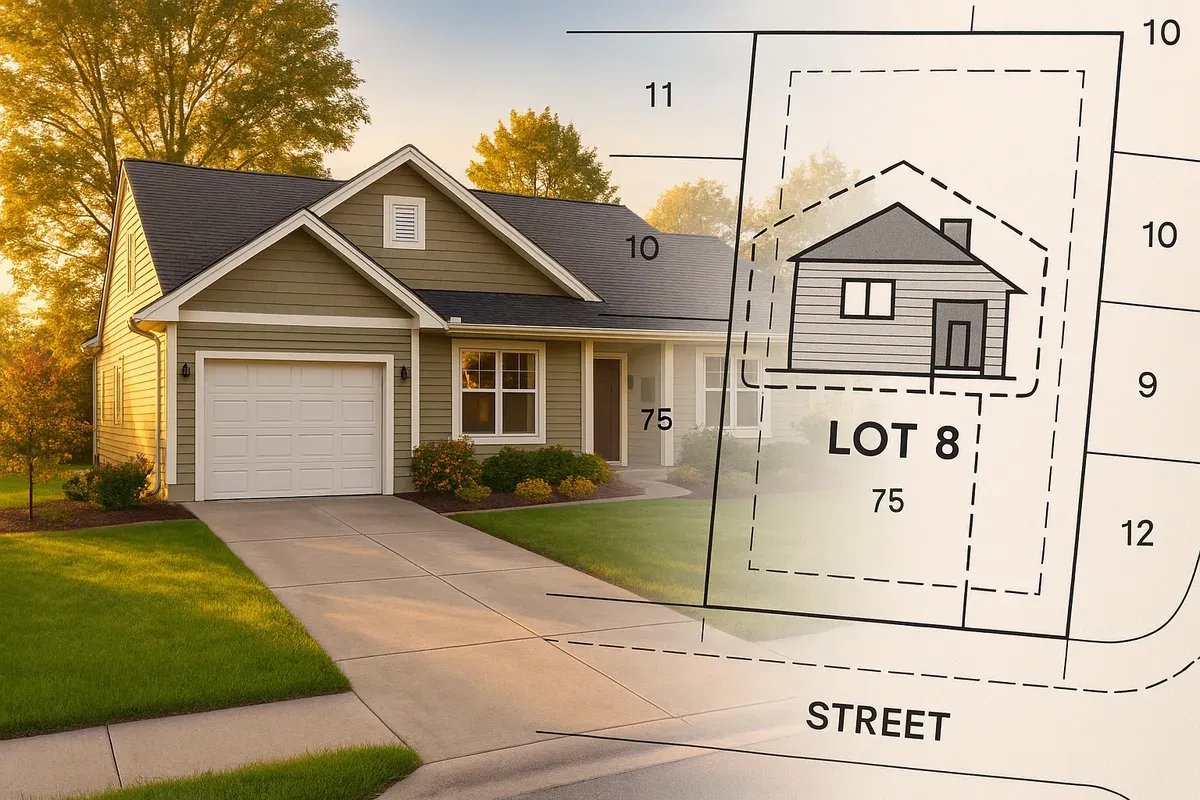
<h2>What Is a Plat Map? A Complete Guide for Homeowners and Property Owners</h2>
<p>If you've ever bought a home, applied for a building permit, or tried to figure out exactly where your property ends and your neighbor's begins, you've likely encountered a plat map — even if you didn't know what you were looking at. These technical documents are the foundation of how land is legally divided, recorded, and understood across the United States, yet most property owners have never had anyone walk them through how to actually read one.</p>
<p>That's a problem, because misunderstanding your plat map can lead to costly mistakes: building a fence on the wrong side of a property line, missing an easement that restricts where you can place a structure, or submitting a permit application with incorrect lot dimensions. Whether you're a first-time homebuyer, a seasoned investor, or someone preparing to build an addition, understanding your plat map is one of the most practical skills you can develop as a property owner.</p>
<p>This guide will explain exactly what a plat map is, walk you through how to read every major element on one, clarify how it differs from a property survey, and show you how this knowledge connects directly to the site plans you'll need for permits and construction projects.</p>
<hr>
<h2>What Is a Plat Map?</h2>
<p>A <strong>plat map</strong> is a scaled, legally recorded diagram that shows how a piece of land has been divided into individual lots, blocks, streets, and easements within a specific subdivision or area. It is created by a licensed land surveyor, approved by local government authorities, and recorded in the public records of the county or municipality where the land is located.</p>
<p>Think of it as the official blueprint of a neighborhood's layout — not the buildings on the land, but the land itself. Every residential subdivision you've ever driven through exists because a developer hired a surveyor to create a subdivision plat, had it approved by the local planning department, and had it recorded at the county courthouse or recorder's office.</p>
<p>Plat maps are used by:</p>
<ul>
<li><strong><a href="/homeowners">Homeowners</a></strong> to understand their exact property boundaries and what restrictions apply to their land</li>
<li><strong>Buyers and <a href="/real-estate">real estate</a> agents</strong> to verify lot size, dimensions, and legal descriptions before closing</li>
<li><strong><a href="/contractors">Contractors</a> and builders</strong> to determine <a href="/setback-guide">setback requirements</a> and buildable areas</li>
<li><strong>Permit offices</strong> to verify that proposed construction complies with recorded easements and lot lines</li>
<li><strong>Title companies</strong> to confirm ownership and identify encumbrances on the property</li>
<li><strong>Municipalities</strong> to manage infrastructure, utilities, and public rights-of-way</li>
</ul>
<p>The <a href="https://www.planning.org" rel="nofollow noopener" target="_blank">American Planning Association</a> recognizes plat maps as a fundamental tool in land use planning, and virtually every jurisdiction in the U.S. requires them as part of the subdivision approval process.</p>
<hr>
<h2>The History and Legal Significance of Plat Maps</h2>
<p>The practice of platting land in America dates back to the Land Ordinance of 1785, which established the Public Land Survey System (PLSS) and created a standardized grid for dividing the country's newly acquired territories into townships, sections, and lots. This system, still in use today, is why so many Midwestern roads run in perfectly straight north-south and east-west lines.</p>
<p>When a plat map is recorded with the county, it becomes a legal document. The lot lines, dimensions, and easements shown on a recorded plat are legally binding. This means that if your plat shows a 10-foot utility easement running along the rear of your property, you cannot legally build a permanent structure within that easement — regardless of what the previous owner told you or what you assumed from looking at the land.</p>
<p>This legal weight is exactly why permit offices, title companies, and courts rely on recorded plats when disputes arise about property boundaries or land use.</p>
<hr>
<h2>Key Elements of a Plat Map</h2>
<p>Reading a plat map for the first time can feel like trying to decode a foreign language. There are numbers, arrows, dashed lines, abbreviations, and symbols that all mean something specific. Here's a breakdown of the most important elements you'll encounter.</p>
<h3>The Title Block and Legend</h3>
<p>Every plat map includes a title block — usually in a corner of the document — that contains critical identifying information:</p>
<ul>
<li>The <strong>name of the subdivision</strong> (e.g., "Maplewood Estates, Unit 3")</li>
<li>The <strong>county, city, and state</strong> where the land is located</li>
<li>The <strong>date the plat was prepared and recorded</strong></li>
<li>The <strong>name and license number</strong> of the surveyor who prepared it</li>
<li>The <strong>scale</strong> of the map (e.g., 1 inch = 50 feet)</li>
</ul>
<p>Always check the scale first. It tells you the relationship between distances on the paper and actual distances on the ground. A plat drawn at 1"=100' will look very different from one drawn at 1"=20', even if they show the same parcel.</p>
<p>The legend (sometimes called the key) explains the symbols and line types used throughout the map. Common symbols include iron pins (used to mark corners), monuments, and centerlines.</p>
<h3>Lot and Block Numbers</h3>
<p>In a subdivision plat, land is organized into <strong>blocks</strong> (larger groupings) and <strong>lots</strong> (individual parcels). Your legal property description will reference these directly — for example, "Lot 14, Block 3, Maplewood Estates, Unit 3, as recorded in Plat Book 22, Page 47, of the public records of [County]." This is the legal description that appears on your deed.</p>
<p>When you look at a plat map, each individual lot is typically labeled with its lot number. Blocks may be labeled with letters or numbers. Streets are usually named and shown as open areas between the blocks.</p>
<h3>Lot Lines and Dimensions</h3>
<p>The lines that define each lot's boundaries are called <strong>lot lines</strong>. Along these lines, you'll find dimension notations showing the length of each boundary segment. These are usually expressed in feet and decimal fractions of a foot (not feet and inches).</p>
<p>For example, a lot line might be labeled "75.00'" meaning it is exactly 75 feet long. On irregularly shaped lots, you may see multiple segments with different lengths along the same boundary.</p>
<p>Pay close attention to the <strong>front lot line</strong> (the boundary facing the street), the <strong>rear lot line</strong> (opposite the street), and the <strong>side lot lines</strong> (the boundaries between you and your neighbors). These directly determine your setback requirements when building.</p>
<h3>Bearings and Angles</h3>
<p>In addition to lengths, lot lines are described using <strong>bearings</strong> — directional notations that tell you the compass direction of each boundary line. A bearing is expressed in a format like "N 45°30'15" E," which means the line runs in a direction 45 degrees, 30 minutes, and 15 seconds east of due north.</p>
<p>For most homeowners, the exact bearing numbers matter less than understanding that they exist and that they define the precise legal direction of each boundary. Surveyors use these bearings, combined with the starting point (a monument or benchmark), to locate your exact property corners on the ground.</p>
<h3>Easements</h3>
<p>Easements are one of the most practically important elements on a plat map, and one of the most commonly overlooked by property owners. An <strong>easement</strong> is a legal right for someone other than the property owner to use a portion of the land for a specific purpose.</p>
<p>Common types of easements shown on plat maps include:</p>
<ul>
<li><strong>Utility easements</strong>: Areas reserved for underground or overhead utility lines (electric, gas, water, sewer, telecommunications). These typically run along the rear or sides of lots and are shown as dashed lines with a notation like "10' U.E." (10-foot utility easement).</li>
<li><strong>Drainage easements</strong>: Areas reserved for stormwater flow or drainage infrastructure.</li>
<li><strong>Access easements</strong>: Paths that allow neighboring property owners or the public to cross the land.</li>
<li><strong>Conservation easements</strong>: Restrictions that limit development to protect natural features.</li>
</ul>
<p>If you plan to build a fence, shed, deck, or any structure, you must check your plat map for easements first. Building within an easement can result in the utility company or municipality requiring you to remove the structure at your own expense — and your permit application will be rejected if your site plan shows construction within a recorded easement.</p>
<h3>Rights-of-Way</h3>
<p>The <strong>right-of-way (ROW)</strong> is the strip of land dedicated to public use for streets, sidewalks, and utilities. On a plat map, you'll see the ROW width noted along each street — for example, "60' R.O.W." This means the public owns a 60-foot-wide corridor, even though only part of it may be paved road.</p>
<p>Importantly, the ROW often extends beyond the edge of the pavement and into what appears to be your front yard. Your actual property line may be several feet behind the curb or sidewalk. This is why permit setbacks are measured from the <strong>property line</strong>, not from the curb.</p>
<h3>Monuments and Benchmarks</h3>
<p>Plat maps reference physical markers placed in the ground by surveyors to establish the exact location of corners and reference points. These are called <strong>monuments</strong> or <strong>control points</strong>. Common types include:</p>
<ul>
<li><strong>Iron pins or rebar</strong>: Steel rods driven into the ground at lot corners</li>
<li><strong>Concrete monuments</strong>: Larger permanent markers, often used at subdivision corners</li>
<li><strong>Brass caps</strong>: Discs set in concrete, often used for benchmarks</li>
</ul>
<p>The plat map will show the location of these monuments, and the legend will explain the symbol used for each type. When a surveyor comes to locate your property corners, they use these monuments as their starting reference.</p>
<h3>Curve Data</h3>
<p>When lot lines follow a curved path — common on cul-de-sacs and curved streets — the plat map includes <strong>curve data</strong> to precisely define the arc. This typically includes:</p>
<ul>
<li><strong>Radius (R)</strong>: The radius of the circle that defines the curve</li>
<li><strong>Arc Length (L or A)</strong>: The actual length along the curve</li>
<li><strong>Chord Bearing and Length</strong>: The straight-line distance and direction across the curve</li>
<li><strong>Delta (Δ)</strong>: The central angle of the curve</li>
</ul>
<p>For property owners, the key takeaway is that curved lot lines are still precisely defined — they just require more mathematical notation to describe.</p>
<hr>
<h2>Plat Map vs. Survey: What's the Difference?</h2>
<p>This is one of the most common points of confusion for property owners, and it's worth addressing directly. A plat map and a property survey are related but distinct documents.</p>
<h3>What a Plat Map Is</h3>
<p>A plat map is a <strong>recorded public document</strong> that shows how an entire subdivision or tract of land has been divided. It was created at the time the subdivision was developed and shows the planned layout of all lots, streets, and easements. It applies to the entire subdivision, not just your individual lot.</p>
<h3>What a Property Survey Is</h3>
<p>A <strong>property survey</strong> (also called a boundary survey or land survey) is a document prepared specifically for your individual parcel. A licensed surveyor physically visits your property, locates the monuments and benchmarks from the recorded plat, measures the actual boundaries on the ground, and produces a survey drawing showing your specific lot with current conditions.</p>
<p>A property survey will show:</p>
<ul>
<li>Your exact current boundaries as physically located on the ground</li>
<li>The location of existing structures relative to those boundaries</li>
<li>Encroachments (structures that cross a boundary line)</li>
<li>Easements as they physically exist</li>
<li>Any discrepancies between the recorded plat and what's actually on the ground</li>
</ul>
<h3>When You Need Each One</h3>
<table>
<thead>
<tr>
<th>Situation</th>
<th>Plat Map</th>
<th>Property Survey</th>
</tr>
</thead>
<tbody><tr>
<td>Understanding your neighborhood's layout</td>
<td>✓</td>
<td></td>
</tr>
<tr>
<td>Verifying lot dimensions from public records</td>
<td>✓</td>
<td></td>
</tr>
<tr>
<td>Resolving a boundary dispute</td>
<td></td>
<td>✓</td>
</tr>
<tr>
<td>Applying for a building permit</td>
<td>✓ (often sufficient)</td>
<td>Sometimes required</td>
</tr>
<tr>
<td>Purchasing a home</td>
<td>✓</td>
<td>Recommended</td>
</tr>
<tr>
<td>Installing a fence on the boundary</td>
<td></td>
<td>✓ Strongly recommended</td>
</tr>
</tbody></table>
<p>For permit applications, many jurisdictions will accept a site plan drawn based on the plat map dimensions. However, if there's any question about where boundaries actually fall on the ground, a new survey is the only way to know for certain. The National Society of Professional Surveyors provides resources for finding licensed surveyors in your area.</p>
<hr>
<h2>How to Find Your Plat Map</h2>
<p>Locating your plat map is easier than most people expect. Here are the most reliable methods:</p>
<ol>
<li><p><strong>County Recorder or Register of Deeds</strong>: Plat maps are recorded public documents. Visit or search the website of your county recorder, register of deeds, or clerk of courts. Many counties have digitized their plat records and offer free online search tools.</p>
</li>
<li><p><strong>Your deed</strong>: Your property deed contains the legal description, which references the plat book and page number where your subdivision plat is recorded. Use that reference to locate the exact document.</p>
</li>
<li><p><strong>County GIS portal</strong>: Most counties maintain a Geographic Information System (GIS) that allows you to search for properties by address and view plat information, lot dimensions, and aerial imagery overlaid on the plat grid.</p>
</li>
<li><p><strong>Title company</strong>: If you purchased your home recently, your title company likely has a copy of the plat in your closing documents.</p>
</li>
<li><p><strong>Your local planning or zoning department</strong>: These offices maintain plat records and can often help you locate the correct document.</p>
</li>
</ol>
<hr>
<h2>How Plat Maps Connect to Building Permits and Site Plans</h2>
<p>Understanding your plat map becomes especially important when you're planning any construction project that requires a building permit. Here's why:</p>
<p>When you apply for a permit to build an addition, a detached garage, a fence, a pool, or any other structure, your local building department will require you to submit a <strong>site plan</strong> — a scaled drawing that shows your property boundaries, existing structures, and the proposed new construction.</p>
<p>The dimensions and lot lines on your site plan must match the recorded plat. Permit reviewers will check your submitted site plan against the plat to verify:</p>
<ul>
<li>That your proposed structure respects the required <strong>setbacks</strong> from property lines (front, rear, and side)</li>
<li>That no construction is proposed within recorded easements</li>
<li>That the building footprint fits within the buildable area of your lot</li>
<li>That the lot coverage (the percentage of the lot covered by impervious surfaces) complies with zoning regulations</li>
</ul>
<p>This is where many permit applications run into trouble. An applicant who doesn't understand their plat map may submit a site plan with incorrect lot dimensions, missing easements, or structures that appear to violate setbacks — leading to rejection and delays.</p>
<p>According to the <a href="https://www.iccsafe.org" rel="nofollow noopener" target="_blank">International Code Council</a>, building codes and zoning ordinances are administered at the local level, meaning setback requirements vary by jurisdiction and zoning district. Your plat map provides the boundary framework; your local zoning code tells you what you can build within it.</p>
<h3>Using Plat Map Data in Your Site Plan</h3>
<p>When creating a site plan for a permit application, you'll use the following information directly from your plat map:</p>
<ul>
<li><strong>Lot dimensions</strong>: The length of each boundary line, used to draw your lot to scale</li>
<li><strong>Lot shape</strong>: Whether your lot is rectangular, irregular, pie-shaped (common on cul-de-sacs), or has curved boundaries</li>
<li><strong>Easement locations and widths</strong>: Shown on the site plan as restricted areas</li>
<li><strong>Right-of-way</strong>: Establishes where your front property line actually is</li>
<li><strong>Lot area</strong>: Used to calculate lot coverage percentages</li>
</ul>
<p>With this information accurately captured, you can create a site plan that shows your proposed construction in the correct location relative to all boundaries and easements — giving your permit application the best possible chance of approval on the first submission.</p>
<hr>
<h2>Common Mistakes When Reading Plat Maps</h2>
<p>Even experienced property owners make these errors. Watch out for:</p>
<ol>
<li><p><strong>Confusing the right-of-way line with the property line</strong>: Your property line is typically set back from the street behind the ROW. Building to what looks like the edge of your yard may actually be within the ROW.</p>
</li>
<li><p><strong>Ignoring easements</strong>: Easements are easy to overlook on a plat map but have major practical consequences. Always trace every dashed line and read every easement notation before planning any construction.</p>
</li>
<li><p><strong>Using the wrong scale</strong>: If you're measuring distances on a printed plat map, make sure you know the scale and that the map hasn't been reduced or enlarged from the original. Always verify dimensions against the labeled notations rather than relying on physical measurement of the paper.</p>
</li>
<li><p><strong>Assuming the plat reflects current conditions</strong>: Plat maps show the original subdivision layout. They don't show structures that have been built, trees that have grown, or fences that may have been placed in the wrong location over the years.</p>
</li>
<li><p><strong>Overlooking notes and restrictions</strong>: Many plat maps include a section of written notes that impose additional restrictions on the land — minimum house sizes, prohibitions on certain uses, or requirements for architectural review. These notes are legally binding and must be read carefully.</p>
</li>
<li><p><strong>Confusing lot lines with building lines</strong>: Some plats show a <strong>building setback line</strong> as a separate line inside the lot line. This is the minimum distance from the boundary where construction can begin — not the property line itself.</p>
</li>
</ol>
<hr>
<h2>Subdivision Plats vs. Other Types of Plat Maps</h2>
<p>While subdivision plats are the most common type, you may encounter other varieties:</p>
<ul>
<li><strong>Replats</strong>: When an existing subdivision is modified — lots are combined, split, or reconfigured — a replat is filed. The replat supersedes the original plat for the affected area.</li>
<li><strong>Condominium plats</strong>: Show the layout of condominium units within a building or complex, including common areas and unit boundaries.</li>
<li><strong>Lot split plats</strong>: Filed when a single lot is divided into two or more new lots.</li>
<li><strong>Vacation plats</strong>: Filed when a street, easement, or public dedication is legally abandoned.</li>
<li><strong>Short plats</strong>: Used in some jurisdictions for minor subdivisions (typically four or fewer lots) with a simplified review process.</li>
</ul>
<p>Each type follows the same basic principles of legal description, boundary notation, and public recording — but the context and purpose differ.</p>
<hr>
<h2>Practical Tips for Homeowners</h2>
<p>Here are actionable steps you can take right now to make better use of your plat map:</p>
<ol>
<li><p><strong>Download your plat map today</strong>: Search your county's online recorder or GIS portal and save a copy of your subdivision plat. It's a public record and typically free to access.</p>
</li>
<li><p><strong>Identify your lot and block</strong>: Find your specific lot on the plat and note its dimensions, shape, and any easements that cross it.</p>
</li>
<li><p><strong>Locate your property corners</strong>: If you can find the iron pins at your lot corners (a metal detector can help), you'll have a much clearer sense of your actual boundaries on the ground.</p>
</li>
<li><p><strong>Compare the plat to your deed</strong>: Verify that the legal description on your deed matches the lot and block shown on the plat.</p>
</li>
<li><p><strong>Note all easements before planning projects</strong>: Before you design any addition, outbuilding, fence, or landscaping feature, identify every easement on your lot and understand what restrictions it imposes.</p>
</li>
<li><p><strong>Use the plat when creating your site plan</strong>: When you're ready to apply for a permit, your plat map is the starting point for your site plan drawing. The lot dimensions, easements, and boundary information from the plat form the foundation of an accurate, permit-ready site plan.</p>
</li>
</ol>
<hr>
<h2>Conclusion: From Plat Map to Permit-Ready Site Plan</h2>
<p>A plat map is far more than a piece of paper filed at the courthouse. It's the legal foundation of your property — defining where your land begins and ends, what restrictions apply to it, and what rights others may have over portions of it. Learning to read one is one of the most practical investments you can make as a property owner.</p>
<p>The key takeaways: understand your lot lines and dimensions, identify every easement and right-of-way, know the difference between a plat map and a property survey, and recognize how this information flows directly into the site plans required for <a href="/construction-permit-site-plans">building permits</a>.</p>
<p>When you're ready to put that plat map to work, <strong><a href="/">Site Plan Creator</a></strong> makes it easy to turn your property's dimensions and boundary information into a professional, permit-ready site plan — right in your browser, without expensive CAD software or a drafting background. Simply enter your lot dimensions from the plat, place your existing and proposed structures, mark your setbacks and easements, and generate a scaled site plan that meets permit office requirements. Start your site plan today at <a href="https://www.siteplancreator.com">siteplancreator.com</a> and take the guesswork out of your next permit application.</p>