Subcontractor Pulls a Permit Without a Site Plan: What Happens
When a subcontractor pulls a permit without a proper site plan, the consequences can cascade quickly from rejection to stop work orders to project delays. This guide breaks down exactly what happens, who is liable, and how to prevent it from derailing your project.
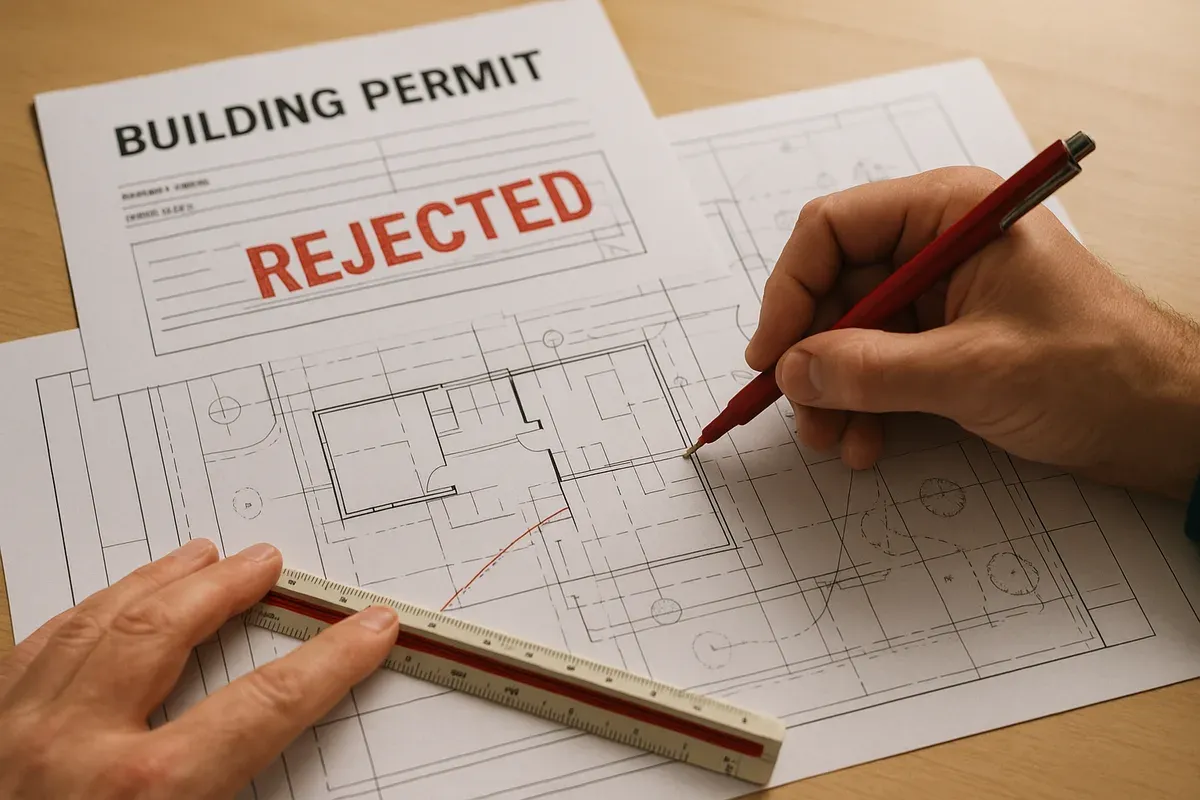
<h2>The Permit Shortcut That Can Shut Down Your Entire Project</h2>
<p>It happens more often than most <a href="/contractors">contractors</a> want to admit. A subcontractor, eager to get work started and operating under the assumption that "someone else is handling the paperwork," pulls a permit without attaching a proper site plan. Maybe the site plan was never prepared. Maybe it was prepared but not submitted. Maybe the subcontractor assumed the general contractor already took care of it. Whatever the reason, the result is almost always the same: delays, fines, and a permit rejection that stops the job cold.</p>
<p>In 2026, building departments across the country are more stringent than ever about documentation requirements. Digital permit portals have made it easier to flag incomplete submissions automatically, and inspectors are increasingly trained to catch discrepancies between what is permitted and what is actually being built on the ground. A missing or inadequate site plan is one of the most common triggers for permit rejection, and when a subcontractor is the one who pulled the permit, the liability questions that follow can get complicated fast.</p>
<p>This article walks through exactly what happens when a subcontractor pulls a permit without a site plan, who bears responsibility, what the downstream consequences look like, and how to build a workflow that prevents this from happening on your projects.</p>
<hr>
<h2>Why Site Plans Are Required in the First Place</h2>
<p>Before diving into what goes wrong, it helps to understand why building departments require site plans in the first place. A site plan is a scaled, overhead drawing of a property that shows the relationship between the proposed work and the rest of the lot. It typically includes:</p>
<ul>
<li>Property boundaries and lot dimensions</li>
<li>Existing and proposed structures with building footprints</li>
<li>Setbacks from property lines, easements, and rights-of-way</li>
<li>Driveways, parking areas, and access points</li>
<li>Utility connections and drainage features</li>
<li>North arrow and scale</li>
</ul>
<p>Building officials use site plans to verify that proposed construction complies with local zoning ordinances, <a href="/setback-guide">setback requirements</a>, and land use regulations. Without a site plan, a permit reviewer has no way to confirm that a new structure, addition, or utility installation will actually fit on the lot legally.</p>
<p>The <a href="https://www.iccsafe.org" rel="nofollow noopener" target="_blank">International Code Council</a> publishes model building codes that most jurisdictions adopt, and those codes consistently require site documentation as part of the permit application process. Local amendments can add further requirements, but the baseline expectation is almost universal: show us where this work is happening on the property before we approve it.</p>
<hr>
<h2>How Subcontractors End Up Pulling Permits Without Site Plans</h2>
<p>Understanding how this situation arises is key to preventing it. There are several common scenarios:</p>
<h3>The Communication Breakdown</h3>
<p>On larger projects with multiple trades, general contractors often delegate permit responsibility to subcontractors for their specific scope of work. An electrician might pull the electrical permit, a plumber pulls the plumbing permit, and so on. The problem is that each subcontractor may assume the site plan is already on file with the building department, or that the general contractor submitted it separately. When no one confirms this assumption, the permit application goes in without the required site documentation.</p>
<h3>The Scope Creep Scenario</h3>
<p>A subcontractor is brought in for what seems like a simple job, perhaps replacing a water heater or upgrading an electrical panel. The work appears straightforward, so they pull a permit quickly without thinking through the full documentation requirements. But the building department, upon review, flags the application because the property has no current site plan on file, or because the proposed work triggers zoning review that requires one.</p>
<h3>The "We've Done This Before" Assumption</h3>
<p>Experienced subcontractors sometimes operate on muscle memory from previous projects in the same jurisdiction. They know the permit portal, they know the fees, and they submit what they have always submitted. But permit requirements change. Many jurisdictions updated their documentation requirements between 2023 and 2026, adding site plan requirements to categories of work that previously did not need them, particularly for accessory structures, detached garages, and certain utility installations.</p>
<h3>The Unlicensed or Out-of-Area Subcontractor</h3>
<p>A subcontractor who is unfamiliar with a specific jurisdiction's requirements may not know that a site plan is required at all. This is especially common when general contractors bring in out-of-area specialty trades for a project. Local permit requirements vary significantly, and what was acceptable in one county may be completely insufficient in the next.</p>
<hr>
<h2>What Happens Immediately After Submission</h2>
<p>When a subcontractor submits a permit application without a required site plan, one of several things happens, depending on the jurisdiction's review process.</p>
<h3>Automatic Rejection at the Counter or Portal</h3>
<p>Many building departments now use digital permit portals with checklist-based intake systems. If a site plan is listed as a required document and it is not uploaded, the system may reject the application outright before it ever reaches a human reviewer. The subcontractor receives an automated notice listing the missing items, and the permit is placed in an incomplete or rejected status until the documentation is provided.</p>
<p>This is actually the best-case scenario, because the problem is caught early and no work has started yet.</p>
<h3>Plan Review Rejection</h3>
<p>In jurisdictions where applications pass initial intake but are reviewed by a plans examiner, the rejection may come days or weeks later. A plans examiner who cannot verify setbacks, building footprints, or lot coverage without a site plan will issue a correction notice. The applicant must then respond with the missing documentation before the permit can be approved.</p>
<p>This delay can cost a project significant time, especially if the subcontractor has already mobilized a crew in anticipation of a quick permit turnaround.</p>
<h3>Permit Issued, Then Flagged at Inspection</h3>
<p>This is the most dangerous scenario. In some cases, particularly for smaller jurisdictions with limited staff, a permit may be issued despite incomplete documentation. Work begins, and the problem is not discovered until an inspector arrives on site and finds that the work does not match what was permitted, or that no site plan was ever filed to verify compliance with setbacks and zoning.</p>
<p>At this point, the inspector has the authority to issue a stop work order.</p>
<hr>
<h2>The Stop Work Order: What It Means and What It Costs</h2>
<p>A stop work order is one of the most disruptive events that can happen on a construction project. When an inspector issues a stop work order, all construction activity on the affected portion of the project must cease immediately. Workers leave the site, equipment sits idle, and the project timeline begins to slip.</p>
<p>Stop work orders related to permit compliance issues, including missing site plans, typically require the responsible party to:</p>
<ol>
<li>Submit the missing documentation (in this case, a proper site plan)</li>
<li>Schedule a re-inspection to verify compliance</li>
<li>In some cases, pay a reinstatement fee before work can resume</li>
<li>Potentially remove or modify work that was completed without proper permits</li>
</ol>
<p>The financial impact of a stop work order can be severe. Direct costs include idle labor, equipment rental fees that continue regardless of whether work is happening, and expedited fees to get the missing documentation prepared and submitted quickly. Indirect costs include schedule delays that push project completion back, which can trigger liquidated damages clauses in contracts, affect financing draws, and damage the contractor's relationship with the client.</p>
<p>For a residential addition project, a stop work order caused by a missing site plan might add $2,000 to $10,000 in direct and indirect costs. On a commercial project, the numbers can be far higher.</p>
<hr>
<h2>Who Is Liable When a Subcontractor Pulls a Permit Without a Site Plan</h2>
<p>This is where things get complicated, and where contractor permit compliance becomes a critical business concern.</p>
<h3>The Subcontractor's Direct Liability</h3>
<p>The subcontractor who pulled the permit is the permit holder of record. That means they bear primary responsibility for ensuring the application was complete and accurate. If a stop work order is issued or a fine is levied, the subcontractor named on the permit is the first party the building department will hold accountable.</p>
<h3>The General Contractor's Exposure</h3>
<p>Even when a subcontractor pulls the permit, the general contractor is rarely off the hook entirely. Most construction contracts include provisions about permit compliance, and the general contractor has a supervisory responsibility for the overall project. If the general contractor failed to establish a clear permitting protocol, failed to verify that required documentation was submitted, or failed to communicate site plan requirements to subcontractors, they may share liability for the resulting delays and costs.</p>
<p>In some jurisdictions, the general contractor's license can be affected by permit violations on projects where they serve as the responsible party, even when a subcontractor pulled the individual permit.</p>
<h3>The Property Owner's Position</h3>
<p>Property owners are often surprised to learn that unpermitted or improperly permitted work can affect them directly. Work performed without a valid permit, or with a permit that was issued based on incomplete information, may not be covered by homeowner's insurance in the event of a claim. It can also create title issues when the property is sold, since buyers' attorneys and title companies increasingly scrutinize permit records as part of due diligence.</p>
<p>The <a href="https://www.planning.org" rel="nofollow noopener" target="_blank">American Planning Association</a> provides resources on how zoning and permit compliance intersect with property rights, and their guidance makes clear that documentation gaps can follow a property for years after the original construction.</p>
<hr>
<h2>The Cascading Effects on Project Timeline and Relationships</h2>
<p>Beyond the immediate financial and legal consequences, a permit rejection or stop work order caused by a missing site plan creates ripple effects that touch every aspect of the project.</p>
<h3>Schedule Compression</h3>
<p>When work stops, the project schedule does not simply pause. Subcontractors who were scheduled to follow the stopped trade may have other commitments and cannot simply wait indefinitely. By the time the permit issue is resolved and work resumes, the project may face a compressed schedule that increases the risk of quality problems and worker fatigue.</p>
<h3>Client Trust Erosion</h3>
<p>For most property owners, a stop work order is a deeply unsettling event. It signals that something has gone wrong, and clients often do not distinguish between a subcontractor's mistake and the general contractor's overall management of the project. Even if the general contractor was not directly responsible for the missing site plan, they will likely absorb the reputational damage in the client's eyes.</p>
<h3>Insurance and Bonding Complications</h3>
<p>Some insurance policies include provisions that limit or exclude coverage for work performed without proper permits. If an incident occurs on a job site where a stop work order has been issued or where permit compliance is in question, the contractor may find that their insurance carrier takes a much harder look at the claim.</p>
<hr>
<h2>How to Prevent This: Building a Permit Compliance Workflow</h2>
<p>The good news is that this entire category of problems is preventable with the right systems in place. Here is a practical framework for general contractors and subcontractors to follow.</p>
<h3>Establish a Permit Responsibility Matrix at Project Kickoff</h3>
<p>At the start of every project, document clearly which party is responsible for pulling each required permit and what documentation that permit requires. Do not leave this to verbal agreements or assumptions. A simple spreadsheet that lists each permit type, the responsible party, the required attachments (including site plan requirements), and the submission deadline eliminates the ambiguity that leads to missing documentation.</p>
<h3>Require Site Plan Confirmation Before Permit Submission</h3>
<p>Make it a non-negotiable rule that no permit application leaves your office or your subcontractor's office without a confirmed site plan on file. This does not mean every permit requires a brand new site plan, but it does mean that someone has verified that a current, accurate site plan exists and has been submitted to the building department for the project.</p>
<h3>Educate Subcontractors on Local Requirements</h3>
<p>If you work with subcontractors who are new to a particular jurisdiction, take the time to brief them on local permit requirements before they start pulling permits. A 15-minute conversation at the start of a project can prevent weeks of delays later. Share the local building department's permit application checklist with every subcontractor who will be pulling permits on your projects.</p>
<h3>Use Technology to Prepare Site Plans Quickly</h3>
<p>One of the most common reasons subcontractors skip the site plan is that they do not know how to create one and do not want to wait for someone else to do it. Browser-based tools like <a href="/">Site Plan Creator</a> make it straightforward to produce a permit-ready site plan without CAD software expertise. A subcontractor or general contractor can generate an accurate, scaled site plan showing property boundaries, building footprints, setbacks, and other required elements in a fraction of the time it would take to hire a drafter.</p>
<p>Having the ability to produce a site plan quickly removes the temptation to skip it, because the barrier to doing it right is much lower.</p>
<h3>Verify Permit Status Before Work Begins</h3>
<p>Before any subcontractor mobilizes on a job site, verify that their permit has been issued (not just applied for) and that the application was complete. Most building department portals allow permit status lookups by address or permit number. This takes five minutes and can save weeks of headaches.</p>
<h3>Keep Site Plans Updated as Projects Evolve</h3>
<p>Site plans are not a one-time submission. If the scope of work changes, if a structure is relocated on the lot, or if new elements are added to the project, the site plan needs to be updated and resubmitted. Make sure your subcontractors understand that the site plan they see at the start of the project may not reflect the current scope, and that any changes need to flow back through the permit process.</p>
<hr>
<h2>What to Do If You Are Already in This Situation</h2>
<p>If you are reading this because a subcontractor has already pulled a permit without a site plan and the project is now in trouble, here are the immediate steps to take.</p>
<ol>
<li><strong>Stop any work that is not covered by a valid permit.</strong> Do not compound the problem by continuing work while the permit issue is unresolved.</li>
<li>Determine what site plan documentation the building department requires and whether a current site plan exists for the property.</li>
<li>If no site plan exists, prepare one immediately. Tools like Site Plan Creator allow you to generate a permit-ready site plan quickly, which can significantly reduce the time needed to resolve the permit rejection.</li>
<li>Contact the building department directly to understand the correction process. Ask specifically what documentation is needed, what the review timeline looks like, and whether there are any expedited review options.</li>
<li>Document everything. Keep records of all communications with the building department, all permit submissions, and all decisions made about permit responsibility. This documentation will be critical if there are later disputes about liability.</li>
<li>Notify the property owner promptly. Trying to resolve the issue quietly without informing the client almost always backfires. Proactive communication, even about bad news, builds more trust than a client discovering the problem on their own.</li>
<li>Review your subcontractor agreements and insurance policies to understand your coverage and liability exposure.</li>
</ol>
<p>For guidance on permit processes in your specific state, most state contractor licensing boards publish permit compliance resources online. The <a href="https://www.hud.gov" rel="nofollow noopener" target="_blank">U.S. Department of Housing and Urban Development</a> also provides general guidance on <a href="/construction-permit-site-plans">construction permit</a> requirements that can help orient contractors who are navigating unfamiliar regulatory territory.</p>
<hr>
<h2>The Bigger Picture: Permit Compliance as a Competitive Advantage</h2>
<p>Contractors who treat permit compliance as a burden to be minimized are looking at it the wrong way. In 2026, with building departments increasingly digitized and permit records more accessible than ever, a track record of clean permits and complete documentation is a genuine competitive differentiator.</p>
<p>Property owners who have been through a bad experience with a contractor who cut permit corners are often willing to pay a premium for a contractor who demonstrates rigorous compliance. <a href="/real-estate">Real estate</a> attorneys, property managers, and commercial property owners increasingly ask for permit compliance records before awarding contracts.</p>
<p>Subcontractor permit mistakes are not just a legal risk. They are a reputation risk. And in an industry where reputation is often the primary driver of new business, the cost of a single stop work order caused by a missing site plan can far exceed the cost of the fine or the delay. It can cost you the next project, and the one after that.</p>
<p>Building a culture of permit compliance within your organization, and extending that culture to the subcontractors you work with, is an investment that pays dividends in reduced risk, smoother projects, and stronger client relationships.</p>
<hr>
<h2>Conclusion</h2>
<p>When a subcontractor pulls a permit without a site plan, the consequences range from a minor administrative delay to a full stop work order, financial penalties, and serious damage to client relationships and professional reputation. The root causes are almost always preventable: communication gaps, unclear responsibility, unfamiliarity with local requirements, and the mistaken belief that a site plan is optional or someone else's problem.</p>
<p>The solution starts with clear protocols, explicit communication, and the right tools to make permit compliance straightforward rather than burdensome. Site Plan Creator was built specifically to help contractors, subcontractors, and property owners generate accurate, permit-ready site plans quickly and without specialized CAD knowledge. Whether you need a site plan to support a new permit application, to resolve a correction notice, or to ensure your subcontractors have the documentation they need before they pull a single permit, Site Plan Creator gives you a professional result in a fraction of the time.</p>
<p>Do not let a missing site plan be the reason your project stops. Visit <a href="https://www.siteplancreator.com">siteplancreator.com</a> today and see how easy it is to get your documentation right the first time.</p>