Solar Installer's Guide to Site Plans: Permit Requirements
Getting a solar permit approved starts with understanding what your local jurisdiction actually needs on a site plan. This guide breaks down the documentation requirements solar installers face across different permit authorities, so you can submit complete packages the first time.
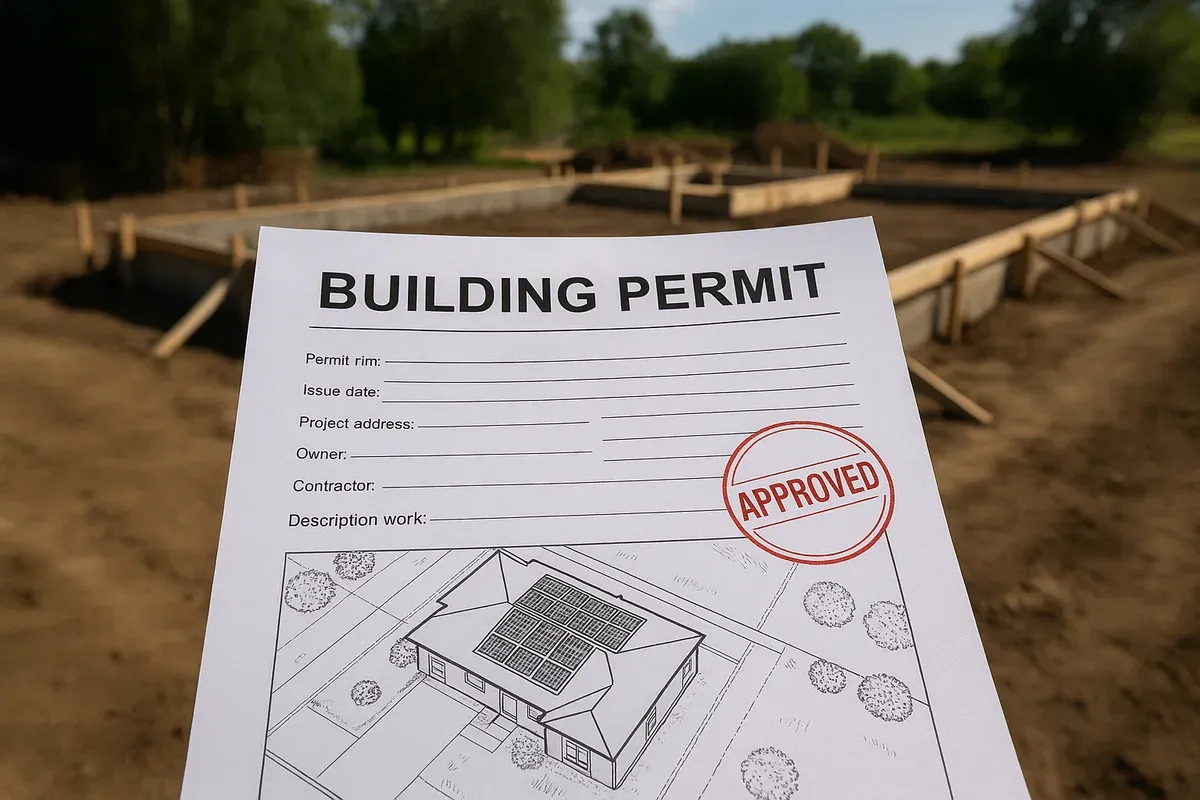
<p>Permit rejections are one of the most expensive problems a solar installer can face. A single incomplete submission can add days or weeks to a project timeline, delay interconnection agreements, and frustrate <a href="/homeowners">homeowners</a> who are eager to start saving on energy bills. The culprit, more often than not, is an incomplete or improperly formatted solar permit site plan.</p>
<p>In 2026, jurisdictions across the country are tightening their documentation standards as residential solar adoption accelerates. What worked in a neighboring city may not fly in the next jurisdiction over. And with every jurisdiction setting its own rules, solar installers need a reliable framework for understanding what is universally required, what varies by location, and how to prepare documentation that gets approved on the first submission.</p>
<p>This guide is built for working solar installers, project managers, and permit expediters who want clear, actionable guidance on site plan requirements. We will walk through what goes into a compliant solar permit site plan, how requirements differ across jurisdictions, what common mistakes trigger rejections, and how to build a documentation workflow that scales with your business.</p>
<h2>Why Site Plans Are the Foundation of Every Solar Permit</h2>
<p>A solar permit site plan is not just a formality. It is the primary document that allows a building or electrical inspector to understand the scope of your installation before they ever set foot on the property. A well-prepared site plan communicates the location of panels on the roof, the routing of electrical conduit, the position of the inverter and disconnect, and how all of these elements relate to the property boundaries and existing structures.</p>
<p>Jurisdictions use site plans to verify three core things:</p>
<ol>
<li><strong>Code compliance</strong>: Does the installation meet <a href="/setback-guide">setback requirements</a> from roof edges, ridges, and hips as defined by the International Fire Code and local amendments?</li>
<li><strong>Structural adequacy</strong>: Is the roof capable of supporting the added load of the panel array?</li>
<li><strong>Electrical safety</strong>: Is the system designed to meet NEC requirements for interconnection, grounding, and labeling?</li>
</ol>
<p>Without a complete site plan, reviewers cannot answer these questions, and permits get rejected. The <a href="https://www.iccsafe.org" rel="nofollow noopener" target="_blank">International Code Council (ICC)</a> publishes the model codes that most jurisdictions adopt, including the International Residential Code (IRC) and International Fire Code (IFC), which together define many of the standards that appear in solar permit checklists.</p>
<h3>The Cost of Getting It Wrong</h3>
<p>Permit rejection rates for solar installations vary widely, but industry data consistently shows that incomplete documentation is the leading cause of first-submission rejections. Each rejection cycle typically adds 5 to 15 business days to a project. For a company running 20 or more installs per month, that delay compounds quickly into lost revenue, strained customer relationships, and scheduling headaches.</p>
<p>Building a repeatable, jurisdiction-aware documentation process is one of the most important operational investments a solar company can make.</p>
<h2>Core Elements Every Jurisdiction Requires</h2>
<p>While requirements vary, there is a baseline set of elements that virtually every jurisdiction will expect to see on a solar permit site plan. Think of these as the non-negotiables.</p>
<h3>1. Property Boundary and Site Overview</h3>
<p>Every solar permit site plan should begin with a clear representation of the property boundaries. This establishes the legal context for the installation and allows reviewers to confirm setback compliance from property lines.</p>
<p>Your site overview should include:</p>
<ul>
<li>The full legal address of the property</li>
<li>North arrow and scale indicator</li>
<li>Property dimensions (lot width and depth at minimum)</li>
<li>Location of all existing structures on the lot</li>
<li>Driveway and utility easement locations where relevant</li>
<li>Distance from the main structure to property lines</li>
</ul>
<p>This is the layer that connects your installation to the physical world of the parcel. Without it, reviewers have no spatial context for anything else on the plan.</p>
<h3>2. Roof Plan with Panel Layout</h3>
<p>The roof plan is the heart of the solar permit site plan. It should show the roof from a top-down perspective and include:</p>
<ul>
<li>Roof slope and pitch for each plane (expressed as X:12)</li>
<li>Location and dimensions of all roof penetrations, skylights, vents, and chimneys</li>
<li>Panel array layout with row and column counts</li>
<li>Panel setbacks from roof edges, ridges, hips, and valleys (typically 3 feet per IFC Section 605.11 in jurisdictions that have adopted this standard)</li>
<li>Walkway pathways for firefighter access (required in many California jurisdictions and increasingly elsewhere)</li>
<li>Compass orientation of each roof plane</li>
</ul>
<p>Panel setback requirements are one of the most jurisdiction-specific elements of solar permit documentation. Some jurisdictions follow the IFC model code directly, while others have adopted local amendments that increase or decrease required clearances. Always verify the locally adopted version before finalizing your layout.</p>
<h3>3. Electrical Single-Line Diagram</h3>
<p>The single-line diagram (SLD) is the electrical schematic of the system. While it is technically a separate document from the site plan, most jurisdictions require it as part of the same permit package. It should show:</p>
<ul>
<li>PV modules (make, model, quantity, wattage)</li>
<li>String configuration and open-circuit voltage</li>
<li>Inverter (make, model, type: string, microinverter, or power optimizer)</li>
<li>AC and DC disconnect locations</li>
<li>Main service panel rating and available breaker space</li>
<li>Interconnection method (supply-side or load-side)</li>
<li>Grounding and bonding details</li>
<li>All wire sizes, conduit types, and overcurrent protection ratings</li>
</ul>
<p>The SLD must comply with the National Electrical Code (NEC), specifically Article 690 for photovoltaic systems. The 2023 NEC is the most widely adopted version as of 2026, though some jurisdictions are still on the 2020 cycle.</p>
<h3>4. Structural Details</h3>
<p>Structural documentation confirms that the roof and attachment hardware can support the mechanical loads introduced by the panel array. Minimum structural documentation typically includes:</p>
<ul>
<li>Roof framing type and member sizes (rafters or trusses)</li>
<li>Rafter or truss spacing</li>
<li>Attachment hardware specifications (lag bolt diameter, embedment depth, spacing)</li>
<li>Roof covering material and condition</li>
<li>Structural calculations or a stamped letter from a licensed engineer (required for complex systems or older roofs)</li>
</ul>
<p>Many jurisdictions accept a simplified structural checklist for standard residential installations on conventional rafter roofs. However, if the home has trusses, a tile roof, or is in a high-wind or high-snow-load zone, a licensed structural engineer's stamp is often required.</p>
<h3>5. Equipment Specifications and Cut Sheets</h3>
<p>Permit packages should include manufacturer data sheets for all major equipment: panels, inverters, racking systems, and disconnects. These documents confirm that the equipment is UL-listed and that the specifications match what is shown on the SLD and roof plan.</p>
<h2>How Requirements Vary by Jurisdiction</h2>
<p>This is where solar permit documentation gets complicated. The baseline elements above are nearly universal, but the specifics vary enormously from one authority having jurisdiction (AHJ) to the next.</p>
<h3>California</h3>
<p>California has some of the most detailed solar permit requirements in the country, driven by the California Fire Code's specific provisions for solar panel access and pathways. Key California-specific requirements include:</p>
<ul>
<li>Mandatory 3-foot pathways along ridgelines and between arrays for single-family homes under 10,000 square feet</li>
<li>Compliance with California's Title 24 energy code for new construction solar</li>
<li>Specific labeling requirements for DC conduit, combiner boxes, and rapid shutdown systems</li>
<li>Many jurisdictions in California participate in SolarAPP+, a state-supported automated permit platform that has streamlined approvals for qualifying systems</li>
</ul>
<p>The <a href="https://www.energy.ca.gov/programs-and-topics/programs/building-energy-efficiency-standards" rel="nofollow noopener" target="_blank">California Energy Commission</a> publishes the Title 24 standards that govern solar installations on new and existing residential buildings in the state.</p>
<h3>Texas</h3>
<p>Texas does not have a statewide building code, which means permit requirements vary dramatically by municipality. Cities like Austin and Houston have adopted the IRC and IFC and have well-defined solar permit checklists. Smaller municipalities or unincorporated areas may have minimal or no permit requirements at all.</p>
<p>For Texas installers, the most important step is confirming whether a permit is required at all, and if so, which code edition the local jurisdiction has adopted. Requirements can range from a simple electrical permit with a basic site sketch to a full package similar to California's standards.</p>
<h3>Northeast and Mid-Atlantic States</h3>
<p>States like New York, New Jersey, Massachusetts, and Connecticut generally have strong permit requirements with active inspection programs. New York State has a standardized permit application process for small solar systems that reduces some of the jurisdiction-to-jurisdiction variation. Massachusetts has adopted a uniform solar permit application through the State Building Code, though local AHJs still have some discretion in what they request.</p>
<p>In these states, expect to provide full structural calculations for any installation that deviates from standard conditions, and always verify whether the local fire department has adopted IFC Section 605.11 provisions.</p>
<h3>Rural and Unincorporated Areas</h3>
<p>In many rural counties and unincorporated areas, the permit process is handled by a county building department that may have limited staff and resources. Requirements in these areas are often less detailed, but that does not mean you can skip documentation. A minimal site plan that still includes property boundaries, a roof plan with panel locations, and a basic single-line diagram is a professional standard that protects both the installer and the homeowner.</p>
<h2>What Triggers Permit Rejections: The Most Common Mistakes</h2>
<p>Understanding why permits get rejected is just as important as knowing what to include. Here are the most common documentation failures that solar installers encounter:</p>
<h3>Missing or Incorrect Scale</h3>
<p>A site plan without a scale bar or with an incorrect scale is one of the fastest ways to get a rejection. Reviewers need to be able to measure distances on the plan to verify setbacks and access pathways. Always include a graphic scale bar and a written scale (e.g., 1 inch = 20 feet).</p>
<h3>Setback Dimensions Not Labeled</h3>
<p>Showing the panel layout is not enough. You must explicitly label the dimension from the panel array edge to the nearest roof edge, ridge, hip, or valley. If the jurisdiction requires a 3-foot setback and your plan shows panels but no dimensions, the reviewer has no way to confirm compliance.</p>
<h3>Mismatched Equipment on SLD vs. Cut Sheets</h3>
<p>If your single-line diagram specifies a 7.6 kW inverter but the cut sheet you included is for a 6.0 kW model, the reviewer will flag the discrepancy. Equipment specifications must match exactly across all documents in the permit package.</p>
<h3>No Rapid Shutdown Compliance Detail</h3>
<p>Since the 2017 NEC, rapid shutdown systems (RSS) have been required for residential solar installations. By 2026, most jurisdictions are on a code cycle that requires module-level rapid shutdown (MLRS). Your SLD and site plan should clearly indicate the RSS equipment and its compliance with NEC 690.12.</p>
<h3>Incorrect or Missing North Arrow</h3>
<p>This sounds minor, but a missing north arrow makes it impossible for a reviewer to confirm roof plane orientation, which affects shading analysis and fire access pathway compliance. It is a simple element that should never be omitted.</p>
<h3>No Utility Meter or Service Panel Location</h3>
<p>The site plan should show where the utility meter and main service panel are located on the property. This helps reviewers understand the interconnection path and verify that the proposed conduit routing is logical and code-compliant.</p>
<h2>Building a Scalable Solar Permit Documentation Workflow</h2>
<p>For solar companies doing volume installations, creating a repeatable documentation process is essential. Here is a practical framework:</p>
<h3>Step 1: Build a Jurisdiction Research Database</h3>
<p>Create a spreadsheet or CRM-integrated database that tracks permit requirements for every jurisdiction you work in. For each AHJ, document:</p>
<ul>
<li>Adopted code edition (IRC, IFC, NEC year)</li>
<li>Required documents and forms</li>
<li>Setback and pathway requirements</li>
<li>Structural documentation thresholds</li>
<li>Turnaround times and online portal availability</li>
<li>Inspector contact information</li>
</ul>
<p>Update this database whenever you receive a rejection or encounter a new requirement. Over time, this becomes one of your most valuable operational assets.</p>
<h3>Step 2: Create Jurisdiction-Specific Templates</h3>
<p>Rather than building every permit package from scratch, develop a library of site plan templates tailored to your most common jurisdictions. A good template includes all required elements pre-formatted, with placeholders for project-specific information like address, panel count, and equipment specs.</p>
<p>Using a browser-based CAD tool like <a href="/">Site Plan Creator</a> makes this process significantly more efficient. You can build a base template once, then quickly customize it for each project by adjusting the roof plan, panel layout, and property dimensions. The ability to export clean, scaled PDF drawings directly from the browser eliminates the need for expensive desktop CAD software and reduces the learning curve for new staff.</p>
<h3>Step 3: Implement a Pre-Submission Checklist</h3>
<p>Before submitting any permit package, run it through a standardized checklist. This checklist should mirror the requirements of the specific AHJ and cover:</p>
<ul>
<li><input disabled="" type="checkbox"> Property boundaries and dimensions shown</li>
<li><input disabled="" type="checkbox"> North arrow and scale included</li>
<li><input disabled="" type="checkbox"> All roof planes labeled with pitch</li>
<li><input disabled="" type="checkbox"> Panel array layout with setback dimensions labeled</li>
<li><input disabled="" type="checkbox"> Firefighter access pathways shown (if required)</li>
<li><input disabled="" type="checkbox"> Utility meter and service panel location shown</li>
<li><input disabled="" type="checkbox"> Single-line diagram complete and NEC-compliant</li>
<li><input disabled="" type="checkbox"> Rapid shutdown system specified</li>
<li><input disabled="" type="checkbox"> Equipment cut sheets included and matching SLD</li>
<li><input disabled="" type="checkbox"> Structural documentation appropriate for roof type</li>
<li><input disabled="" type="checkbox"> All required AHJ forms completed and signed</li>
</ul>
<h3>Step 4: Track Rejections and Refine</h3>
<p>Every rejection is data. When a permit comes back with comments, log the specific reason for rejection, the jurisdiction, and the fix applied. Review this log quarterly to identify patterns. If the same jurisdiction keeps rejecting for the same reason, that is a signal to update your template for that AHJ.</p>
<h3>Step 5: Stay Current on Code Cycles</h3>
<p>Building and electrical codes are updated on regular cycles, and jurisdictions adopt new editions on their own schedules. Subscribe to updates from the ICC and NFPA, and check in with your most active AHJs at least once a year to confirm which code edition is currently enforced. A permit package built for the 2020 NEC may need updates if the jurisdiction has moved to the 2023 edition.</p>
<h2>The Role of Technology in Modern Solar Permit Documentation</h2>
<p>The days of hand-drawn site plans and paper permit submissions are largely behind us. In 2026, most jurisdictions accept or prefer digital submissions, and many have online portals that require specific file formats and document naming conventions.</p>
<p>Cloud-based site plan tools have become essential for solar companies that want to move fast without sacrificing accuracy. The ability to draw a scaled site plan, add building footprints, place panel arrays, label setbacks, and export a permit-ready PDF in under an hour is a genuine competitive advantage.</p>
<p>When evaluating tools for solar permit documentation, look for:</p>
<ul>
<li>Accurate scaling and dimension tools</li>
<li>The ability to import satellite imagery or parcel data as a drawing base</li>
<li>Pre-built symbols for solar panels, inverters, and electrical components</li>
<li>PDF export with embedded scale bars</li>
<li>Cloud storage for easy retrieval and revision</li>
<li>Collaboration features if multiple team members work on permit packages</li>
</ul>
<p>Some installers also use SolarAPP+, the automated permit platform developed with support from the Department of Energy, which is available in participating California jurisdictions and expanding to other states. SolarAPP+ can issue instant permits for qualifying systems, but it still requires accurate system specifications and does not eliminate the need for proper site documentation.</p>
<h2>Special Considerations for Complex Installations</h2>
<p>Not every solar installation fits the standard residential template. Here are a few scenarios that require additional documentation attention:</p>
<h3>Battery Storage Systems</h3>
<p>When a battery energy storage system (BESS) is included in the permit package, expect additional documentation requirements. Most jurisdictions require:</p>
<ul>
<li>Battery make, model, and UL listing</li>
<li>Location of the battery within the structure (interior vs. exterior)</li>
<li>Ventilation requirements for the installation space</li>
<li>Fire separation details if the battery is installed in a garage or living space</li>
<li>Updated single-line diagram showing battery interconnection</li>
</ul>
<h3>Ground-Mount Systems</h3>
<p>Ground-mounted arrays require a different site plan approach. Instead of a roof plan, you will need a site plan that shows the array location relative to property boundaries, setbacks from structures and property lines, and the underground conduit routing from the array to the building. Structural documentation for the racking foundation (typically ground screws or concrete piers) is also required.</p>
<h3>Historic Districts and HOA Communities</h3>
<p>Some jurisdictions require additional approval from a historic preservation board or homeowners association before a solar permit can be issued. While these approvals are separate from the <a href="/construction-permit-site-plans">building permit</a> process, the site plan you prepare for the permit office is often the same document submitted to these bodies. A clean, professional site plan can make the difference in getting HOA or historic board approval.</p>
<h2>Conclusion</h2>
<p>Solar permit documentation is not the most glamorous part of the installation business, but it is one of the most consequential. A complete, accurate solar permit site plan is the difference between a smooth approval and a costly delay. Understanding what jurisdictions actually require, building a repeatable workflow, and using the right tools are the three pillars of a high-performing permit operation.</p>
<p>As residential solar adoption continues to grow in 2026 and beyond, the installers who invest in documentation quality will have a measurable advantage: faster approvals, fewer rejections, happier customers, and more installs per month.</p>
<p>If you are ready to streamline your solar permit site plan process, Site Plan Creator is built for exactly this kind of work. Our browser-based platform lets you draw accurate, scaled property site plans with all the elements jurisdictions require, and export permit-ready PDFs in minutes. No expensive software, no steep learning curve, just clean professional drawings that get approved. Start your first project at <a href="https://www.siteplancreator.com">siteplancreator.com</a> and see how much time you can save on your next permit submission.</p>