Site Plan vs Survey: What's the Difference?
Site plans and surveys are both essential property documents, but they serve very different purposes. Understanding the difference can save you time, money, and headaches when navigating the permit process.
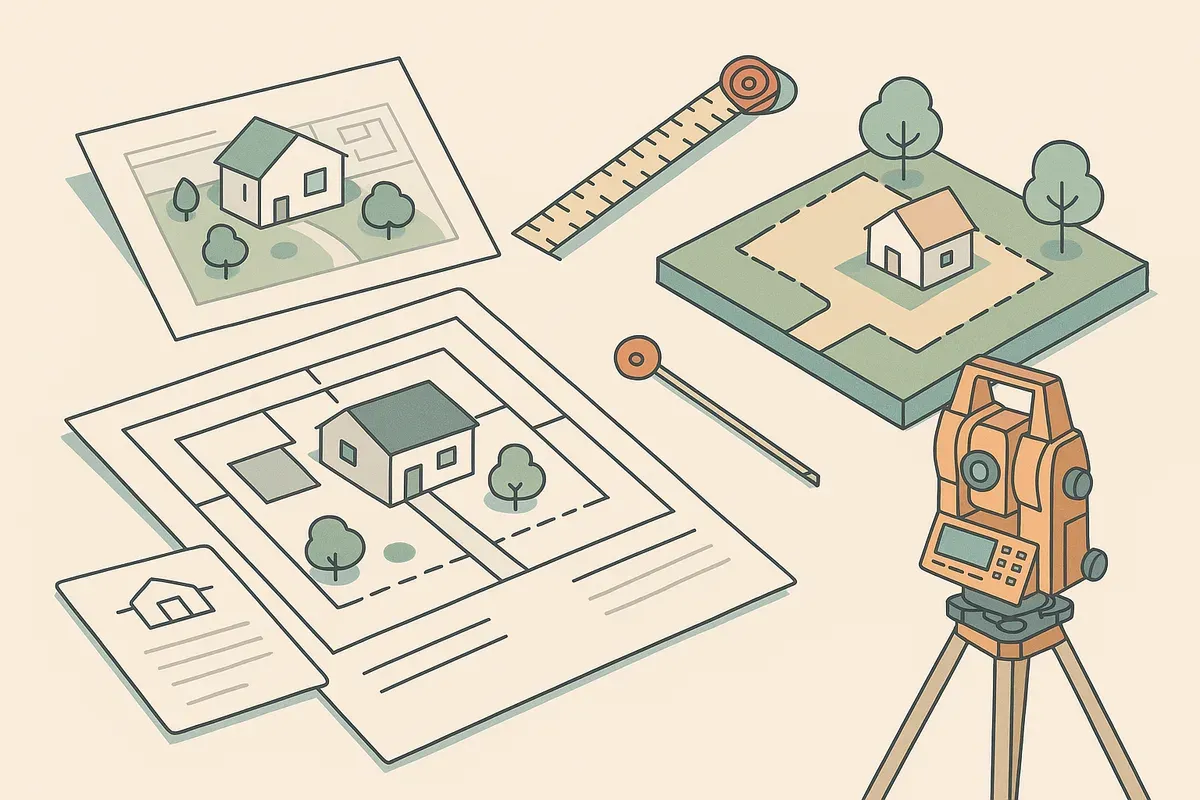
<p>If you've ever applied for a building permit, started a home addition project, or tried to sell a piece of land, you've probably encountered two terms that get used interchangeably — but shouldn't be: <strong>site plan</strong> and <strong>survey</strong>. Confusing these two documents is one of the most common mistakes property owners make, and it can lead to costly delays, rejected permit applications, and unnecessary professional fees.</p>
<p>The good news? Once you understand what each document actually is, what it contains, and when you need it, the whole process becomes much clearer. This guide breaks down the site plan vs survey debate in plain language, so you can walk into your permit office — or log into your favorite online planning tool — knowing exactly what you need and why.</p>
<h2>What Is a Property Survey?</h2>
<p>A property survey is a legally binding document prepared by a licensed land surveyor that precisely defines the physical boundaries of a parcel of land. Think of it as the legal fingerprint of your property — it establishes where your land begins and ends, and it carries legal weight in courts, title companies, and government offices.</p>
<h3>What a Survey Typically Includes</h3>
<p>Depending on the type of survey ordered, a property survey can include:</p>
<ul>
<li><strong>Boundary lines</strong> with precise measurements and bearings</li>
<li>Corner markers or monuments (physical stakes or pins placed in the ground)</li>
<li>Easements, rights-of-way, and encroachments</li>
<li>Topographic data (elevations and contours) if it's a topographic survey</li>
<li>Flood zone designations referencing <a href="https://msc.fema.gov/portal/home" rel="nofollow noopener" target="_blank">FEMA flood maps</a></li>
<li>Existing structures and their relationship to property lines</li>
<li>Legal descriptions that match or update deed language</li>
<li>Utilities and infrastructure located on or near the parcel</li>
</ul>
<h3>Types of Property Surveys</h3>
<p>Not all surveys are the same. The type you need depends on your project:</p>
<ol>
<li><strong>Boundary Survey</strong> — The most common type. Establishes or confirms the legal boundaries of a parcel.</li>
<li><strong>Topographic Survey</strong> — Maps elevation changes and natural features. Often required for grading or drainage projects.</li>
<li><strong>ALTA/NSPS Survey</strong> — A comprehensive survey used in commercial <a href="/real-estate">real estate</a> transactions. Meets standards set by the American Land Title Association.</li>
<li><strong>Construction Survey</strong> — Used during active construction to ensure structures are built in the correct location.</li>
<li><strong>Mortgage Survey</strong> — A simplified survey used by lenders to confirm a structure's location on a lot. Less detailed than a boundary survey.</li>
</ol>
<h3>Who Performs a Survey?</h3>
<p>Only a licensed professional land surveyor (PLS) can legally perform and certify a property survey. The surveyor physically visits the property, researches historical records and deeds, places or locates boundary monuments, and produces a certified plat or survey map. This process can take anywhere from a few days to several weeks and typically costs between $500 and $2,500 or more, depending on lot size, complexity, and location.</p>
<h2>What Is a Site Plan?</h2>
<p>A site plan is a scaled, bird's-eye-view drawing of a property that shows how a proposed or existing project relates to the land. While a survey is primarily a legal document about boundaries, a site plan is a planning and communication document — it tells the story of what exists on the property and what you intend to build or change.</p>
<p>Site plans are the backbone of the residential and commercial permitting process. When you walk into a building department to apply for a permit to build a deck, add a garage, install a fence, or construct a new home, the permit office almost always requires a site plan.</p>
<h3>What a Site Plan Typically Includes</h3>
<p>A permit-ready site plan generally contains:</p>
<ul>
<li>Property boundaries with dimensions</li>
<li>North arrow and scale</li>
<li>Existing structures (house, garage, sheds, etc.) with their footprints</li>
<li>Proposed structures or additions with footprints</li>
<li><strong>Setback distances</strong> from all property lines to structures</li>
<li>Driveways, walkways, and parking areas</li>
<li>Easements and rights-of-way</li>
<li>Utility connections (water, sewer, gas, electric)</li>
<li>Lot dimensions and total lot area</li>
<li>Street names and adjacent property references</li>
<li>In some cases, landscaping, grading, and drainage features</li>
</ul>
<h3>Who Creates a Site Plan?</h3>
<p>This is where site plans and surveys diverge significantly in terms of accessibility and cost. Unlike surveys, site plans do not always need to be created by a licensed professional — though requirements vary by jurisdiction. In many municipalities, a clearly drawn, accurately scaled site plan created by the property owner or a contractor is perfectly acceptable for standard residential permits.</p>
<p>This is exactly where tools like <strong><a href="/">Site Plan Creator</a></strong> come in. Our browser-based CAD-style application allows <a href="/homeowners">homeowners</a>, <a href="/contractors">contractors</a>, architects, and developers to create professional, permit-ready site plans without expensive software or professional drafting fees. You can input your property dimensions, place structures, measure setbacks, and produce a clean, scaled drawing that meets most local permit office requirements — all in a fraction of the time and cost of hiring a draftsperson.</p>
<h2>Site Plan vs Survey: A Side-by-Side Comparison</h2>
<p>Let's put the two documents side by side so the differences are crystal clear:</p>
<table>
<thead>
<tr>
<th>Feature</th>
<th>Property Survey</th>
<th>Site Plan</th>
</tr>
</thead>
<tbody><tr>
<td><strong>Primary Purpose</strong></td>
<td>Legally define boundaries</td>
<td>Show project layout for permits</td>
</tr>
<tr>
<td><strong>Legal Standing</strong></td>
<td>Legally binding document</td>
<td>Planning/permit document</td>
</tr>
<tr>
<td><strong>Who Creates It</strong></td>
<td>Licensed land surveyor only</td>
<td>Owner, contractor, architect, or online tool</td>
</tr>
<tr>
<td><strong>Physical Site Visit</strong></td>
<td>Required</td>
<td>Not always required</td>
</tr>
<tr>
<td><strong>Cost</strong></td>
<td>$500–$2,500+</td>
<td>$0–$500 (often much less)</td>
</tr>
<tr>
<td><strong>Timeframe</strong></td>
<td>Days to weeks</td>
<td>Hours to days</td>
</tr>
<tr>
<td><strong>Required For</strong></td>
<td>Property sales, disputes, mortgages</td>
<td>Building permits, zoning approvals</td>
</tr>
<tr>
<td><strong>Contains Legal Description</strong></td>
<td>Yes</td>
<td>Sometimes referenced, not defined</td>
</tr>
<tr>
<td><strong>Shows Proposed Work</strong></td>
<td>No</td>
<td>Yes</td>
</tr>
</tbody></table>
<h2>Do You Need a Survey for a Permit?</h2>
<p>This is one of the most common questions property owners ask when preparing a permit application, and the answer is: <strong>it depends on your jurisdiction and the scope of your project.</strong></p>
<p>In many cases, you do not need a brand-new survey to get a building permit. Here's a more nuanced breakdown:</p>
<h3>When a Survey Is NOT Required for a Permit</h3>
<p>For the majority of routine residential permits — decks, sheds, fences, interior renovations, HVAC replacements, and small additions — most building departments will accept a site plan that references existing survey data without requiring a new survey. If you already have a survey from when you purchased your home (often included in your closing documents), you can use those boundary dimensions to create your site plan.</p>
<p>Common scenarios where a new survey is typically not required:</p>
<ul>
<li>Adding a deck or patio</li>
<li>Building a detached garage (in most jurisdictions)</li>
<li>Installing a fence</li>
<li>Constructing a <a href="/pool-site-plans">swimming pool</a></li>
<li>Interior remodels</li>
<li><a href="/adu-feasibility-software">Accessory dwelling units</a> (ADUs) in many areas</li>
</ul>
<h3>When a Survey IS Required (or Strongly Recommended)</h3>
<p>There are situations where a survey is either legally required or practically essential:</p>
<ol>
<li><strong>New construction on a vacant lot</strong> — Most jurisdictions require a certified survey before issuing a building permit for a new home or commercial building.</li>
<li><strong>Properties with unclear or disputed boundaries</strong> — If you're not certain where your property lines are, don't guess. A survey protects you from building in the wrong location.</li>
<li><strong>Projects near property lines</strong> — If your proposed structure will be close to a setback limit, a survey ensures you have accurate measurements before you build.</li>
<li><strong>Flood zone properties</strong> — If your property is near a floodplain, a survey (often an Elevation Certificate) may be required to verify compliance with FEMA regulations.</li>
<li><strong>Subdivisions and lot splits</strong> — Any time you're dividing land, a survey is legally required.</li>
<li><strong>Commercial projects</strong> — Most commercial building permits require a certified survey as part of the application package.</li>
<li><strong>Mortgage or title requirements</strong> — Lenders and title companies routinely require surveys as a condition of financing or title insurance.</li>
</ol>
<p>For the most accurate guidance, always check with your local building department. The <a href="https://www.iccsafe.org/" rel="nofollow noopener" target="_blank">International Code Council (ICC)</a> publishes model building codes that many jurisdictions adopt, but local amendments vary widely.</p>
<h2>How Site Plans and Surveys Work Together</h2>
<p>Rather than thinking of site plans and surveys as competing documents, it's more accurate to think of them as complementary tools that serve different stages of the property development process.</p>
<p>Here's a typical workflow that illustrates how they interact:</p>
<h3>Step 1: Obtain Your Survey Data</h3>
<p>When you purchase a property, you typically receive a survey or plat as part of your closing documents. This gives you the legal boundary dimensions, lot size, and sometimes the location of existing structures. If you don't have this, you can often obtain a copy from your county recorder's office or GIS mapping system.</p>
<h3>Step 2: Use Survey Data to Create Your Site Plan</h3>
<p>With your boundary dimensions in hand, you can create a site plan that accurately reflects your property. In Site Plan Creator, you'd input these dimensions to draw your property outline, then add existing structures, proposed additions, driveways, and other features. The tool calculates setback distances automatically, helping you verify compliance before you submit.</p>
<h3>Step 3: Submit Your Site Plan for Permits</h3>
<p>Your completed site plan becomes the primary document for your permit application. The building department uses it to verify that your project complies with zoning setbacks, lot coverage limits, and other local regulations.</p>
<h3>Step 4: Survey Verification (If Required)</h3>
<p>For projects near property lines or in jurisdictions with stricter requirements, a surveyor may need to stake the corners of your proposed structure before construction begins, ensuring everything is built exactly where the approved site plan shows.</p>
<h2>Common Misconceptions About Site Plans and Surveys</h2>
<h3>Misconception 1: "My Survey Is My Site Plan"</h3>
<p>A survey shows existing conditions and legal boundaries, but it doesn't show your proposed project. You can't submit a survey in place of a site plan for a building permit — they serve fundamentally different purposes. You need a site plan that incorporates your survey data and adds the proposed work.</p>
<h3>Misconception 2: "I Need to Hire a Surveyor to Create a Site Plan"</h3>
<p>For most residential permits, this simply isn't true. While surveyors can and do create site plans as part of their services, it's not required. A well-drawn site plan created with a reliable tool like Site Plan Creator — using dimensions from your existing deed or survey — meets the requirements of the vast majority of residential permit offices across the country.</p>
<h3>Misconception 3: "Once I Have a Survey, I Never Need Another One"</h3>
<p>Surveys can become outdated. If you've made improvements to your property, if neighboring properties have changed, or if there's a boundary dispute, you may need an updated survey. Additionally, if your original survey is more than 10-15 years old, some lenders and permit offices may require a new one.</p>
<h3>Misconception 4: "All Site Plans Are the Same"</h3>
<p>Different permits require different levels of detail on a site plan. A simple <a href="/fence-deck-site-plans">fence permit</a> might require little more than a sketch with dimensions, while a new home <a href="/construction-permit-site-plans">construction permit</a> might require a detailed site plan showing utilities, grading, drainage, and landscaping. Always check your local permit office's specific requirements before creating your site plan.</p>
<h2>Practical Tips for Property Owners</h2>
<p>Navigating the site plan vs survey question doesn't have to be stressful. Here are some practical steps to keep your project on track:</p>
<h3>Tip 1: Start With What You Have</h3>
<p>Before spending money on a new survey, check your closing documents, county GIS portal, or local tax assessor's website. Many counties provide free access to parcel maps, plat records, and even historical surveys online. The <a href="https://www.planning.org/" rel="nofollow noopener" target="_blank">American Planning Association</a> offers resources to help you understand local planning and zoning data.</p>
<h3>Tip 2: Call Your Permit Office First</h3>
<p>Before creating any documents, call or visit your local building department and ask specifically: "What do I need to submit for a [type of project] permit?" Ask whether a new survey is required or whether existing survey data is acceptable for your site plan. This one phone call can save you hundreds of dollars.</p>
<h3>Tip 3: Know Your Setbacks Before You Design</h3>
<p><a href="/setback-guide">Setback requirements</a> — the minimum distances structures must be from property lines, streets, and other features — are defined by your local zoning code. Violating setbacks is one of the most common reasons permits get rejected. Use your survey data to confirm property lines, then check your zoning code for setback requirements before finalizing your design.</p>
<h3>Tip 4: Keep Copies of Everything</h3>
<p>Store digital and physical copies of your survey, site plan, permit applications, and approvals. These documents become invaluable when you sell the property, apply for future permits, or need to resolve boundary questions.</p>
<h3>Tip 5: Use the Right Tool for Each Job</h3>
<p>If you need legal boundary clarification, hire a licensed surveyor. If you need a permit-ready site plan, use a purpose-built tool like Site Plan Creator that produces professional, scaled drawings at a fraction of the cost of hiring a draftsperson or architect.</p>
<h2>Real-World Scenarios</h2>
<h3>Scenario A: Building a Backyard Deck</h3>
<p>You want to add a 400-square-foot deck to the back of your home. You have your original survey from closing. In this case, you almost certainly do not need a new survey. Use your existing boundary dimensions to create a site plan in Site Plan Creator, show the proposed deck footprint, measure the setback from the rear property line, and submit. Most permit offices will approve this without requiring a new survey.</p>
<h3>Scenario B: Constructing a New Home on a Vacant Lot</h3>
<p>You've purchased a vacant lot and want to build a custom home. Here, a current survey is almost certainly required. The survey establishes exact boundary locations, identifies easements, and may provide topographic data needed for grading plans. Once you have the survey, your architect or contractor (or you, using Site Plan Creator) can produce the required site plan showing the proposed home's footprint, setbacks, driveway, utilities, and other features.</p>
<h3>Scenario C: Adding an Accessory Dwelling Unit (ADU)</h3>
<p>ADU regulations vary dramatically by location, but most require a detailed site plan showing the existing home, the proposed ADU, all setbacks, parking spaces, and utility connections. A new survey may or may not be required depending on your jurisdiction. Check with your local planning department, create a thorough site plan, and you'll be well-positioned for approval.</p>
<h2>The Cost Factor: Survey vs Site Plan</h2>
<p>Let's talk dollars and cents, because this is often the deciding factor for homeowners and small developers.</p>
<p>A property survey from a licensed surveyor typically costs:</p>
<ul>
<li>Simple boundary survey (small residential lot): $500–$900</li>
<li>Larger or more complex lots: $1,000–$2,500+</li>
<li>ALTA/NSPS commercial surveys: $2,000–$10,000+</li>
</ul>
<p>A site plan, on the other hand, can cost:</p>
<ul>
<li>Hiring an architect or draftsperson: $300–$1,500+ depending on complexity</li>
<li>Using Site Plan Creator: A fraction of that cost, with professional results you can produce yourself in hours</li>
</ul>
<p>For most homeowners doing routine permit work, the math is straightforward: use your existing survey data and create your own site plan with Site Plan Creator. Save the surveyor fees for situations where a new survey is genuinely required.</p>
<h2>Conclusion</h2>
<p>Understanding the difference between a site plan and a survey is one of the most practical pieces of knowledge a property owner can have. To summarize the key points:</p>
<ul>
<li>A <strong>survey</strong> is a legally binding document created by a licensed surveyor that defines your property's boundaries. It's required for property sales, mortgage financing, new construction, and boundary disputes.</li>
<li>A <strong>site plan</strong> is a scaled drawing that shows how your project relates to your property. It's required for most building permits and can be created by the property owner using the right tools.</li>
<li>You do not always need a new survey to get a building permit — in many cases, existing survey data is sufficient to create a compliant site plan.</li>
<li>Always verify your local permit office's specific requirements before investing in either document.</li>
</ul>
<p>Ready to create a professional, permit-ready site plan without the hassle? <strong>Site Plan Creator</strong> is designed specifically for property owners, contractors, and developers who need accurate, scaled site plans that meet permit office requirements. Our intuitive browser-based platform lets you draw property boundaries, place structures, measure setbacks, and export a finished plan — all without CAD experience or expensive software. Start your site plan today at <a href="https://www.siteplancreator.com">siteplancreator.com</a> and move your project forward with confidence.</p>