Sacramento Fence Permit Guide: Rules, Height Limits & Site Plans
Building a fence in Sacramento? This comprehensive guide covers everything you need to know about Sacramento fence permits, height limits by zone, setback requirements, and how to prepare a site plan that gets your permit approved the first time.
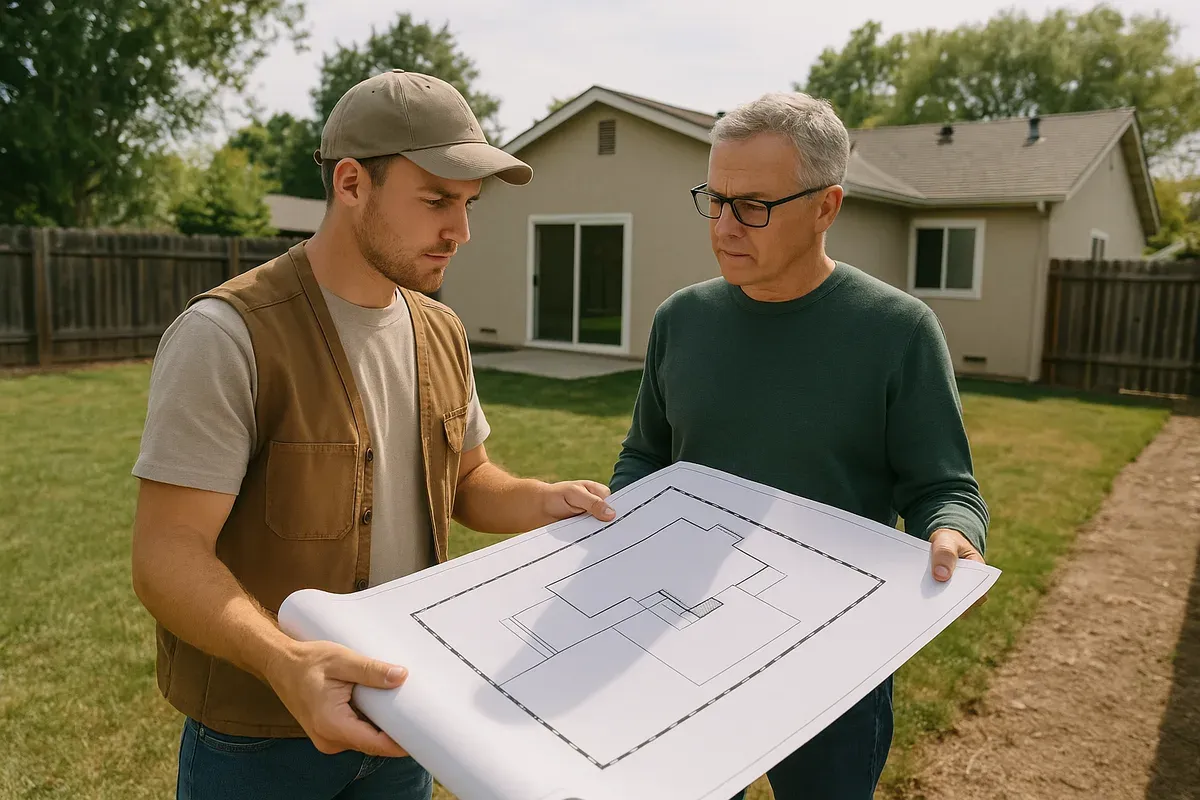
<h2>Everything You Need to Know Before You Build a Fence in Sacramento</h2>
<p>You've finally decided to put up that fence. Maybe you want privacy from the neighbors, a safe yard for your kids, or a clean boundary line between your property and the sidewalk. Whatever the reason, the moment you start researching the process in Sacramento, you discover something that surprises a lot of <a href="/homeowners">homeowners</a>: fences aren't always as simple as digging a few post holes and calling it a day.</p>
<p>Sacramento has specific rules about fence height, materials, placement, and when you need a permit. Get it wrong and you could face a stop-work order, a fine, or worse: a demand to tear down the fence you just paid a contractor to build. This guide walks you through every major requirement, explains when a permit is mandatory, and shows you how a professional site plan can be the difference between a smooth approval and a frustrating back-and-forth with the city.</p>
<p>Let's get into it.</p>
<hr>
<h2>Do You Need a <a href="/fence-deck-site-plans">Fence Permit</a> in Sacramento?</h2>
<p>Not every fence in Sacramento requires a permit, but many do. The City of Sacramento's Development Services Department enforces zoning and building codes that determine when a permit is required. Here's the general breakdown:</p>
<h3>When a Permit Is NOT Required</h3>
<p>You typically don't need a <a href="/construction-permit-site-plans">building permit</a> for a fence if:</p>
<ul>
<li>The fence is <strong>6 feet or less</strong> in height in a rear or side yard</li>
<li>The fence is <strong>3.5 feet or less</strong> in height in a front yard or street-side yard</li>
<li>The fence does not use masonry or concrete construction above certain height thresholds</li>
<li>The fence is not located in a flood zone, historic district, or other special overlay zone</li>
</ul>
<p>These are general thresholds, and exceptions exist depending on your specific zoning district. Always verify with the <a href="https://www.cityofsacramento.org/Community-Development" rel="nofollow noopener" target="_blank">City of Sacramento Community Development Department</a> before assuming no permit is needed.</p>
<h3>When a Permit IS Required</h3>
<p>You will generally need a Sacramento fence permit if:</p>
<ol>
<li>Your fence exceeds 6 feet in height anywhere on the property</li>
<li>You're building a masonry wall (brick, block, or concrete) over 3 feet tall</li>
<li>Your property is in a Special Flood Hazard Area (SFHA) as designated by <a href="https://msc.fema.gov/portal/home" rel="nofollow noopener" target="_blank">FEMA's Flood Map Service Center</a></li>
<li>Your property is in a historic preservation district</li>
<li>The fence is on a corner lot with sight-line visibility concerns</li>
<li>You're building a fence around a <a href="/pool-site-plans">swimming pool</a> (pool barrier requirements apply separately)</li>
<li>Your fence is part of a larger construction project already requiring a permit</li>
</ol>
<p>Pool safety fencing in particular is governed by strict California Building Code requirements, which align with the International Building Code standards published by the <a href="https://www.iccsafe.org" rel="nofollow noopener" target="_blank">International Code Council</a>. These rules exist to prevent accidental drowning and are non-negotiable.</p>
<hr>
<h2>Sacramento Fence Height Limits by Zone and Location</h2>
<p>One of the most common points of confusion for Sacramento homeowners is that fence height limits aren't uniform across the property. Where your fence is located on the lot matters enormously.</p>
<h3>Front Yard Fence Height Limits</h3>
<p>In most residential zones in Sacramento, the front yard fence height limit is <strong>3.5 feet</strong> (42 inches). This applies to the area between your home and the front property line, including the street-facing side of a corner lot.</p>
<p>The reasoning behind this limit is safety and visibility. Low front fences allow drivers, cyclists, and pedestrians to maintain clear sightlines, especially near driveways and intersections.</p>
<p>Some exceptions exist:</p>
<ul>
<li>Certain agricultural and rural zones may allow taller front fences</li>
<li>Decorative or open-style fences (wrought iron, split rail) may have slightly different treatment in some overlay zones</li>
<li>Properties with approved variances can exceed standard limits</li>
</ul>
<h3>Side and Rear Yard Fence Height Limits</h3>
<p>For the side and rear portions of your property, Sacramento generally allows fences up to <strong>6 feet</strong> in height without a permit in standard residential zones. This is the most common scenario for privacy fencing.</p>
<p>However, if you want to go taller (7 or 8 feet is common for noise reduction near busy streets), you'll need to apply for a building permit and potentially a zoning variance depending on your district.</p>
<h3>Corner Lot Rules</h3>
<p>Corner lots in Sacramento come with additional complexity. The "street side yard" of a corner lot is treated more like a front yard for fence height purposes. This means the fence along the side street may also be limited to 3.5 feet rather than the 6-foot limit that applies to interior side yards.</p>
<p>There's also a sight distance triangle requirement near intersections. Within a triangular area defined by the two street property lines and a diagonal line connecting them at specified distances, fence heights are strictly limited to preserve driver visibility. Your site plan will need to show this triangle clearly if it applies to your property.</p>
<h3>Fence Height in Special Districts</h3>
<p>If your property falls within one of Sacramento's special planning areas, historic districts, or specific plan zones, different rules may apply:</p>
<ul>
<li><strong>Historic preservation districts</strong>: The city may require design review for fences that are visible from the street, including restrictions on materials and style</li>
<li><strong>Specific plan areas</strong>: Neighborhoods developed under a specific plan (such as Natomas, North Natomas, or various infill areas) may have their own fence standards written into the plan document</li>
<li><strong>Flood zones</strong>: FEMA-designated flood zones may restrict solid fence panels that could impede water flow during flood events</li>
</ul>
<hr>
<h2>Setback Requirements and Property Line Rules</h2>
<p>Beyond height, where you place your fence matters. Setbacks define how close a structure can be to a property line, easement, or public right-of-way.</p>
<h3>Property Line Placement</h3>
<p>Fences are generally allowed to be placed directly on the property line in Sacramento, but this comes with important caveats:</p>
<ul>
<li>You must be certain of your property boundaries before building. Disputes with neighbors over fence placement are extremely common and can result in costly legal issues.</li>
<li>Some fence <a href="/contractors">contractors</a> recommend placing the fence a few inches inside the property line to avoid encroachment issues.</li>
<li>If there's any doubt, hire a licensed land surveyor to locate and mark your corners before construction begins.</li>
</ul>
<h3>Easements</h3>
<p>Easements are areas of your property where another party (often a utility company or the city) has the right to access or use the land. You may not be able to build a fence in an easement, or if you do, you may be required to remove it if the easement holder needs access.</p>
<p>Common easements in Sacramento include:</p>
<ul>
<li>Utility easements along rear property lines</li>
<li>Drainage easements in flood-prone areas</li>
<li>Public pedestrian easements in some newer subdivisions</li>
</ul>
<p>Your property's easements should be shown on your deed, title report, or a recorded plat map. A good site plan will clearly mark any easements on the property.</p>
<h3>Right-of-Way Considerations</h3>
<p>The public right-of-way (ROW) typically extends several feet beyond the curb or edge of pavement. Your property line is NOT the edge of the sidewalk. In many Sacramento neighborhoods, the city owns a strip of land between the sidewalk and the actual property line, sometimes including the parking strip where street trees are planted.</p>
<p>Building a fence in the public right-of-way without city approval is a code violation. Make sure your site plan accurately shows the right-of-way line and that your fence is positioned on your property.</p>
<hr>
<h2>How to Apply for a Sacramento Fence Permit</h2>
<p>If your project requires a permit, here's what the application process typically looks like through the City of Sacramento's permitting system.</p>
<h3>Step 1: Confirm Your Zoning</h3>
<p>Before anything else, look up your property's zoning designation using Sacramento's online mapping tools or by contacting the planning counter. Your zone determines which rules apply to your fence project.</p>
<h3>Step 2: Prepare Your Application Documents</h3>
<p>For a fence permit application, you'll typically need to submit:</p>
<ol>
<li><strong>A completed permit application form</strong> (available through the city's online portal)</li>
<li><strong>A site plan</strong> showing the property boundaries, existing structures, proposed fence location, fence height, and distances from property lines</li>
<li><strong>Construction details</strong> or specifications for the fence (materials, post depth, footing design for masonry walls)</li>
<li><strong>Proof of property ownership</strong> or authorization from the owner</li>
<li><strong>Photos of the existing site</strong> (sometimes requested)</li>
</ol>
<p>The site plan is often the document that causes the most delays. Applicants who submit a vague or incomplete site plan frequently receive correction notices that add weeks to the process.</p>
<h3>Step 3: Submit and Pay Fees</h3>
<p>Sacramento processes many residential permits through its online permitting portal. Fence permit fees are generally modest for simple projects but can increase for larger or more complex applications. Check the current fee schedule with the city directly, as fees are updated periodically.</p>
<h3>Step 4: Review and Approval</h3>
<p>Simple fence permits in Sacramento can sometimes be approved over the counter or within a few business days for straightforward projects. More complex applications involving zoning variances, design review, or special districts take longer.</p>
<h3>Step 5: Inspections</h3>
<p>For permitted fence projects, the city may require one or more inspections. For masonry walls, a footing inspection before pouring concrete is common. For wood or metal fences, a final inspection may be required.</p>
<hr>
<h2>Why Your Site Plan Is the Most Important Part of the Application</h2>
<p>If you've read this far, you've probably noticed that the site plan keeps coming up. That's not an accident. For fence permit applications in Sacramento, the site plan is the document that communicates everything the city needs to evaluate your project.</p>
<h3>What a Fence Permit Site Plan Must Show</h3>
<p>A complete site plan for a Sacramento fence permit should include:</p>
<ul>
<li><strong>Property boundaries</strong> with dimensions (lot width and depth)</li>
<li><strong>North arrow and scale</strong></li>
<li><strong>Existing structures</strong> on the property (house, garage, shed, pool, etc.) with their dimensions and distances from property lines</li>
<li><strong>Proposed fence location</strong> clearly drawn along the relevant property lines or interior locations</li>
<li><strong>Fence height</strong> labeled at each section if height varies</li>
<li><strong>Setback distances</strong> from property lines, easements, and structures</li>
<li><strong>Street names</strong> adjacent to the property</li>
<li><strong>Driveway and gate locations</strong></li>
<li><strong>Any easements</strong> shown on the property</li>
<li><strong>Sight distance triangle</strong> if applicable (corner lots)</li>
<li><strong>Flood zone designation</strong> if in or near a SFHA</li>
</ul>
<p>A hand-drawn sketch on a napkin won't cut it. Sacramento's reviewers need a clear, scaled drawing that allows them to verify compliance with all applicable rules without having to guess.</p>
<h3>Common Site Plan Mistakes That Cause Delays</h3>
<p>Based on what permit reviewers frequently flag, here are the most common errors in fence permit site plans:</p>
<ol>
<li><strong>No scale or inconsistent scale</strong>: The drawing must be to scale so reviewers can verify distances</li>
<li><strong>Missing property dimensions</strong>: Without knowing the lot size, reviewers can't confirm setbacks</li>
<li><strong>Omitting existing structures</strong>: Every structure on the lot must be shown</li>
<li><strong>Not showing easements</strong>: If an easement exists and isn't shown, the reviewer may flag it</li>
<li><strong>Unclear fence location</strong>: The fence line must be clearly distinguished from property lines and other features</li>
<li><strong>No north arrow</strong>: Orientation is required for all site plans</li>
<li><strong>Missing height callouts</strong>: Every section of fence should have its height labeled</li>
</ol>
<h3>Creating a Professional Site Plan with <a href="/">Site Plan Creator</a></h3>
<p>This is where Site Plan Creator makes a real difference. Instead of wrestling with graph paper, generic drawing software, or expensive CAD programs, you can use Site Plan Creator's browser-based tools to produce a clean, scaled, permit-ready site plan in a fraction of the time.</p>
<p>Here's how the process typically works for a fence project:</p>
<ol>
<li><strong>Enter your property address</strong>: Site Plan Creator can pull in your parcel dimensions and help you set up the base drawing</li>
<li><strong>Draw your lot boundaries</strong>: Use the precision drawing tools to accurately represent your property lines</li>
<li><strong>Place existing structures</strong>: Add your house footprint, garage, and any other structures with accurate dimensions</li>
<li><strong>Draw the proposed fence</strong>: Use the fence tool to place your fence line along the appropriate property lines</li>
<li><strong>Add labels and dimensions</strong>: Label fence heights, setback distances, and all other required annotations</li>
<li><strong>Add north arrow and scale bar</strong>: These are automatically included in your output</li>
<li><strong>Export and submit</strong>: Download a print-ready PDF that meets city submission standards</li>
</ol>
<p>The result is a professional site plan that looks like it came from a design firm, even if you've never used CAD software in your life. For Sacramento fence permits, this level of professionalism in your application documents can significantly reduce back-and-forth with the city and get your project moving faster.</p>
<hr>
<h2>Neighbor Agreements and HOA Rules</h2>
<p>Before you finalize your fence plans, there are two more stakeholders you may need to consider: your neighbors and your homeowners association.</p>
<h3>Fence Disputes with Neighbors</h3>
<p>California Civil Code Section 841 (the "Good Neighbor Fence Law") establishes that adjoining landowners share equal responsibility for fences on the property line. Key points include:</p>
<ul>
<li>Both neighbors share the cost of a shared boundary fence unless one party can show the fence is not needed</li>
<li>You must provide written notice to your neighbor at least 30 days before starting construction on a shared fence</li>
<li>The notice should include the proposed fence design, materials, and estimated cost</li>
</ul>
<p>Even if the law is on your side, a conversation with your neighbor before you start is always a good idea. Fence disputes are one of the most common sources of neighbor conflict, and a little communication upfront can prevent a lot of headaches.</p>
<h3>HOA Restrictions</h3>
<p>If your property is in a homeowners association, the HOA's CC&Rs (Covenants, Conditions, and Restrictions) may impose additional rules beyond city code:</p>
<ul>
<li>Approved fence materials (some HOAs prohibit chain link or certain wood types)</li>
<li>Color and finish requirements</li>
<li>Maximum fence heights that are stricter than city limits</li>
<li>Required setbacks from property lines</li>
<li>Approval process before construction begins</li>
</ul>
<p>HOA approval and city permit approval are separate processes. You need both. Skipping the HOA step can result in fines and a demand to modify or remove the fence, even if the city already approved it.</p>
<hr>
<h2>Special Situations: Pools, Slopes, and Flood Zones</h2>
<h3>Pool Safety Fencing Requirements</h3>
<p>If you have a swimming pool (or are adding one), California law requires a pool barrier that meets specific standards under California Building Code Section 3109 and local amendments. In Sacramento, this typically means:</p>
<ul>
<li>A fence at least 60 inches (5 feet) high surrounding the pool area</li>
<li>No openings that allow a 4-inch sphere to pass through</li>
<li>Self-closing, self-latching gates that open away from the pool</li>
<li>No climbable features on the pool side of the fence</li>
</ul>
<p>Pool barrier permits are handled separately from general fence permits and require their own inspection.</p>
<h3>Fences on Sloped Properties</h3>
<p>Sloped lots create a measurement challenge. Is fence height measured from the top of the slope, the bottom, or the average grade? Sacramento generally measures fence height from the adjacent grade at each point along the fence. On a steeply sloped lot, this can mean your fence appears taller on one side than the other while still complying with height limits.</p>
<p>Your site plan should show grade elevations if your lot has significant slope, so the reviewer can verify height compliance.</p>
<h3>Fences in FEMA Flood Zones</h3>
<p>Properties in FEMA-designated Special Flood Hazard Areas face additional restrictions. Solid panel fences can obstruct flood water flow and increase flood damage to structures. Sacramento's floodplain management regulations may require that fences in these areas use open-style construction (such as split rail or wrought iron) rather than solid panels.</p>
<p>Check your property's flood zone status using the <a href="https://msc.fema.gov/portal/home" rel="nofollow noopener" target="_blank">FEMA Flood Map Service Center</a> before finalizing your fence design.</p>
<hr>
<h2>Tips for a Smooth Fence Permit Experience in Sacramento</h2>
<p>Based on everything covered in this guide, here are the most actionable tips for getting your Sacramento fence permit approved efficiently:</p>
<ol>
<li><strong>Start with zoning research</strong>: Know your zone and its specific fence rules before you design anything</li>
<li><strong>Survey your property first</strong>: Don't guess where your property lines are</li>
<li><strong>Check for easements</strong>: Pull your title report or contact a title company to identify any easements</li>
<li><strong>Talk to your neighbors</strong>: Especially if the fence will be on or near a shared boundary</li>
<li><strong>Check your HOA rules</strong>: Get written approval from your HOA before applying for a city permit</li>
<li><strong>Prepare a complete site plan</strong>: Use professional tools like Site Plan Creator to produce a clear, scaled drawing</li>
<li><strong>Include all required details</strong>: Don't leave the reviewer guessing about heights, locations, or materials</li>
<li><strong>Apply online when possible</strong>: Sacramento's online permitting portal is generally faster than in-person submissions for simple projects</li>
<li><strong>Respond quickly to correction notices</strong>: If the city sends a correction request, address it promptly to avoid losing your place in the queue</li>
<li><strong>Schedule inspections early</strong>: Once approved, don't wait to schedule required inspections</li>
</ol>
<hr>
<h2>Conclusion: Build Your Sacramento Fence the Right Way</h2>
<p>Building a fence in Sacramento doesn't have to be a bureaucratic nightmare. Once you understand the height limits, setback rules, permit thresholds, and documentation requirements, the process becomes much more manageable.</p>
<p>The single most impactful thing you can do to streamline your permit application is to submit a complete, professional site plan from the start. A clear, scaled drawing that shows your property boundaries, existing structures, proposed fence location, and all required dimensions gives the city reviewer everything they need to approve your project without sending correction notices.</p>
<p>Site Plan Creator is built exactly for this purpose. Whether you're a homeowner handling your own permit application or a contractor managing multiple projects, Site Plan Creator's browser-based tools let you produce permit-ready site plans quickly, accurately, and without needing a background in CAD or engineering. Visit <a href="https://www.siteplancreator.com">siteplancreator.com</a> to start your site plan today and give your Sacramento fence permit application the professional foundation it needs to get approved.</p>