Phoenix Pool Permit Requirements: What Your Site Plan Must Include
Getting a pool permit in Phoenix requires a detailed, code-compliant site plan that satisfies the City of Phoenix Building Services department. This guide breaks down every element your site plan must include, from property boundaries to barrier requirements, so your permit application sails through on the first submission.
<h2>Why Your Phoenix Pool Permit Starts With a Great Site Plan</h2>
<p>Every summer in the Valley of the Sun, thousands of <a href="/homeowners">homeowners</a> dream of adding a backyard pool. And every year, hundreds of those permit applications get kicked back by the City of Phoenix Building Services department — not because the pool itself is a problem, but because the site plan is incomplete, inaccurate, or missing critical information.</p>
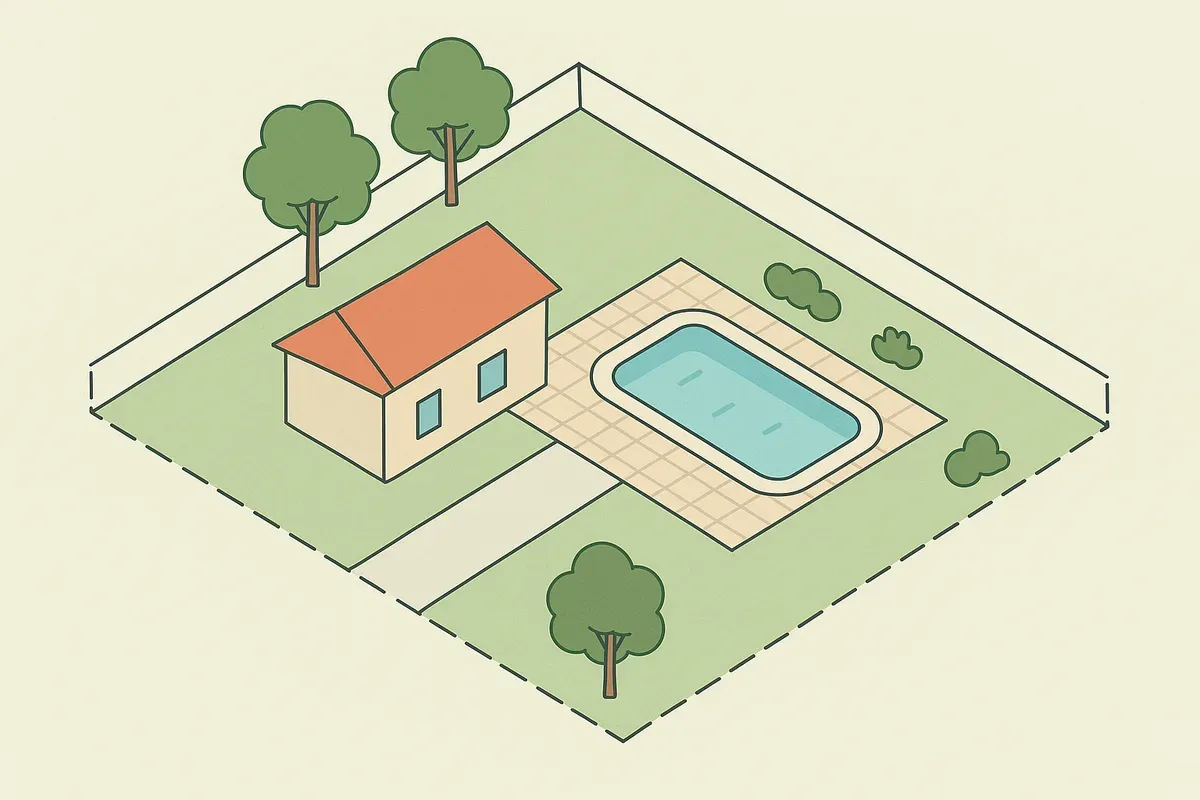
<p>A <strong>site plan</strong> is the top-down, scaled drawing of your property that shows reviewers exactly where your pool will sit, how far it sits from your property lines and structures, how barriers will be installed, and how the project fits within the rules governing your lot. In Phoenix, this document is non-negotiable. Without a permit-ready site plan, your application won't move forward — and your contractor can't legally break ground.</p>
<p>This guide walks you through every element the City of Phoenix requires on a pool permit site plan, explains the underlying code rationale, and gives you actionable steps to prepare a drawing that passes review the first time. Whether you're a homeowner navigating this process independently or a contractor looking to tighten up your submissions, you'll find everything you need here.</p>
<hr>
<h2>Understanding the Phoenix Pool Permit Process</h2>
<p>Before diving into what goes on the site plan itself, it helps to understand the broader permitting framework you're working within.</p>
<h3>Who Issues Pool Permits in Phoenix?</h3>
<p>The <a href="https://www.phoenix.gov/pdd" rel="nofollow noopener" target="_blank">City of Phoenix Development Services Department</a> handles all residential and commercial <a href="/construction-permit-site-plans">building permits</a>, including swimming pools, spas, and in-ground water features. Applications can be submitted online through the city's ProjectDox e-permit portal or in person at the Phoenix Permit Center located at 200 W. Washington Street.</p>
<p>Phoenix adopts the <strong>International Residential Code (IRC)</strong> and the <strong>International Building Code (IBC)</strong>, published by the <a href="https://www.iccsafe.org" rel="nofollow noopener" target="_blank">International Code Council (ICC)</a>, with local amendments. Pool-specific requirements draw heavily from IRC Appendix G (Swimming Pools, Spas, and Hot Tubs) and local Phoenix amendments that address the region's climate, lot sizes, and community standards.</p>
<h3>What Triggers a Pool Permit?</h3>
<p>In Phoenix, a permit is required for:</p>
<ul>
<li>Any in-ground or above-ground pool with a water depth exceeding 18 inches</li>
<li>Permanently installed spas and hot tubs</li>
<li>Significant remodels of existing pools (replastering, equipment upgrades, barrier changes)</li>
<li>Water features connected to pool systems</li>
</ul>
<p>Simple cosmetic repairs and equipment replacements under a certain value threshold may not require a permit, but when in doubt, call the Development Services Department to confirm before starting work.</p>
<h3>Typical Permit Timeline</h3>
<p>For standard residential pools, Phoenix targets a plan review turnaround of 10–15 business days for over-the-counter submissions, though complex projects or incomplete applications can extend this significantly. Projects in historic districts or HOA-overlay zones may require additional approvals before the city permit is issued.</p>
<hr>
<h2>The 10 Essential Elements of a Phoenix Pool Permit Site Plan</h2>
<p>This is the core of what you need to know. Each of the following elements must appear on your site plan drawing, clearly labeled and drawn to scale.</p>
<h3>1. Property Boundaries and Legal Description</h3>
<p>Your site plan must show the full outline of your lot with accurate dimensions on all sides. This means:</p>
<ul>
<li>Total lot width and depth in feet</li>
<li>All property line lengths labeled</li>
<li>The legal lot description (lot number, block, subdivision name, APN)</li>
<li>North arrow indicating orientation</li>
</ul>
<p>This information allows reviewers to verify that setback calculations are based on the actual lot geometry, not an approximation. Pull your dimensions from your recorded plat map or a current survey — do not rely on Google Maps or informal measurements.</p>
<h3>2. Existing Structures and Their Footprints</h3>
<p>Every structure already on the property must be shown:</p>
<ul>
<li>Primary dwelling (house) with its full footprint</li>
<li>Detached garages, guest houses, or <a href="/adu-feasibility-software">accessory dwelling units</a> (ADUs)</li>
<li>Covered patios, pergolas, and shade structures</li>
<li>Sheds and storage buildings</li>
<li>Any existing pools, spas, or water features</li>
</ul>
<p>Each structure should be labeled and its dimensions noted. This context lets reviewers evaluate setbacks between the proposed pool and all existing improvements.</p>
<h3>3. Proposed Pool Location and Dimensions</h3>
<p>The pool itself must be drawn to scale and fully dimensioned:</p>
<ul>
<li>Overall pool length and width</li>
<li>Shape (rectangular, freeform, L-shaped, etc.) accurately represented</li>
<li>Water surface area in square feet (useful for equipment sizing documentation)</li>
<li>Location of steps, ledges, and shallow/deep end transitions if relevant to barrier placement</li>
<li>Spa or attached water feature location if applicable</li>
<li>Equipment pad location (pump, filter, heater, automation equipment)</li>
</ul>
<p>Pool dimensions on the site plan should match the structural drawings submitted with your application.</p>
<h3>4. Setback Distances — The Most Critical Measurements</h3>
<p>Setbacks are the minimum distances required between the pool's water's edge (or pool wall, depending on the measurement point specified) and various boundaries or structures. In Phoenix, the standard residential setbacks for pools are:</p>
<ul>
<li><strong>Rear property line:</strong> 5 feet minimum from pool water's edge</li>
<li><strong>Side property lines:</strong> 5 feet minimum from pool water's edge</li>
<li><strong>Front property line:</strong> Pools are generally not permitted in the front yard</li>
<li><strong>Primary dwelling:</strong> No minimum specified in all cases, but must comply with fire separation and egress requirements — typically shown as a practical clearance of 3–5 feet for equipment access</li>
<li><strong>Easements:</strong> No pool construction within recorded utility or drainage easements</li>
</ul>
<p>Your site plan must show each setback as a dimensioned arrow or callout from the pool edge to the relevant boundary. Reviewers will measure these on your drawing, so accuracy is essential. If your lot has unusual geometry — a pie-shaped lot, a corner lot, or a lot with a recorded easement — call this out clearly and confirm the applicable setback rules with the Development Services Department before submitting.</p>
<p><strong>Corner lots</strong> in Phoenix require special attention: both street-facing sides are typically treated as front yards for setback purposes, which can significantly constrain where a pool can be placed.</p>
<h3>5. Barrier and Fence Requirements</h3>
<p>Pool barrier requirements are among the most scrutinized elements of any Phoenix pool permit application, and for good reason — Arizona has one of the highest rates of childhood drowning in the nation. The state of Arizona passed <a href="https://www.azleg.gov" rel="nofollow noopener" target="_blank">dedicated pool barrier legislation</a> that Phoenix enforces and supplements with local code.</p>
<p>Your site plan must show:</p>
<ul>
<li>The complete barrier enclosure around the pool area</li>
<li>Barrier height (minimum 5 feet in Phoenix for residential pools)</li>
<li>Gate locations, including which direction they swing (must swing away from the pool)</li>
<li>Self-closing and self-latching hardware notation</li>
<li>Distance from barrier to pool water's edge (minimum 20 inches from inside of barrier to pool wall)</li>
<li>Any portion of the dwelling that serves as part of the barrier (e.g., a wall of the house)</li>
<li>Door alarms if the house wall serves as part of the barrier</li>
</ul>
<p>If your existing fence will serve as part or all of the pool barrier, it must meet current code requirements. Older fences with horizontal rails that could be climbed, or picket spacing greater than 4 inches, will need to be replaced or supplemented.</p>
<h3>6. Utility Locations and Clearances</h3>
<p>Phoenix requires pool applicants to demonstrate awareness of and compliance with utility clearance requirements:</p>
<ul>
<li><strong>Underground utilities:</strong> Show locations of gas, water, sewer, and electrical lines crossing or adjacent to the pool area. Call 811 (Arizona 811 — Blue Stake) before finalizing your design.</li>
<li><strong>Overhead electrical lines:</strong> Minimum horizontal clearance of 10 feet from the pool water's edge to any overhead power line; minimum vertical clearance of 22.5 feet above the water surface</li>
<li><strong>Gas meters and electrical panels:</strong> Note locations; equipment must maintain required clearances</li>
<li><strong>Drainage:</strong> Show how pool backwash and overflow water will be directed; discharge to the street or storm drain may require additional approval</li>
</ul>
<h3>7. Pool Equipment Location</h3>
<p>The equipment pad — where your pump, filter, heater, and automation systems will live — must be shown on the site plan with:</p>
<ul>
<li>Dimensions of the equipment pad area</li>
<li>Distance from property lines (equipment must also meet <a href="/setback-guide">setback requirements</a>)</li>
<li>Distance from gas meter, electrical panel, and dwelling openings</li>
<li>Notation of electrical subpanel if required</li>
</ul>
<p>Phoenix also requires that pool equipment be accessible for inspection without entering the pool barrier enclosure, which affects where you can position the gate and equipment pad relative to each other.</p>
<h3>8. Grading and Drainage Notation</h3>
<p>While a full grading plan may not be required for straightforward pool installations, your site plan should indicate:</p>
<ul>
<li>General slope direction of the yard</li>
<li>How excavated material will be managed</li>
<li>Drainage swales or retention areas if the pool installation will alter natural drainage patterns</li>
<li>Deck drainage direction (water should drain away from the dwelling)</li>
</ul>
<p>If your lot is in or adjacent to a FEMA Special Flood Hazard Area, you'll need to reference your <a href="https://msc.fema.gov/portal/home" rel="nofollow noopener" target="_blank">FEMA flood map</a> and may need additional documentation or an elevation certificate before your permit can be issued.</p>
<h3>9. Scale Bar and Drawing Notes</h3>
<p>Every permit-ready site plan must include:</p>
<ul>
<li>A graphic scale bar (e.g., 1 inch = 10 feet or 1 inch = 20 feet)</li>
<li>Written scale notation</li>
<li>Project address</li>
<li>Owner name and contact information</li>
<li>Preparer name and contact information</li>
<li>Date of preparation</li>
<li>Revision history if the drawing has been updated</li>
</ul>
<p>Phoenix plan reviewers use the scale to verify all dimensions shown on the drawing. If your scale is off, every measurement is suspect and the plan may be rejected outright.</p>
<h3>10. Compliance Notes and Code References</h3>
<p>Include a notes block on your site plan that references the applicable codes and confirms key compliance points:</p>
<ul>
<li>IRC Appendix G compliance</li>
<li>Arizona barrier law compliance (A.R.S. § 36-1681)</li>
<li>Pool barrier height and hardware specifications</li>
<li>Electrical bonding and grounding (per NEC Article 680)</li>
<li>Anti-entrapment drain cover compliance (Virginia Graeme Baker Pool and Spa Safety Act)</li>
</ul>
<p>These notes signal to reviewers that the design was prepared with code awareness, which builds confidence and can speed up the review process.</p>
<hr>
<h2>Common Reasons Phoenix Pool Permits Get Rejected</h2>
<p>Understanding why applications fail is just as valuable as knowing what to include. The most frequent reasons for plan rejection in Phoenix include:</p>
<ol>
<li><strong>Missing or inaccurate setback dimensions</strong> — Reviewers can't approve what they can't verify</li>
<li><strong>Barrier plan omitted or incomplete</strong> — No barrier plan is an automatic rejection</li>
<li><strong>Overhead utility clearances not addressed</strong> — Especially common in older neighborhoods</li>
<li><strong>Drawing not to scale</strong> — Dimensions don't match the scaled drawing</li>
<li><strong>Equipment pad location missing</strong> — Often overlooked but required</li>
<li><strong>Easements ignored</strong> — Pool drawn within a utility or drainage easement</li>
<li><strong>Legal description absent</strong> — Reviewers can't confirm the lot without it</li>
<li><strong>No north arrow</strong> — Simple omission that flags an unprofessional submission</li>
</ol>
<p>A single missing element can send your application back to the start of the queue, adding weeks to your timeline and delaying the start of construction.</p>
<hr>
<h2>Special Situations That Affect Your Phoenix </h2>
<h3>HOA Overlay and Design Review</h3>
<p>Many Phoenix neighborhoods — particularly in areas like Arcadia, Ahwatukee, and the Biltmore corridor — have active HOAs with their own design review processes. HOA approval is typically required before you submit to the city. Your site plan may need to include additional information like pool coping material, deck finish, and landscaping screening to satisfy HOA requirements.</p>
<h3>Historic Preservation Districts</h3>
<p>Properties within Phoenix's historic preservation overlay zones face additional scrutiny. The Historic Preservation Office reviews pool permits to ensure the installation doesn't negatively impact the historic character of the property or neighborhood. Pools in rear yards of historic properties are generally approvable, but equipment placement and barrier design may need to be modified.</p>
<h3>Lots With Slopes or </h3>
<p>If your lot has significant grade changes, you may need to include a <a href="/retaining-wall-site-plans">retaining wall</a> plan with your pool permit application. Pools installed on or near slopes require engineering review to confirm soil stability and wall design. This adds to the documentation package but doesn't change what the site plan itself must show.</p>
<h3>Combination Pool and Outdoor Kitchen Permits</h3>
<p>Many Phoenix homeowners pull a combined permit for a pool, outdoor kitchen, pergola, and extended patio all at once. In this case, your site plan needs to show all proposed improvements simultaneously, with setbacks and dimensions for each element. This is actually more efficient than pulling separate permits, as it requires only one plan review cycle.</p>
<hr>
<h2>Tips for Preparing a Permit-Ready Pool Site Plan in Phoenix</h2>
<p>With the requirements clear, here are practical strategies to make your site plan preparation as smooth as possible:</p>
<ol>
<li><p><strong>Start with your recorded plat.</strong> Obtain your official plat map from the Maricopa County Recorder's office or through the county's online GIS portal. This gives you accurate lot dimensions to build from.</p>
</li>
<li><p><strong>Call 811 before you draw.</strong> Arizona 811 (Blue Stake) will mark underground utilities at no charge. Incorporate those locations into your site plan before submission.</p>
</li>
<li><p><strong>Measure your existing structures.</strong> Don't rely on county assessor records for structure dimensions — measure the actual footprints and distances from property lines.</p>
</li>
<li><p><strong>Use a scaled drawing tool.</strong> Freehand sketches are not accepted. Your site plan must be drawn to a consistent, stated scale. Browser-based CAD tools like <a href="/">Site Plan Creator</a> allow you to input real dimensions and generate accurate, scaled drawings without specialized software training.</p>
</li>
<li><p><strong>Double-check every setback.</strong> Before submitting, measure every setback on your drawing using the stated scale. If the numbers don't match what you've labeled, fix it.</p>
</li>
<li><p><strong>Include a barrier legend.</strong> If your barrier uses multiple fence types, gate hardware, or incorporates the house wall, use a legend to clearly differentiate each element.</p>
</li>
<li><p><strong>Pre-application meeting option.</strong> For complex projects, Phoenix offers pre-application meetings with plan reviewers. This 30-minute conversation can save weeks of back-and-forth on a complicated submission.</p>
</li>
<li><p><strong>Keep a revision log.</strong> If you need to revise and resubmit, clearly note the revision date and what changed. Reviewers appreciate being able to quickly identify what's new.</p>
</li>
</ol>
<hr>
<h2>What Happens After Your Site Plan Is Approved</h2>
<p>Approval of your site plan and permit doesn't mean construction can begin immediately without oversight. Phoenix requires:</p>
<ul>
<li><strong>Pre-construction inspection:</strong> In some cases, an inspector will verify staking before excavation begins</li>
<li><strong>Rough inspection:</strong> After excavation and before shotcrete or gunite is applied, an inspector reviews the steel reinforcement and plumbing rough-in</li>
<li><strong>Barrier inspection:</strong> The pool barrier must be inspected and approved before the pool can be filled with water</li>
<li><strong>Final inspection:</strong> Covers all equipment, electrical bonding, barrier hardware, and overall completion</li>
</ul>
<p>Your approved site plan will be on file with the city and must be available on site during inspections. Keep a printed copy in a weatherproof sleeve at the job site.</p>
<hr>
<h2>How Site Plan Creator Simplifies Phoenix Pool Permits</h2>
<p>Preparing a permit-ready site plan used to mean hiring a draftsperson or architect, waiting days for drawings, and paying hundreds of dollars before you even submitted to the city. Site Plan Creator changes that equation entirely.</p>
<p>Our browser-based platform lets you:</p>
<ul>
<li>Draw your property boundaries using real dimensions from your plat map</li>
<li>Place existing structures, proposed pool, equipment pad, and barriers accurately to scale</li>
<li>Add setback dimension lines with automatic labeling</li>
<li>Include all required notes, north arrows, scale bars, and legal information</li>
<li>Export a professional PDF ready for Phoenix Building Services submission</li>
</ul>
<p>Thousands of Arizona homeowners and <a href="/contractors">contractors</a> have used Site Plan Creator to generate permit-ready drawings for Phoenix pool projects — drawings that pass first-submission review and get pools built faster. The platform is designed specifically for non-engineers who need professional results without the professional price tag.</p>
<hr>
<h2>Conclusion</h2>
<p>A Phoenix pool permit is entirely achievable when you approach the site plan with the right knowledge and the right tools. The City of Phoenix has clear, consistent requirements: accurate property boundaries, dimensioned setbacks, a complete barrier plan, utility clearances, equipment locations, and proper drawing standards. Miss any one of these, and you're looking at a resubmission delay that pushes your pool project back by weeks.</p>
<p>The good news is that none of this is beyond a motivated homeowner or a contractor who wants to tighten up their permit submissions. With the requirements laid out in this guide and a tool like <strong>Site Plan Creator</strong>, you can produce a drawing that meets every City of Phoenix requirement and gets your project moving.</p>
<p>Ready to build your permit-ready <a href="/pool-site-plans">pool site plan</a>? Visit <a href="https://www.siteplancreator.com">Site Plan Creator</a> and start your drawing today — no CAD experience required.</p>