Nashville Pool Permit Requirements: Your Site Plan Guide
Getting a pool permit in Nashville requires more than just filling out an application — Metro Nashville's permit office needs a detailed site plan showing property boundaries, setbacks, equipment placement, and more. This guide breaks down every requirement so your Davidson County pool permit moves through review without delays.
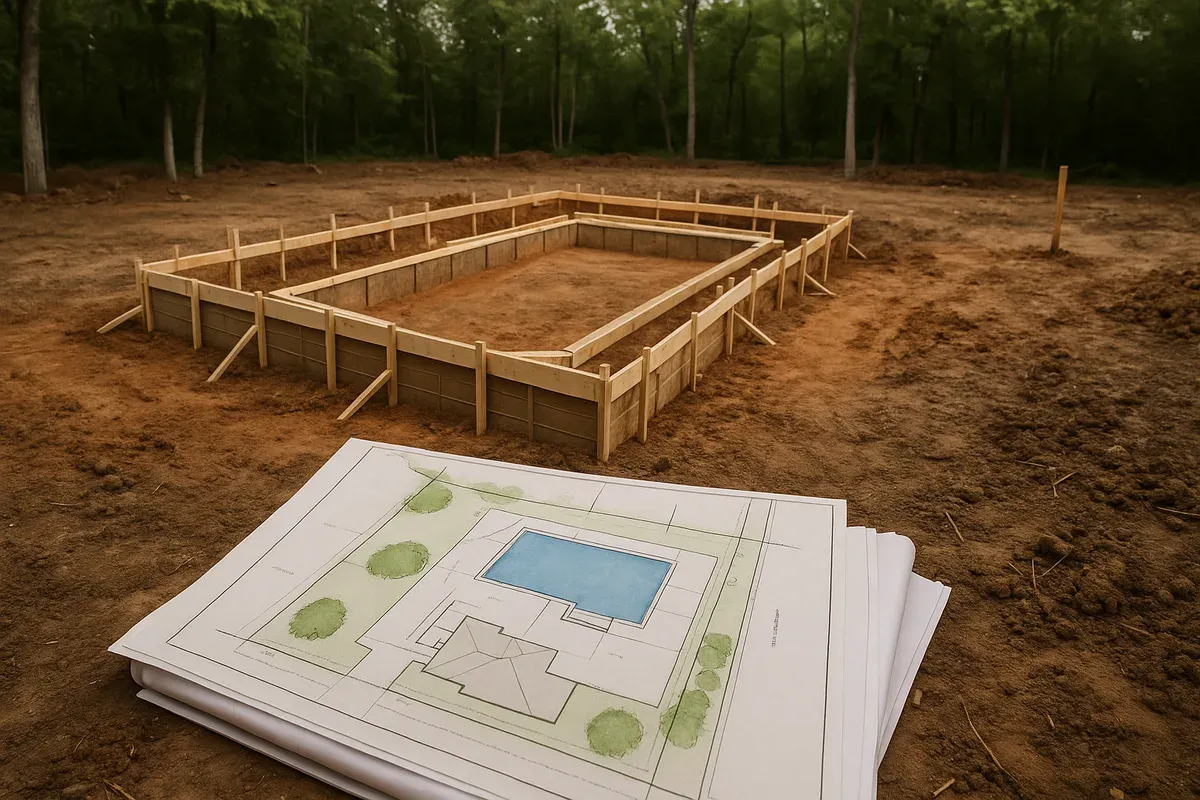
<h2>Nashville Pool Permit Requirements: What Metro Nashville Needs on Your Site Plan</h2>
<p>You've picked the pool style, chosen the contractor, and mentally reserved your first Saturday afternoon poolside. Then reality arrives in the form of a permit application — and suddenly you're staring at a checklist that mentions setbacks, drainage easements, equipment zones, and a site plan you have no idea how to produce.</p>
<p>You're not alone. The Metro Nashville pool permit process trips up <a href="/homeowners">homeowners</a> and even experienced <a href="/contractors">contractors</a> who underestimate what Davidson County's permit office actually needs to see before they'll issue approval. The good news: once you understand the requirements, the process is genuinely manageable. This guide walks you through every element Metro Nashville expects on your site plan, explains the reasoning behind each requirement, and gives you practical advice for getting your permit approved without costly back-and-forth revisions.</p>
<hr>
<h2>Why Nashville Requires a Site Plan for Pool Permits</h2>
<p>Metro Nashville — governed by the <a href="https://www.nashville.gov/departments/codes" rel="nofollow noopener" target="_blank">Metro Nashville-Davidson County Metropolitan Government</a> — requires a site plan for <a href="/pool-site-plans">swimming pool</a> permits for the same reason it requires one for room additions or detached garages: a pool fundamentally changes your property's footprint, drainage behavior, and relationship to neighboring lots.</p>
<p>A site plan gives the codes department a bird's-eye view of your property so reviewers can verify:</p>
<ul>
<li>Your pool and associated equipment respect required setbacks from property lines, easements, and structures</li>
<li>Impervious surface coverage limits aren't exceeded</li>
<li>Drainage won't be redirected onto neighboring properties</li>
<li>The pool's location doesn't conflict with underground utilities or recorded easements</li>
<li>Fencing and barrier requirements can be assessed relative to the pool's position</li>
</ul>
<p>Without an accurate site plan, the permit office is essentially being asked to approve a project they can't visualize. Submitting an incomplete or inaccurate plan is the single most common reason Nashville pool permits get delayed or rejected outright.</p>
<hr>
<h2>Understanding Metro Nashville's Permit Jurisdiction</h2>
<p>Before diving into site plan specifics, it's worth clarifying who has authority over your project. Metro Nashville and Davidson County operate as a unified metropolitan government, so most residential properties within Davidson County fall under Metro Nashville's Codes Administration department.</p>
<p>However, there are important nuances:</p>
<h3>Incorporated Cities Within Davidson County</h3>
<p>Several smaller municipalities — including Berry Hill, Forest Hills, Goodlettsville (partially), Lakewood, and Oak Hill — have their own codes departments and may have different permit requirements. If your property is in one of these areas, confirm directly with your local municipality before assuming Metro Nashville's requirements apply.</p>
<h3>HOA Requirements Are Separate</h3>
<p>Even after Metro Nashville approves your pool permit, your homeowners association may have its own approval process, aesthetic guidelines, or setback rules that are <em>more restrictive</em> than Metro's minimums. Always check with your HOA before finalizing your pool design — discovering a conflict after permit approval is an expensive problem.</p>
<h3>Tennessee State Codes</h3>
<p>Metro Nashville adopts and locally amends the International Building Code (IBC) and International Residential Code (IRC). For pools specifically, the <a href="https://www.iccsafe.org/products-and-events/i-codes/2021-i-codes/ispsc/" rel="nofollow noopener" target="_blank">International Swimming Pool and Spa Code (ISPSC)</a> published by the International Code Council establishes baseline requirements that Metro Nashville incorporates by reference. Understanding the ISPSC helps you anticipate what reviewers are looking for even before you read Metro's local amendments.</p>
<hr>
<h2>What Type of Pool Requires a Permit in Nashville?</h2>
<p>Not every pool triggers a full permit process. Here's how Metro Nashville generally categorizes pools:</p>
<p><strong>Permit Required:</strong></p>
<ul>
<li>In-ground pools of any size</li>
<li>Above-ground pools with a water depth of 24 inches or more</li>
<li>Attached spas or hot tubs that are permanently installed</li>
<li>Any pool connected to the home's electrical system</li>
</ul>
<p><strong>Often Exempt (but confirm with Metro Codes):</strong></p>
<ul>
<li>Portable inflatable pools under 24 inches deep</li>
<li>Small wading pools that aren't permanently installed</li>
</ul>
<p>When in doubt, call Metro Nashville Codes Administration at (615) 862-6590 or check the <a href="https://www.nashville.gov/departments/codes" rel="nofollow noopener" target="_blank">Metro Nashville Codes Administration portal</a> before assuming your project is exempt. An unpermitted pool discovered during a home sale or insurance claim can create serious legal and financial complications.</p>
<hr>
<h2>The Core Site Plan Requirements for a Nashville Pool Permit</h2>
<p>This is the heart of what you need to know. Metro Nashville's codes department requires your site plan to contain specific information — and missing even one element can send your application back to square one.</p>
<h3>1. Property Boundaries and Lot Dimensions</h3>
<p>Your site plan must show the full perimeter of your lot with accurate dimensions. This isn't a rough sketch — reviewers need to verify setback compliance mathematically, which means your boundary lines need to reflect your actual recorded plat.</p>
<p>Practical tips:</p>
<ul>
<li>Pull your property's recorded plat from the Davidson County Register of Deeds or the Metro Nashville GIS portal</li>
<li>Verify that your plat dimensions match what's physically on the ground — discrepancies are common on older lots</li>
<li>Show all lot lines, including any irregular angles or curves on non-rectangular lots</li>
</ul>
<h3>2. Existing Structures and Building Footprints</h3>
<p>All existing structures on the property must appear on the site plan, including:</p>
<ul>
<li>The primary residence (with accurate footprint dimensions)</li>
<li>Detached garages or carports</li>
<li>Sheds and outbuildings</li>
<li>Covered patios, pergolas, and decks</li>
<li>Driveways and walkways</li>
</ul>
<p>This matters because <a href="/setback-guide">setback requirements</a> apply to the pool's relationship to structures as well as property lines. Metro Nashville requires pools to maintain specific distances from the foundation of your home.</p>
<h3>3. Proposed Pool Location and Dimensions</h3>
<p>The pool itself must be drawn to scale on the site plan, showing:</p>
<ul>
<li>The pool's outer perimeter dimensions (length and width for rectangular pools; radius or overall dimensions for freeform shapes)</li>
<li>The pool's position relative to all property lines, measured from the nearest edge of the pool shell</li>
<li>Any attached spa or water feature</li>
<li>Proposed decking or patio areas surrounding the pool (since these affect impervious surface calculations)</li>
</ul>
<h3>4. Setback Measurements — Nashville's Specific Requirements</h3>
<p>This is where many Nashville homeowners run into trouble. Metro Nashville's setback requirements for swimming pools vary by zoning district, so there's no single universal number that applies to every property. However, general residential zones typically require:</p>
<ul>
<li><strong>Rear property line:</strong> Minimum 5 feet from the pool edge to the rear property line (though some zones require more)</li>
<li><strong>Side property lines:</strong> Minimum 5 feet from the pool edge to side property lines</li>
<li><strong>Front yard:</strong> Pools are generally prohibited in front yards in residential zones</li>
<li><strong>Distance from home foundation:</strong> Typically 5 feet minimum, though this can vary based on soil conditions and foundation type</li>
<li><strong>Easements:</strong> Pools cannot be constructed within recorded drainage, utility, or access easements</li>
</ul>
<p>Your site plan must clearly label each setback dimension. Don't just draw the pool in position — annotate the distances with numerical labels so reviewers don't have to measure them manually from your drawing.</p>
<p><strong>Critical step:</strong> Look up your specific zoning district in Metro Nashville's zoning code before finalizing your site plan. The Metro Nashville Zoning Code is searchable through the Metro Planning Department's online resources, and setback requirements in districts like R6, RS5, or SP zones may differ from standard RS10 or RS15 residential requirements.</p>
<h3>5. Recorded Easements</h3>
<p>Easements are invisible on the ground but critically important on a site plan. Nashville properties commonly have:</p>
<ul>
<li><strong>Utility easements</strong> (typically 10-15 feet along rear and side property lines)</li>
<li><strong>Drainage easements</strong> (common in newer subdivisions and low-lying areas)</li>
<li><strong>Access easements</strong> (shared driveways or pathways)</li>
<li><strong>TVA or other transmission line easements</strong> (relevant in parts of Davidson County)</li>
</ul>
<p>Your recorded plat will show easement locations. Transfer these to your site plan accurately — placing a pool within an easement will result in immediate rejection, and in some cases, you could be required to remove a completed pool at your own expense if an easement violation is discovered after construction.</p>
<h3>6. Pool Equipment Location</h3>
<p>The pump, filter, heater, and any associated mechanical equipment must be shown on the site plan. Metro Nashville requires:</p>
<ul>
<li>Equipment to meet the same setback requirements as the pool itself in most cases</li>
<li>Adequate clearance around equipment for maintenance access</li>
<li>Equipment locations that don't conflict with drainage patterns</li>
</ul>
<p>Many homeowners overlook equipment placement on their site plan and then discover their preferred location violates setbacks or creates a drainage problem. Show it on the plan from the start.</p>
<h3>7. Fencing and Barrier Plan</h3>
<p>Tennessee state law and Metro Nashville's local ordinances require swimming pools to be enclosed by a barrier that meets specific height and construction requirements. Your site plan must show:</p>
<ul>
<li>The proposed fence line with dimensions</li>
<li>Gate locations and gate swing direction</li>
<li>Distance from the pool edge to the fence</li>
<li>Any walls of the house used as part of the barrier</li>
</ul>
<p>The Tennessee Department of Commerce and Insurance outlines the state's pool barrier requirements, which Metro Nashville enforces and locally amends. Key requirements generally include:</p>
<ul>
<li>Minimum fence height of 48 inches (4 feet)</li>
<li>Self-closing, self-latching gates that open away from the pool</li>
<li>Maximum 4-inch gaps in fence construction</li>
<li>If the house wall serves as part of the barrier, doors leading to the pool area must have alarms or self-closing hardware</li>
</ul>
<h3>8. Drainage and Grading Notation</h3>
<p>Metro Nashville is increasingly attentive to stormwater management, particularly after significant flooding events in the region. Your site plan should indicate:</p>
<ul>
<li>General grading direction (arrows showing which way surface water flows)</li>
<li>How pool backwash and drainage will be managed</li>
<li>That drainage won't be directed onto neighboring properties</li>
</ul>
<p>If your property is in or near a FEMA-designated flood zone, additional requirements apply. Check your property's flood zone status using the <a href="https://msc.fema.gov/portal/home" rel="nofollow noopener" target="_blank">FEMA Flood Map Service Center</a> before finalizing your site plan. Pool construction in floodplains may require elevation certificates and additional engineering review.</p>
<h3>9. North Arrow and Scale</h3>
<p>Every professional site plan includes a north arrow and a stated drawing scale (e.g., 1 inch = 20 feet). These aren't bureaucratic formalities — they allow reviewers to orient the plan relative to the property and verify that dimensions are accurate. A site plan without a scale is essentially unverifiable.</p>
<h3>10. Property Address and Owner Information</h3>
<p>The site plan should include:</p>
<ul>
<li>Full property address</li>
<li>Owner's name</li>
<li>Parcel identification number (available from the Davidson County Assessor's records)</li>
<li>Date of plan preparation</li>
<li>If prepared by a professional, their name, license number, and seal</li>
</ul>
<hr>
<h2>Does Nashville Require a Professionally Stamped Site Plan?</h2>
<p>This is a common question, and the answer depends on your project's complexity.</p>
<p>For standard residential pools on straightforward lots, Metro Nashville generally does not require a licensed engineer or architect to stamp the site plan. A clear, accurate, to-scale drawing that includes all required elements is typically sufficient for permit review.</p>
<p>However, a professionally stamped plan <em>is</em> typically required when:</p>
<ul>
<li>The pool requires structural engineering (e.g., <a href="/retaining-wall-site-plans">retaining walls</a>, complex grading)</li>
<li>The property is in a flood zone and requires elevation certification</li>
<li>The project involves significant site work that affects drainage</li>
<li>The lot has unusual topography or soil conditions</li>
</ul>
<p>When in doubt, call Metro Nashville Codes Administration before submitting. Asking upfront saves you the time and cost of a rejection.</p>
<hr>
<h2>The Nashville Pool Permit Application Process, Step by Step</h2>
<p>Knowing what goes on the site plan is only part of the picture. Here's how the overall permit process flows in Davidson County:</p>
<ol>
<li><strong>Determine your zoning district</strong> — Use Metro Nashville's online GIS map to confirm your property's zoning designation and look up applicable setback requirements</li>
<li><strong>Check for easements</strong> — Pull your recorded plat from the Register of Deeds</li>
<li><strong>Verify flood zone status</strong> — Check FEMA's flood map and confirm whether additional review is required</li>
<li><strong>Prepare your site plan</strong> — Include all elements described in this guide</li>
<li><strong>Complete the permit application</strong> — Metro Nashville's permit applications are available through the Codes Administration portal; pool permits typically fall under the residential building permit category</li>
<li><strong>Submit your application</strong> — Metro Nashville accepts applications online through their permitting portal or in person at the Codes Administration office at 800 Second Avenue South</li>
<li><strong>Pay permit fees</strong> — Pool permit fees in Nashville are calculated based on the project's valuation; budget for fees in the range of several hundred dollars for a typical residential pool</li>
<li><strong>Await plan review</strong> — Review timelines vary; straightforward applications may be approved in 5-10 business days, while more complex projects or periods of high volume can take longer</li>
<li><strong>Address any corrections</strong> — If reviewers request corrections, respond promptly with a revised site plan</li>
<li><strong>Schedule inspections</strong> — After permit issuance, Metro Nashville will require inspections at specific construction milestones before the pool can be filled and used</li>
</ol>
<hr>
<h2>Common Reasons Nashville Pool Permits Get Rejected</h2>
<p>Learning from others' mistakes is the fastest way to avoid your own. These are the most frequent reasons Metro Nashville pool permit applications come back with correction notices:</p>
<ul>
<li><strong>Missing setback dimensions</strong> — Drawing the pool in position isn't enough; you must label the distances numerically</li>
<li><strong>Easements not shown</strong> — Reviewers can see from county records that your property has easements; if they're not on your plan, the application is incomplete</li>
<li><strong>No fence plan</strong> — Barrier requirements are mandatory; submitting a site plan without a proposed fence location signals to reviewers that you haven't thought through safety compliance</li>
<li><strong>Inaccurate property boundaries</strong> — Using a tax map sketch instead of a recorded plat often results in boundary dimensions that don't match official records</li>
<li><strong>Equipment location missing</strong> — Pump and filter placement must be shown</li>
<li><strong>No scale or north arrow</strong> — Without these, the plan can't be verified</li>
<li><strong>Impervious surface not addressed</strong> — If your proposed pool deck pushes you over Metro Nashville's impervious surface limits for your zoning district, you'll need to address that before approval</li>
</ul>
<hr>
<h2>Tips for a Faster Nashville Pool Permit Approval</h2>
<p>Beyond getting the technical elements right, these practical strategies can help move your application through review more efficiently:</p>
<h3>Start With a Pre-Application Call</h3>
<p>Metro Nashville Codes Administration staff can answer specific questions about your project before you submit. A 10-minute phone call can save you weeks of back-and-forth. Ask specifically about setback requirements for your zoning district and whether your property has any flags in the system (flood zone, historic overlay, etc.).</p>
<h3>Use Digital Submission</h3>
<p>Metro Nashville's online permitting portal allows digital submission of permit applications and supporting documents. Digital submissions are generally processed faster than paper submissions and allow you to track your application's status in real time.</p>
<h3>Submit a Complete Package the First Time</h3>
<p>Every correction cycle adds time to your project. Treat your initial submission as your one chance to get it right. Review the checklist in this guide against your site plan before hitting submit.</p>
<h3>Coordinate With Your Pool Contractor Early</h3>
<p>Experienced Nashville pool contractors have been through the Metro permit process many times and can flag potential issues with your site plan before submission. If your contractor seems unfamiliar with permit requirements or dismisses the importance of an accurate site plan, that's a red flag about their overall professionalism.</p>
<h3>Create Your Site Plan With the Right Tool</h3>
<p>Handwritten sketches and basic drawing apps rarely produce the accuracy and clarity that permit offices expect. A purpose-built site plan tool produces clean, to-scale drawings with the property boundary annotations, setback labels, and north arrows that reviewers need — and dramatically reduces the risk of a correction notice.</p>
<hr>
<h2>Above-Ground Pools: Do the Same Rules Apply?</h2>
<p>Above-ground pools that require a permit (those with 24+ inch water depth) are subject to most of the same site plan requirements as in-ground pools in Nashville. Setback requirements, barrier/fencing rules, and equipment placement requirements all apply.</p>
<p>The primary difference is that above-ground pools generally don't trigger the same structural and drainage review concerns as in-ground pools, since they don't involve excavation. However, the electrical connection for the pump and any associated decking or platform construction may require separate electrical and <a href="/construction-permit-site-plans">building permits</a>.</p>
<p>Never assume an above-ground pool is automatically exempt from permitting — verify with Metro Nashville Codes Administration based on your specific pool's dimensions and installation method.</p>
<hr>
<h2>What Happens If You Skip the Permit?</h2>
<p>The temptation to skip the Nashville pool permit process is understandable — it adds time, cost, and paperwork to an already complex project. But the consequences of building an unpermitted pool in Davidson County are significant:</p>
<ul>
<li><strong>Stop-work orders</strong> — Metro Nashville code enforcement can issue a stop-work order if construction proceeds without a permit, halting your project mid-construction</li>
<li><strong>Fines and penalties</strong> — Unpermitted work carries financial penalties</li>
<li><strong>Required demolition</strong> — In serious cases, you may be required to remove the pool entirely at your own expense</li>
<li><strong>Home sale complications</strong> — Unpermitted pools are discovered during home inspections and title searches; they can kill <a href="/real-estate">real estate</a> transactions or force last-minute permit legalization at significant cost</li>
<li><strong>Insurance issues</strong> — Homeowners insurance policies often exclude coverage for structures built without permits; an injury in an unpermitted pool could expose you to significant liability</li>
<li><strong>Neighbor complaints</strong> — Neighbors who notice construction can and do file complaints with Metro Codes, triggering inspections</li>
</ul>
<p>The permit process exists to protect you as much as it protects the public. A properly permitted pool has been verified to meet safety standards — that matters enormously when children are involved.</p>
<hr>
<h2>Conclusion: Get Your Nashville Pool Permit Right the First Time</h2>
<p>The Metro Nashville pool permit process is thorough, but it's not unreasonable. Every requirement — from setback measurements to fence plans to equipment locations — exists to ensure that your pool is safe, legally compliant, and considerate of the surrounding neighborhood.</p>
<p>The key to a smooth approval is a site plan that's accurate, complete, and clearly communicates all the information Davidson County's reviewers need to do their job. That means proper property boundaries from your recorded plat, precise setback dimensions labeled on the drawing, easements shown, equipment located, and a barrier plan included.</p>
<p>If you're ready to create a permit-ready site plan without the cost of hiring a surveyor or the frustration of hand-drawing a to-scale property diagram, <strong><a href="/">Site Plan Creator</a></strong> is built exactly for this. Our browser-based CAD-style tool lets you input your property dimensions, place your pool and structures accurately, annotate setbacks, and produce a clean, professional site plan that Metro Nashville's permit office can work with — in a fraction of the time it would take any other way.</p>
<p>Start your Nashville pool permit site plan today at <a href="https://www.siteplancreator.com">siteplancreator.com</a> and move one step closer to that first poolside Saturday.</p>