Los Angeles ADU Permit Requirements: A Step-by-Step Guide
Thinking about adding an accessory dwelling unit to your Los Angeles property? This step-by-step guide breaks down every LADBS permit requirement, from site plan preparation to final inspection, so you can move forward with confidence and avoid costly delays.
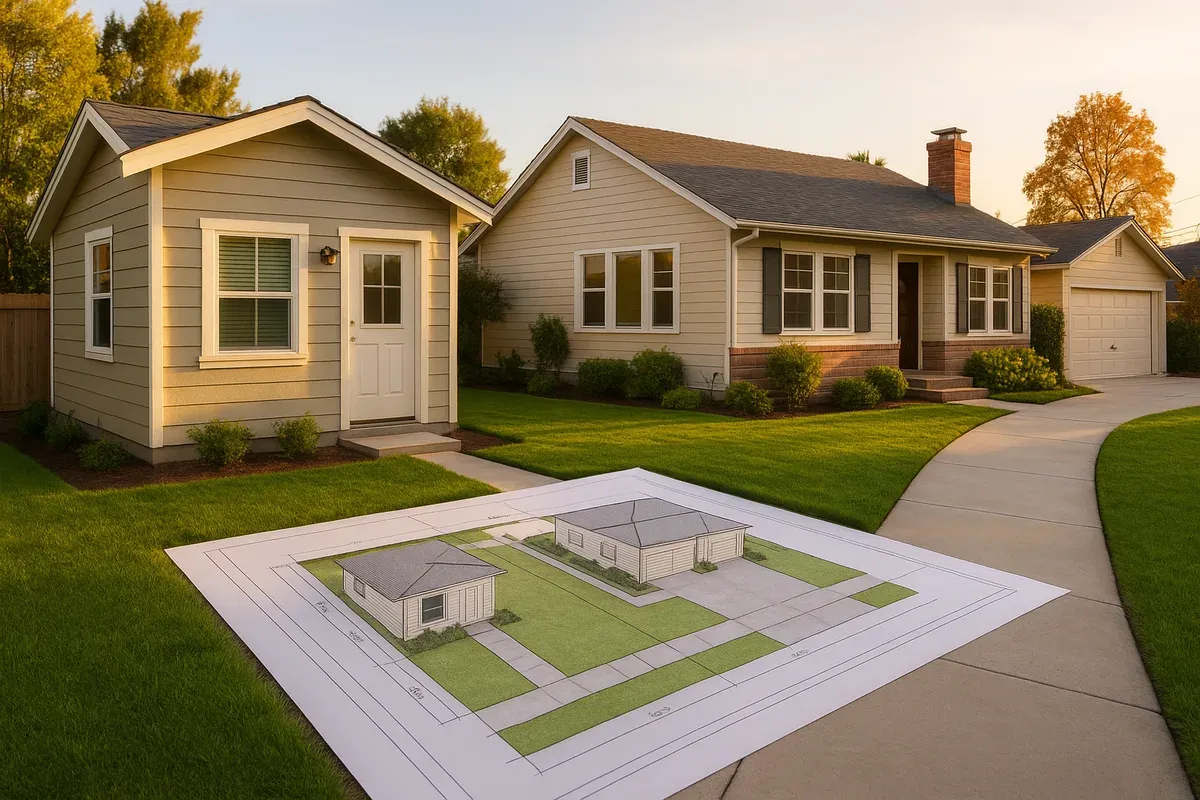
<h2>Los Angeles ADU Permit Requirements: A Step-by-Step Guide for Homeowners</h2>
<p>Los Angeles is in the middle of a housing revolution — and <a href="/adu-feasibility-software">accessory dwelling units</a> are leading the charge. Whether you're planning a detached backyard cottage, a garage conversion, or an attached in-law suite, adding an ADU to your LA property is one of the smartest investments you can make in 2026. But before you break ground, you'll need to navigate the City of Los Angeles Department of Building and Safety (LADBS) permit process — and that starts with understanding exactly what's required.</p>
<p>The good news? California's ADU laws have been significantly streamlined over the past several years, and Los Angeles has adapted its local rules to make ADU permitting more accessible than ever. The not-so-good news? There are still layers of documentation, zoning compliance checks, and site plan requirements that trip up even experienced <a href="/homeowners">homeowners</a>. Miss a setback measurement, submit an incomplete site plan, or overlook a utility easement, and your application could be delayed by weeks or even months.</p>
<p>This guide walks you through every step of the Los Angeles ADU permit process — from understanding zoning eligibility to submitting a LADBS-compliant site plan — so you can move from idea to approved permit as efficiently as possible.</p>
<hr>
<h2>Understanding ADU Types in Los Angeles</h2>
<p>Before diving into the permit process, it's important to know what type of ADU you're planning to build. LADBS categorizes accessory dwelling units into several distinct types, and the permit requirements vary accordingly.</p>
<h3>Detached ADUs</h3>
<p>A detached ADU is a fully separate structure located on the same lot as the primary residence. These are the classic "backyard cottages" or "granny flats" that have become increasingly popular across LA neighborhoods. Detached ADUs can be new construction or converted from existing structures like workshops or storage buildings.</p>
<h3>Attached ADUs</h3>
<p>An attached ADU shares at least one wall with the primary dwelling. These units are often additions built onto the side or rear of a home, and they must maintain structural independence from the main living space while sharing a property boundary.</p>
<h3>Garage Conversions (ADU Conversions)</h3>
<p>Converting an existing attached or detached garage into a livable ADU is one of the most cost-effective options for Los Angeles homeowners. Under California law (AB 2221 and SB 897), garage conversions are entitled to streamlined approval, and the city cannot require replacement parking spaces in most cases.</p>
<h3>Junior ADUs (JADUs)</h3>
<p>A Junior ADU is a unit of no more than 500 square feet created within the existing walls of a primary residence — often a converted bedroom with an added kitchenette. JADUs require an owner-occupancy declaration and have their own simplified permit pathway.</p>
<hr>
<h2>Step 1: Confirm Zoning Eligibility</h2>
<p>The first thing you need to do before spending a dollar on design or documentation is confirm that your property is eligible for an ADU under current Los Angeles zoning rules.</p>
<p>In 2026, ADUs are permitted on virtually all single-family and multifamily residentially zoned lots in Los Angeles. This includes R1, RD, RS, RE, and most RA zones. Multifamily properties can now add ADUs equal to 25% of the existing unit count, plus two ADUs regardless of that calculation.</p>
<h3>How to Check Your Zoning</h3>
<ol>
<li>Visit the <a href="https://zimas.lacity.org" rel="nofollow noopener" target="_blank">Los Angeles Department of City Planning's Zone Information and Map Access System (ZIMAS)</a> and enter your property address.</li>
<li>Review your zoning designation and any applicable overlays (hillside, coastal, historic, etc.).</li>
<li>Check for deed restrictions, HOA covenants, or easements that might affect buildable area.</li>
<li>Note whether your property falls within a flood zone using <a href="https://msc.fema.gov/portal/home" rel="nofollow noopener" target="_blank">FEMA's Flood Map Service Center</a>, as this may affect foundation requirements.</li>
</ol>
<p>Properties in hillside areas, Very High Fire Hazard Severity Zones (VHFHSZ), or Coastal Development Permit zones may face additional requirements beyond standard LADBS review.</p>
<hr>
<h2>Step 2: Know the Development Standards</h2>
<p>Once you've confirmed eligibility, you need to understand the specific development standards that govern how and where your ADU can be built. These standards directly inform what your site plan must show.</p>
<h3>Setback Requirements</h3>
<p>Setbacks are among the most critical measurements in any ADU project. For Los Angeles ADUs in 2026:</p>
<ul>
<li><strong>Detached ADUs</strong>: A minimum 4-foot setback is required from the rear and side property lines. Front <a href="/setback-guide">setback requirements</a> match those of the primary dwelling zone.</li>
<li><strong>ADU Conversions</strong>: Existing structures being converted to ADUs may be exempt from standard setback requirements if the footprint isn't being expanded.</li>
<li><strong>Attached ADUs</strong>: Must comply with the setback standards of the primary structure's zone.</li>
<li><strong>JADUs</strong>: No new setback requirements apply since they're within the existing structure.</li>
</ul>
<p>Always measure setbacks from the property line — not from a fence, wall, or assumed boundary. This is a common source of errors on submitted site plans.</p>
<h3>Height Limits</h3>
<ul>
<li>Detached ADUs on single-family lots: Up to 16 feet in most zones, or up to 18 feet if within half a mile of a major transit stop.</li>
<li>Detached ADUs on multifamily lots: Up to 18 feet.</li>
<li>Attached ADUs: Must comply with the height limit of the primary zone.</li>
</ul>
<h3>Size Limits</h3>
<ul>
<li>Detached ADUs: Up to 1,200 square feet for a one-bedroom unit; larger units permitted with additional review.</li>
<li>JADUs: Maximum 500 square feet.</li>
<li>Minimum size: 150 square feet for any habitable ADU.</li>
</ul>
<h3>Lot Coverage and Floor Area Ratio (FAR)</h3>
<p>Los Angeles calculates lot coverage and FAR based on the combined footprint of all structures on the lot. Your ADU's building footprint will be added to the existing primary dwelling footprint when calculating these figures. A properly drawn site plan must clearly show all existing and proposed structures, their dimensions, and their relationship to property lines.</p>
<hr>
<h2>Step 3: Gather Your Property Documents</h2>
<p>Before you can prepare a permit-ready site plan, you need accurate source documents about your property. Submitting incorrect or estimated measurements is one of the most common reasons ADU permit applications are flagged for corrections.</p>
<p>Gather the following:</p>
<ol>
<li><strong>Assessor's Parcel Map</strong> — Available through the <a href="https://assessor.lacounty.gov" rel="nofollow noopener" target="_blank">LA County Assessor's Office</a>. This shows your lot dimensions and parcel boundaries.</li>
<li><strong>Grant Deed</strong> — Confirms legal ownership and may contain easement or restriction information.</li>
<li><strong>Existing <a href="/construction-permit-site-plans">Building Permits</a></strong> — Pull any permits on file for your primary dwelling through LADBS. This ensures your existing structure is documented correctly.</li>
<li><strong>Utility Easements</strong> — Contact LADBS or your local utility provider to identify any recorded utility easements that cross your property.</li>
<li><strong>Survey (if available)</strong> — A licensed land survey is the gold standard for accurate property boundary data, though it's not always required for ADU applications.</li>
</ol>
<hr>
<h2>Step 4: Prepare Your LADBS-Compliant Site Plan</h2>
<p>This is the heart of your ADU permit application. The site plan is the document that shows LADBS exactly what you're proposing to build, where it will be located on your property, and how it complies with all applicable development standards.</p>
<p>A site plan that's missing information, drawn to the wrong scale, or contains measurement errors will result in a correction notice — adding weeks to your timeline. Getting this right the first time is critical.</p>
<h3>What Your Site Plan Must Include</h3>
<p>According to LADBS submittal requirements, your ADU site plan must clearly show:</p>
<ol>
<li><strong>Property boundaries with dimensions</strong> — All four sides of your lot, labeled with accurate measurements in feet.</li>
<li><strong>North arrow and scale</strong> — The plan must be drawn to a standard scale (e.g., 1" = 10', 1" = 20').</li>
<li><strong>All existing structures</strong> — Including the primary dwelling, any garages, sheds, pools, or other improvements, with their footprints and dimensions shown.</li>
<li><strong>Proposed ADU footprint</strong> — The exact outline of the new unit with all exterior dimensions labeled.</li>
<li><strong>Setback dimensions</strong> — Measured distances from every structure to every applicable property line.</li>
<li><strong>Driveway and parking areas</strong> — Location and dimensions of all existing and proposed parking spaces.</li>
<li><strong>Utility connections</strong> — Proposed locations for water, sewer, and electrical service connections.</li>
<li><strong>Easements</strong> — Any utility, access, or drainage easements must be shown on the plan.</li>
<li><strong>Street name and address</strong> — The property address and adjacent street names.</li>
<li><strong>Owner and project information</strong> — Property owner name, APN (Assessor's Parcel Number), and project description.</li>
</ol>
<h3>Scale and Presentation Requirements</h3>
<p>LADBS requires site plans to be legible and professionally presented. While hand-drawn plans were once acceptable, the department increasingly expects clean, to-scale drawings. Plans submitted through the LADBS e-Permit portal must be in PDF format at a minimum resolution suitable for review.</p>
<p>This is where a tool like <strong><a href="/">Site Plan Creator</a></strong> makes an enormous difference. Rather than hiring a drafter at $500–$1,500 just for a site plan, you can produce a professional, to-scale, permit-ready site plan directly in your browser — with property boundaries, building footprints, setback lines, and all required annotations already formatted to meet LADBS expectations.</p>
<hr>
<h2>Step 5: Prepare Your Full Application Package</h2>
<p>A site plan alone won't get your ADU permitted. LADBS requires a complete application package, which typically includes:</p>
<h3>Architectural Plans</h3>
<ul>
<li><strong>Floor plans</strong> for the ADU showing room dimensions, door and window locations, and square footage</li>
<li><strong>Exterior elevations</strong> showing all four sides of the proposed structure with height dimensions</li>
<li><strong>Building sections</strong> (for new construction ADUs)</li>
<li><strong>Roof plan</strong> with pitch notation</li>
</ul>
<h3>Structural Plans</h3>
<ul>
<li>Foundation plan and details</li>
<li>Framing plans</li>
<li>Structural calculations (required for new construction; may be simplified for conversions)</li>
</ul>
<h3>Title 24 Energy Compliance</h3>
<p>California's Title 24 energy efficiency standards apply to all new ADUs and most conversions. You'll need a Title 24 compliance report prepared by a certified energy consultant.</p>
<h3>Additional Documents</h3>
<ul>
<li>Completed LADBS permit application form</li>
<li>Owner-occupancy declaration (for JADUs)</li>
<li>Soils report (for hillside properties or expansive soil areas)</li>
<li>Fire sprinkler plans (if required by the fire department)</li>
</ul>
<hr>
<h2>Step 6: Submit Your Application Through LADBS</h2>
<p>Los Angeles has made significant strides in digitizing the permit process. In 2026, most ADU permit applications are submitted through the LADBS e-Permit and ePlanCheck systems, which allow you to upload documents, pay fees, and track your application status online.</p>
<h3>Submission Options</h3>
<ul>
<li><strong>Online via ePlanCheck</strong>: The preferred method for most ADU applications. Upload your complete plan set, pay the plan check fee, and receive corrections digitally.</li>
<li><strong>In-person at a LADBS District Office</strong>: Useful if your project is complex or you want to speak directly with a plan checker. LA has multiple district offices across the city.</li>
<li><strong>Standard Plan Program</strong>: For projects that meet pre-approved standard plan criteria, LADBS offers an expedited pathway that can significantly reduce plan check time.</li>
</ul>
<h3>Permit Fees</h3>
<p>LADBS permit fees for ADUs are calculated based on the valuation of the project. For a typical new detached ADU in 2026, you can expect:</p>
<ul>
<li><strong>Plan check fee</strong>: $1,500–$4,000 depending on project scope</li>
<li><strong>Permit issuance fee</strong>: $200–$500</li>
<li><strong>Inspection fees</strong>: Bundled into the permit or charged per inspection</li>
<li><strong>School fees</strong>: Required for new construction ADUs (charged per square foot)</li>
<li><strong>Sewer connection fee</strong>: Varies by project and existing connection status</li>
</ul>
<p>Note that California law prohibits cities from charging ADU impact fees for units under 750 square feet. For units 750 square feet or larger, impact fees must be proportional to the ADU's size relative to the primary dwelling.</p>
<hr>
<h2>Step 7: Respond to Plan Check Corrections</h2>
<p>It's rare for a first-time ADU applicant to sail through plan check without any corrections. LADBS plan checkers are thorough, and they frequently issue correction notices requesting additional information, revised drawings, or clarifications.</p>
<p>Common correction items include:</p>
<ul>
<li>Setback dimensions that don't match the site plan</li>
<li>Missing or incorrect utility connection details</li>
<li>Inadequate structural details for the foundation</li>
<li>Title 24 energy compliance documentation gaps</li>
<li>Inconsistencies between the site plan and the floor plans</li>
</ul>
<p>When you receive a correction list, respond promptly and comprehensively. Address every single item — partial responses will result in another correction cycle. If your site plan needs to be revised, this is straightforward in Site Plan Creator, where you can adjust dimensions, move structures, and update annotations without starting over.</p>
<hr>
<h2>Step 8: Pull Your Permit and Begin Construction</h2>
<p>Once plan check is approved, you'll receive a permit issuance notice. At this point, you pay any remaining fees, receive your permit card, and can legally begin construction.</p>
<p>Key construction phase requirements:</p>
<ol>
<li><strong>Post your permit</strong> on-site in a visible location throughout construction.</li>
<li><strong>Schedule inspections</strong> through LADBS at each required phase — typically foundation, framing, rough electrical/plumbing, insulation, and final.</li>
<li><strong>Do not cover work</strong> before it has been inspected and approved.</li>
<li><strong>Use licensed <a href="/contractors">contractors</a></strong> — LADBS verifies contractor license status and requires contractor information on the permit.</li>
</ol>
<hr>
<h2>Step 9: Pass Final Inspection and Receive Your Certificate of Occupancy</h2>
<p>The final inspection is the last hurdle before your ADU is officially legal and habitable. An LADBS inspector will visit the completed unit and verify that it matches the approved plans in all material respects.</p>
<p>For final inspection, make sure:</p>
<ul>
<li>All construction is complete, including landscaping if shown on approved plans</li>
<li>All utilities are connected and functioning</li>
<li>Smoke and carbon monoxide detectors are installed per code</li>
<li>Address numbers are posted on the ADU</li>
<li>Any required fire sprinklers are installed and tested</li>
</ul>
<p>Upon passing final inspection, LADBS issues a <strong>Certificate of Occupancy</strong> (or equivalent sign-off), and your ADU is officially permitted, legal, and ready to occupy or rent.</p>
<hr>
<h2>Common Mistakes That Delay LA ADU Permits</h2>
<p>After reviewing hundreds of ADU permit applications, certain mistakes come up again and again. Avoid these pitfalls:</p>
<ul>
<li><strong>Incorrect property boundary measurements</strong>: Always use your assessor's parcel map or a survey — never estimate.</li>
<li><strong>Missing easement information</strong>: Utility easements that cross your proposed ADU footprint will stop your project cold.</li>
<li><strong>Underestimating setback requirements</strong>: The 4-foot rear and side setback must be measured correctly and shown precisely on your site plan.</li>
<li><strong>Incomplete plan sets</strong>: Submitting without all required sheets (floor plan, elevations, site plan, energy compliance) causes immediate delays.</li>
<li><strong>Not accounting for fire hazard zone requirements</strong>: Properties in VHFHSZ face additional construction standards that must be reflected in the plans.</li>
<li><strong>Skipping the pre-application research</strong>: Failing to check ZIMAS for overlays or restrictions before investing in design can result in a project that's ineligible as designed.</li>
</ul>
<hr>
<h2>Working with Professionals vs. DIY Permitting</h2>
<p>Many Los Angeles homeowners successfully permit their ADUs with a combination of professional help and self-service tools. Here's a realistic breakdown:</p>
<h3>When to Hire Professionals</h3>
<ul>
<li><strong>Architect or designer</strong>: Essential for complex new construction ADUs, especially in hillside or VHFHSZ areas</li>
<li><strong>Structural engineer</strong>: Required for new construction; may be needed for garage conversions depending on existing conditions</li>
<li><strong>Energy consultant</strong>: Needed for Title 24 compliance documentation</li>
<li><strong>Expediter</strong>: If you're navigating multiple city departments (fire, planning, LADBS) simultaneously</li>
</ul>
<h3>Where You Can Save Money</h3>
<p>The site plan is one area where homeowners can produce a professional-quality document without hiring a drafter. Site Plan Creator is designed specifically for this — giving you the tools to draw accurate, to-scale property boundaries, place building footprints, annotate setbacks, and export a permit-ready PDF that meets LADBS formatting expectations. For a project where professional fees can run $15,000–$30,000 or more, saving $500–$1,500 on the site plan alone is meaningful.</p>
<hr>
<h2>Timeline: What to Expect</h2>
<p>Here's a realistic timeline for a typical Los Angeles ADU permit in 2026:</p>
<table>
<thead>
<tr>
<th>Phase</th>
<th>Estimated Duration</th>
</tr>
</thead>
<tbody><tr>
<td>Zoning research and document gathering</td>
<td>1–2 weeks</td>
</tr>
<tr>
<td>Site plan and design preparation</td>
<td>2–4 weeks</td>
</tr>
<tr>
<td>Application submission</td>
<td>1–3 days</td>
</tr>
<tr>
<td>Initial plan check</td>
<td>4–8 weeks</td>
</tr>
<tr>
<td>Correction response and re-check</td>
<td>2–4 weeks</td>
</tr>
<tr>
<td>Permit issuance</td>
<td>1–5 days</td>
</tr>
<tr>
<td>Construction</td>
<td>3–9 months</td>
</tr>
<tr>
<td>Final inspection</td>
<td>1–2 weeks</td>
</tr>
</tbody></table>
<p>Total from application to Certificate of Occupancy: <strong>6–14 months</strong> for most projects, depending on complexity and how quickly corrections are addressed.</p>
<hr>
<h2>Conclusion: Your LA ADU Permit Starts with the Right Site Plan</h2>
<p>Adding an accessory dwelling unit to your Los Angeles property is a powerful way to create rental income, house extended family, or increase your property's value — and in 2026, the regulatory environment has never been more favorable for LA homeowners. But a smooth permitting experience starts with preparation, and preparation starts with an accurate, complete, LADBS-compliant site plan.</p>
<p>Don't let an incomplete or inaccurate site plan be the reason your ADU permit gets delayed. <strong>Site Plan Creator</strong> gives Los Angeles homeowners a professional, browser-based tool to produce permit-ready site plans with accurate property boundaries, building footprints, setback annotations, and all the details LADBS expects — without the cost of hiring a drafter.</p>
<p>Start your ADU site plan today at <a href="https://www.siteplancreator.com">siteplancreator.com</a> and take the first concrete step toward getting your Los Angeles ADU permitted and built.</p>