How Landscapers Can Add Site Plan Services to Their Offering
Landscapers who offer professional site plans alongside their design and installation services are winning more jobs, reducing permit delays, and building stronger client relationships. This guide covers everything you need to know to add site plan services to your landscaping business in 2026.
<h2>Why Landscapers Are Missing a Major Revenue Opportunity</h2>
<p>If you're a landscaper who has ever lost a job because a client didn't know how to get a permit, or watched a project stall for weeks while a homeowner scrambled to produce a site plan, you already understand the problem. Most landscaping businesses focus entirely on the physical work: design, installation, planting, and maintenance. But there is a critical gap between what clients need and what most landscapers provide, and that gap costs everyone time and money.</p>
<p>In 2026, permit requirements for outdoor projects are more stringent than ever. Municipalities across the United States are requiring detailed site plans for a growing list of landscaping-related work, including <a href="/retaining-wall-site-plans">retaining walls</a>, pergolas, fences, sheds, patios, drainage modifications, and even significant grading changes. <a href="/homeowners">Homeowners</a> rarely know how to produce these documents, and many don't even know they need them until a building inspector shows up.</p>
<p>Landscapers who step into this gap, by offering professional site plan services as part of their client package, are gaining a serious competitive edge. They're closing more deals, reducing project delays, and charging more for a higher-value service. This guide will show you exactly how to build that capability into your business, even if you have no drafting or CAD experience.</p>
<hr>
<h2>What Is a Landscaper Permit Site Plan and Why Does It Matter?</h2>
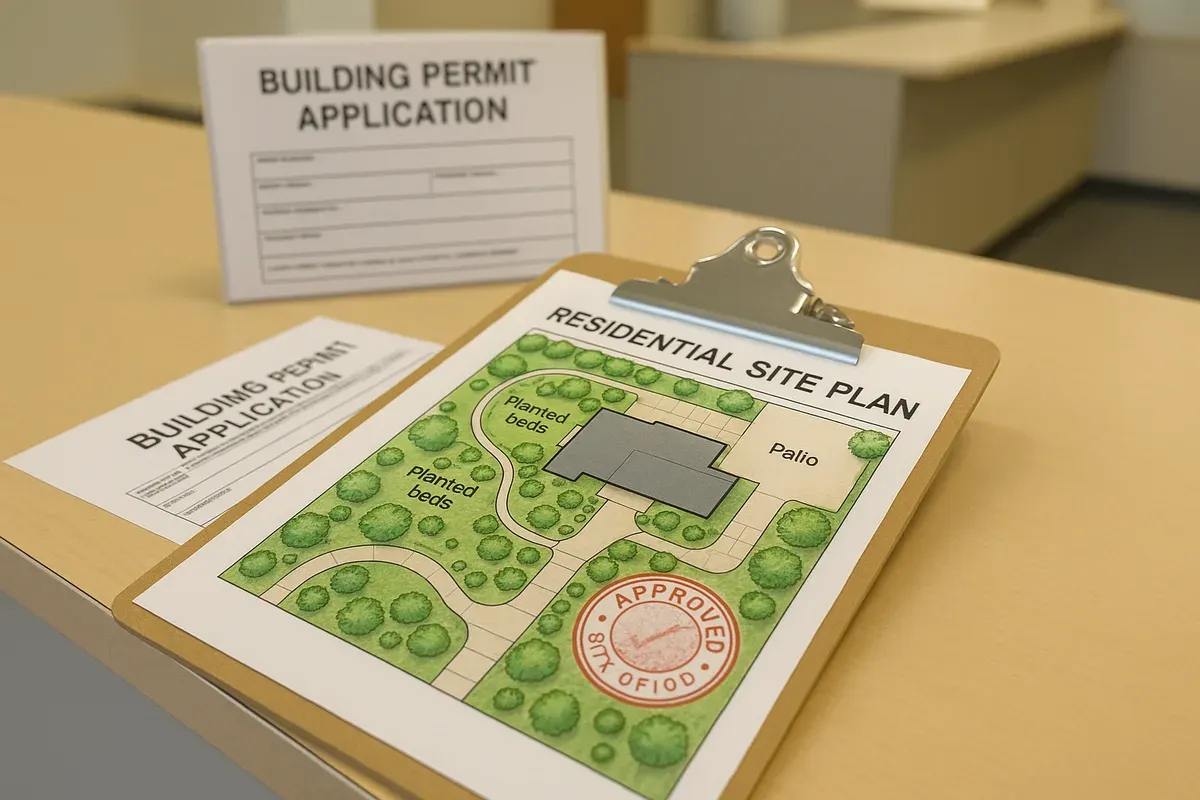
<p>A <strong>site plan</strong> is a scaled, overhead drawing of a property that shows the layout of existing and proposed features. For landscaping projects, a permit site plan typically needs to include:</p>
<ul>
<li>Property boundaries and lot dimensions</li>
<li>The location and footprint of the existing home and any accessory structures</li>
<li>Proposed new structures (pergolas, sheds, retaining walls, decks)</li>
<li>Setback measurements from property lines, fences, and structures</li>
<li>Drainage patterns or grading changes</li>
<li>Driveways, walkways, and hardscape elements</li>
<li>North arrow, scale indicator, and property address</li>
</ul>
<p>The reason municipalities require these documents is straightforward: they need to verify that proposed work complies with local zoning laws, <a href="/setback-guide">setback requirements</a>, and building codes before construction begins. The <a href="https://www.iccsafe.org" rel="nofollow noopener" target="_blank">International Code Council</a> publishes model building codes that most jurisdictions adopt and adapt, and permit offices use site plans to confirm compliance with those standards.</p>
<p>For landscapers, understanding landscaping permit requirements is not just about compliance. It's about being the most informed, most professional contractor a client will ever work with.</p>
<h3>Which Landscaping Projects Typically Require a Permit?</h3>
<p>This varies by municipality, but in 2026, the following project types commonly trigger an outdoor structure permit requirement in most jurisdictions:</p>
<ol>
<li><strong>Retaining walls</strong> over a certain height (often 30 inches or 4 feet, depending on the locality)</li>
<li><strong>Pergolas, gazebos, and shade structures</strong> with a roof or permanent footings</li>
<li><strong>Sheds and outbuildings</strong> over a minimum square footage (often 120–200 sq ft)</li>
<li><strong>Decks and patios</strong> attached to the home or above a certain elevation</li>
<li><strong>Fences</strong> in many jurisdictions, particularly those over 6 feet or near property lines</li>
<li><strong>Drainage modifications</strong> that redirect water flow onto neighboring properties</li>
<li><strong>Swimming pools and spas</strong> (almost universally permitted)</li>
<li><strong>Driveways</strong> that require curb cuts or impervious surface calculations</li>
</ol>
<p>Always advise clients to check with their local building department before starting work. The <a href="https://www.planning.org" rel="nofollow noopener" target="_blank">American Planning Association</a> maintains excellent resources on zoning and land use that can help you understand how local ordinances are structured.</p>
<hr>
<h2>The Business Case for Adding Site Plan Services</h2>
<p>Before we get into the how, let's talk about the why. Adding site plan services to your landscaping business is not just a nice-to-have. It is a genuine revenue and competitive strategy.</p>
<h3>You Become a One-Stop Solution</h3>
<p>Clients love simplicity. When a homeowner hires you for a pergola installation and you can also handle the permit site plan, you eliminate one of the most stressful parts of the project for them. You become indispensable. You're not just the person who builds things; you're the professional who manages the entire process from concept to permit approval to installation.</p>
<p>This is especially valuable for higher-end residential clients who are willing to pay a premium for a seamless experience.</p>
<h3>You Can Charge a Service Fee</h3>
<p>Site plan preparation is a legitimate, billable service. Depending on your market and the complexity of the project, landscapers are charging anywhere from $150 to $600 or more for a permit-ready site plan. For a busy operation doing 50 permitted projects per year, that's a meaningful additional revenue stream with relatively low overhead once you have the right tools and workflow in place.</p>
<h3>You Reduce Project Delays</h3>
<p>Permit delays kill project timelines and damage client relationships. When a client has to figure out the site plan themselves, they often submit incomplete or incorrect documents, leading to rejection and resubmission cycles that can add weeks to a project. When you control the site plan, you control the timeline. You know what the permit office needs, you produce it correctly the first time, and the project moves forward on schedule.</p>
<h3>You Win More Bids</h3>
<p>Many homeowners get multiple quotes for landscaping work. If your competitors are simply quoting labor and materials while you're offering a complete, permit-managed service, you have a differentiated value proposition. Even if your total price is slightly higher, the convenience and professionalism you offer often wins the job.</p>
<hr>
<h2>What Tools Do Landscapers Need to Create Site Plans?</h2>
<p>This is where many landscapers hesitate. The assumption is that creating professional site plans requires expensive CAD software, years of training, or hiring a draftsperson. In 2026, that assumption is simply outdated.</p>
<h3>Browser-Based Site Plan Tools</h3>
<p>Modern browser-based applications like <a href="https://www.siteplancreator.com">Site Plan Creator</a> are specifically designed for <a href="/contractors">contractors</a> and property owners who need permit-ready site plans without a steep learning curve. These tools offer:</p>
<ul>
<li>Drag-and-drop interfaces for placing structures, boundaries, and features</li>
<li>Accurate scaling and dimension tools</li>
<li>Pre-built symbol libraries for common landscaping elements</li>
<li>Export options in PDF and other formats accepted by permit offices</li>
<li>No software installation required, accessible from any computer</li>
</ul>
<p>For landscapers, this kind of tool is the ideal entry point. You don't need to become a CAD expert. You need to be able to produce a clear, accurate, scaled drawing that communicates the scope of work to a building department.</p>
<h3>What You'll Need to Get Started</h3>
<p>Beyond the software, you'll need a few basic inputs for every site plan project:</p>
<ol>
<li><strong>Property dimensions</strong>: These can often be pulled from county assessor records, a survey on file with the homeowner, or a plat map. Many counties make this information available online through their GIS portals.</li>
<li><strong>Measurements of existing structures</strong>: A measuring tape and a few minutes on-site will get you the footprint of the home, garage, and any existing outbuildings.</li>
<li><strong>Proposed structure dimensions</strong>: You already have these as part of your project scope.</li>
<li><strong>Setback requirements</strong>: Pull these from the local zoning code or ask the permit office directly. This is critical information that your site plan must reflect accurately.</li>
</ol>
<hr>
<h2>Step-by-Step: How to Add Site Plan Services to Your Landscaping Business</h2>
<p>Here is a practical roadmap for integrating site plan services into your existing operation.</p>
<h3>Step 1: Identify Which Projects Need Permits</h3>
<p>Start by building a simple internal checklist based on your local municipality's permit requirements. Every time you quote a project, run through the checklist to determine whether a permit and site plan will be required. This should become a standard part of your sales and estimating process.</p>
<p>Call your local building department and ask them directly: what projects require a permit, and what does the site plan submission need to include? Most permit offices are happy to provide this information and may even have a handout or checklist available.</p>
<h3>Step 2: Learn the Local Permit Submission Requirements</h3>
<p>Every municipality has slightly different requirements for what a permit site plan must show. Some require a specific scale (1 inch = 20 feet, for example). Others require a north arrow, a legend, or a specific sheet size for printed submissions. Some accept digital PDF submissions; others still require paper.</p>
<p>Create a reference document for each municipality you regularly work in. This becomes a valuable internal resource that saves time on every future project.</p>
<h3>Step 3: Practice on a Real Project</h3>
<p>Choose an upcoming project that requires a permit and use it as your first site plan case study. Work through the process from property measurement to finished drawing. Note where you had questions, what took longer than expected, and what the permit office's feedback was.</p>
<p>Don't try to charge a premium for this first attempt. Use it as a learning experience and refine your process before you market the service actively.</p>
<h3>Step 4: Build a <a href="/pricing">Pricing</a> Structure</h3>
<p>Once you're confident in your ability to produce permit-ready site plans, build a clear pricing structure. Consider tiering your pricing based on project complexity:</p>
<ul>
<li><strong>Basic site plan</strong> (simple shed or fence, straightforward lot): $150–$250</li>
<li><strong>Standard site plan</strong> (pergola, retaining wall, patio with grading): $250–$400</li>
<li><strong>Complex site plan</strong> (multiple structures, drainage modifications, irregular lot): $400–$600+</li>
</ul>
<p>You can offer site plans as a standalone service or bundle them into your overall project quote. Many landscapers find that bundling is more appealing to clients because it feels like added value rather than an extra charge.</p>
<h3>Step 5: Update Your Marketing Materials</h3>
<p>Once you're offering site plan services, make sure your website, proposals, and social media reflect this. Highlight the fact that you handle the permit process from start to finish. Use language like:</p>
<ul>
<li>"We handle the permit site plan so you don't have to"</li>
<li>"Full-service landscaping including permit documentation"</li>
<li>"From design to permit approval to installation"</li>
</ul>
<p>This messaging resonates strongly with homeowners who have heard horror stories about permit delays and compliance issues.</p>
<h3>Step 6: Consider Offering Site Plans as a Standalone Service</h3>
<p>As your reputation for accurate, permit-ready site plans grows, you may find that other contractors, architects, or homeowners approach you specifically for this service. A neighbor's contractor might not offer site plans. A DIY homeowner building their own shed might need one. This is an opportunity to generate revenue from clients who may later become full landscaping customers.</p>
<hr>
<h2>Common Mistakes Landscapers Make with Permit Site Plans</h2>
<p>Even well-intentioned landscapers can run into problems with permit submissions. Here are the most common errors to avoid.</p>
<h3>Inaccurate Property Boundary Information</h3>
<p>Using outdated plat maps or estimating property dimensions instead of measuring them is one of the most common reasons site plans get rejected. Always verify property boundaries against official records and, when in doubt, recommend the client obtain a current survey.</p>
<h3>Missing or Incorrect Setback Dimensions</h3>
<p>Setback requirements are one of the primary things permit offices check. Failing to show setback dimensions clearly, or using incorrect setback values, will result in rejection. Always pull setback requirements from the current local zoning code and show them explicitly on the drawing.</p>
<h3>Wrong Scale or No Scale Indicator</h3>
<p>A site plan without a clear scale indicator is essentially useless to a permit reviewer. Make sure every plan you produce includes both a written scale (e.g., "1 inch = 20 feet") and a graphic scale bar.</p>
<h3>Forgetting to Show Existing Structures</h3>
<p>Permit offices need to see the full picture of the property, not just the proposed new work. Always include the existing home footprint, garage, and any other significant structures, even if they are not part of the current project.</p>
<h3>Not Accounting for Easements</h3>
<p>Many properties have utility easements or drainage easements that restrict where structures can be placed. These should be shown on the site plan if they are relevant to the proposed work. Check the property deed or plat for easement information.</p>
<hr>
<h2>Landscaper Business Tips for Long-Term Success with Site Plans</h2>
<p>Adding site plan services is a strategic move, but like any business expansion, it requires intentional management to be sustainable and profitable.</p>
<h3>Build a Template Library</h3>
<p>After completing a handful of site plans, you'll notice that many projects share similar elements: standard lot shapes, common structure types, typical setback configurations. Build a library of reusable templates and symbol sets that you can adapt for new projects quickly. This dramatically reduces the time it takes to produce each plan and improves your profitability.</p>
<h3>Document Your Process</h3>
<p>Create a written standard operating procedure (SOP) for site plan production. This is especially important if you plan to delegate the work to an employee or office assistant in the future. A clear SOP ensures consistency and quality regardless of who is producing the plan.</p>
<h3>Stay Current on Code Changes</h3>
<p>Building codes and zoning regulations change. The ICC updates its model codes on a regular cycle, and local jurisdictions adopt amendments on their own schedules. Make it a habit to check in with your local building department at least once a year to confirm that your understanding of permit requirements is still current. Subscribe to any email updates your municipality offers for code changes.</p>
<h3>Build Relationships with Permit Office Staff</h3>
<p>This is one of the most underrated landscaper business tips available. Permit office staff deal with hundreds of contractors. When they know your name and know that your submissions are consistently accurate and complete, they are more likely to give you a quick call if there's a minor issue rather than issuing a formal rejection. That kind of relationship saves time and money on every project.</p>
<h3>Use Client Testimonials About the Permit Process</h3>
<p>Ask satisfied clients to specifically mention the permit handling in their reviews. Testimonials like "They handled the site plan and permit so we didn't have to worry about anything" are extremely compelling to prospective clients who are anxious about the permitting process.</p>
<hr>
<h2>How <a href="/">Site Plan Creator</a> Supports Landscaping Professionals</h2>
<p>Site Plan Creator is built with contractors like landscapers in mind. The platform is browser-based, meaning there's no software to install and no complex learning curve. You can log in from your office computer, a job site laptop, or any device with a browser.</p>
<p>The tool allows you to:</p>
<ul>
<li>Draw accurate property boundaries using real dimensions</li>
<li>Place building footprints, structures, and landscaping elements with precision</li>
<li>Add setback lines and dimension annotations</li>
<li>Include a north arrow, scale bar, and property information block</li>
<li>Export finished plans as PDFs ready for permit submission</li>
</ul>
<p>For landscapers who are new to site plan production, Site Plan Creator's interface is intuitive enough to get your first plan completed without a training course. And for those who do multiple permitted projects per month, the time savings and professional output quality make it a clear business asset.</p>
<p>Whether you're producing a simple site plan for a backyard shed or a detailed plan for a multi-structure outdoor living space with drainage modifications, Site Plan Creator gives you the tools to do it professionally and efficiently.</p>
<hr>
<h2>Conclusion: Position Your Landscaping Business for 2026 and Beyond</h2>
<p>The landscaping industry is competitive, and the contractors who thrive long-term are those who consistently find ways to deliver more value to their clients. Adding site plan services is one of the most practical and profitable ways to do exactly that.</p>
<p>By handling the permit documentation process, you reduce friction for your clients, differentiate your business from competitors, and create an additional revenue stream with strong margins. You also position yourself as a true professional, not just a contractor who shows up with equipment, but a business owner who understands the full scope of what a successful project requires.</p>
<p>The barrier to entry is lower than you might think. With the right tool, a clear understanding of local landscaping permit requirements, and a systematic approach to the process, you can be producing permit-ready site plans within days.</p>
<p>Ready to get started? Visit <a href="https://www.siteplancreator.com">Site Plan Creator</a> to explore the platform and create your first professional site plan today. Your clients will notice the difference, and so will your bottom line.</p>