Florida Shed Permit Requirements by County: 2026 Guide
Florida shed permit rules vary significantly from Miami-Dade to Orange County — but a consistent thread runs through all of them: you need a proper site plan. This guide breaks down what changes by county and what always stays the same, so you can get your permit approved without the back-and-forth.
<h2>Why Florida Shed Permits Are More Complicated Than You Think</h2>
<p>You've picked out the perfect shed. Maybe it's a 12×16 storage building for your lawn equipment, a she-shed tucked into the backyard, or a workshop you've been dreaming about for years. You've measured the yard, picked a spot, and you're ready to order. Then someone mentions the word "permit" — and suddenly the whole project feels like it's buried under a pile of paperwork.</p>
<p>Here's the truth: Florida <a href="/shed-site-plans">shed permit</a> requirements are genuinely more complex than in most other states, and the reason has everything to do with geography. Florida sits in one of the most active hurricane corridors in the world, which means the <a href="https://floridabuilding.org/c/default.aspx" rel="nofollow noopener" target="_blank">Florida Building Code</a> carries wind-load requirements, structural standards, and inspection protocols that don't exist in, say, Ohio or Colorado. On top of that, each of Florida's 67 counties has the authority to adopt local amendments — meaning the rules in Miami-Dade are meaningfully different from those in Orange County, Hillsborough, or Escambia.</p>
<p>The good news? There's a consistent framework underneath all of it. Once you understand what's governed by state law versus what's left to local discretion, navigating the permit process becomes far less intimidating. This guide will walk you through both layers — the statewide constants and the county-level variables — so you can approach your permit application with confidence.</p>
<hr>
<h2>The Florida Building Code: The Statewide Foundation</h2>
<p>Every shed permit application in Florida starts with the same document: the Florida Building Code (FBC). Updated on a roughly three-year cycle and currently in its 8th Edition, the FBC establishes minimum standards that apply uniformly across the state. No county can fall below these standards, though they can — and often do — exceed them.</p>
<h3>What the Florida Building Code Requires for Sheds</h3>
<p>At the state level, the FBC addresses several key areas that affect your shed project:</p>
<p><strong>Wind Speed Compliance</strong>
Florida is divided into wind speed zones, and your shed must be engineered or certified to withstand the design wind speed for your location. Coastal areas, South Florida, and the Keys carry the highest requirements — often 160–180 mph design wind speeds. Inland counties like Alachua or Marion may have lower thresholds, but they're still significantly higher than most of the country.</p>
<p><strong>Structural Anchoring</strong>
The FBC requires that all permanent structures, including sheds, be anchored to resist wind uplift. This typically means concrete footings, anchor bolts, or approved ground anchors — not just setting a shed on gravel or wood blocks.</p>
<p><strong>Size Thresholds</strong>
The FBC generally allows small accessory structures under 200 square feet to be built without a full building permit in some jurisdictions, but this is a default that counties frequently override. Many Florida counties require permits for sheds as small as 100 square feet — or even smaller.</p>
<p><strong>Setback Compliance</strong>
While specific setback distances are set locally, the FBC requires that all structures comply with the applicable zoning regulations. This is where your <strong>site plan</strong> becomes essential: it's the document that proves your shed placement respects required setbacks from property lines, easements, and other structures.</p>
<p><strong>Flood Zone Considerations</strong>
If your property is in a FEMA-designated Special Flood Hazard Area (SFHA), additional requirements apply under both the FBC and local floodplain management ordinances. You can check your property's flood zone status using <a href="https://msc.fema.gov/portal/home" rel="nofollow noopener" target="_blank">FEMA's Flood Map Service Center</a>.</p>
<hr>
<h2>What Changes County by County</h2>
<p>This is where Florida's permitting landscape gets genuinely variable. County and municipal governments have significant discretion over zoning, setbacks, HOA-adjacent regulations, and local amendments to the building code. Here's a breakdown of the major Florida counties and what you need to know about each.</p>
<h3>Miami-Dade County Shed Permits</h3>
<p>Miami-Dade is widely considered the most stringent permitting jurisdiction in Florida — and for good reason. The county sits in a High-Velocity Hurricane Zone (HVHZ), a designation that triggers a separate, stricter chapter of the Florida Building Code. The HVHZ requirements apply to all of Miami-Dade and Broward counties and impose higher wind-load engineering standards than anywhere else in the state.</p>
<p>Key requirements for a <strong>Miami-Dade shed permit</strong> include:</p>
<ul>
<li>A permit is required for virtually all sheds, regardless of size</li>
<li>Sheds must use Miami-Dade Notice of Acceptance (NOA) approved products or have engineered drawings stamped by a Florida-licensed engineer</li>
<li>Concrete slab or engineered foundation is typically required</li>
<li>Setbacks from property lines are enforced strictly — generally 5 feet from side and rear property lines in residential zones, but this varies by zoning district</li>
<li>A site plan drawn to scale showing the property boundary, existing structures, proposed shed location, and all setback dimensions is required with every application</li>
<li>Impact-resistant or wind-rated doors and windows may be required depending on shed design</li>
</ul>
<p>The Miami-Dade Regulatory and Economic Resources (RER) department handles <a href="/construction-permit-site-plans">building permits</a>. Their online permitting portal has improved significantly, but first-time applicants often encounter delays due to incomplete site plan submissions. Getting your site plan right the first time is the single biggest factor in avoiding re-submission loops.</p>
<h3>Orange County Florida Shed Permits</h3>
<p>Orange County (home to Orlando) takes a different approach than Miami-Dade but is still more demanding than many people expect. The county sits in a Wind Speed Zone of 130 mph design wind speed for most areas, which is lower than South Florida but still requires certified or engineered structures.</p>
<p>For an <strong>Orange County Florida shed permit</strong>, here's what you need to know:</p>
<ul>
<li>Sheds over 100 square feet require a building permit</li>
<li>Sheds under 100 square feet may still require a zoning review depending on your property's zoning classification</li>
<li>A site plan is required showing property lines, existing structures, the proposed shed footprint, and setback dimensions</li>
<li>Setbacks in most residential zones: 7.5 feet from side property lines, 7.5 feet from rear property lines — but these vary by zoning district</li>
<li>Sheds cannot be placed in front yard areas in most residential zones</li>
<li>Sheds must be anchored per FBC requirements</li>
<li>If your property is in a flood zone, elevation certificates and additional review may be required</li>
</ul>
<p>Orange County's Building Division processes applications through their online portal, and they're generally responsive to well-prepared applications. The most common reason for delays? An incomplete or non-scaled site plan that doesn't clearly show setback compliance.</p>
<h3>Hillsborough County (Tampa Area)</h3>
<p>Hillsborough County covers the Tampa metro area and has its own set of rules that fall between Miami-Dade's strictness and some of the more relaxed inland counties.</p>
<ul>
<li>Permits required for sheds over 100 square feet</li>
<li>Standard residential setbacks: 5 feet from side and rear property lines (varies by zoning)</li>
<li>Sheds must be anchored per FBC wind requirements</li>
<li>Site plan required showing all structures and property boundaries</li>
<li>Sheds in flood zones require elevation compliance</li>
<li>Sheds cannot exceed a certain percentage of the lot coverage (typically 30-35% total impervious surface including all structures)</li>
</ul>
<h3>Broward County</h3>
<p>Like Miami-Dade, Broward County is in the HVHZ, meaning the same elevated wind standards apply. However, permitting is handled at the municipal level in most of Broward — meaning you'll apply through your city (Fort Lauderdale, Pembroke Pines, Coral Springs, etc.) rather than the county directly. Each municipality may have slightly different administrative requirements, but the HVHZ structural standards are uniform.</p>
<h3>Palm Beach County</h3>
<p>Palm Beach County sits at the northern edge of the HVHZ for coastal areas, with inland areas subject to standard FBC wind requirements. The county requires permits for sheds over 100 square feet and has a detailed site plan requirement. Notably, Palm Beach County has relatively strict aesthetic standards in some zoning districts — shed materials and colors may need to match or complement the primary residence.</p>
<h3>Pinellas County (St. Petersburg Area)</h3>
<ul>
<li>Permits required for sheds over 100 square feet</li>
<li>Setbacks: typically 5 feet from side and rear property lines</li>
<li>Coastal flood zone requirements apply to many properties given the peninsula geography</li>
<li>Site plan required; must show flood zone designation if applicable</li>
<li>Sheds in coastal high-hazard areas (Zone V) face the most stringent requirements</li>
</ul>
<h3>Duval County (Jacksonville)</h3>
<p>Jacksonville operates under a consolidated city-county government, and its permitting requirements are generally less stringent than South Florida counties due to lower wind speed zones.</p>
<ul>
<li>Permits required for sheds over 150 square feet (one of the more generous thresholds in the state)</li>
<li>Setbacks: 5 feet from side and rear property lines in most residential zones</li>
<li>Site plan required for permit applications</li>
<li>Flood zone compliance required for properties in SFHAs</li>
</ul>
<h3>Alachua County (Gainesville Area)</h3>
<p>Alachua County is one of the more permit-friendly counties in Florida for smaller structures:</p>
<ul>
<li>Permits required for sheds over 200 square feet</li>
<li>Standard residential setbacks apply</li>
<li>Less stringent wind requirements than coastal counties</li>
<li>Site plan still required for permit applications</li>
</ul>
<hr>
<h2>What Never Changes: The Constants Across Every Florida County</h2>
<p>Despite all the county-level variation, several requirements are effectively universal across Florida. Understanding these constants helps you build a permit application that works regardless of which county you're in.</p>
<h3>1. A Site Plan Is Always Required</h3>
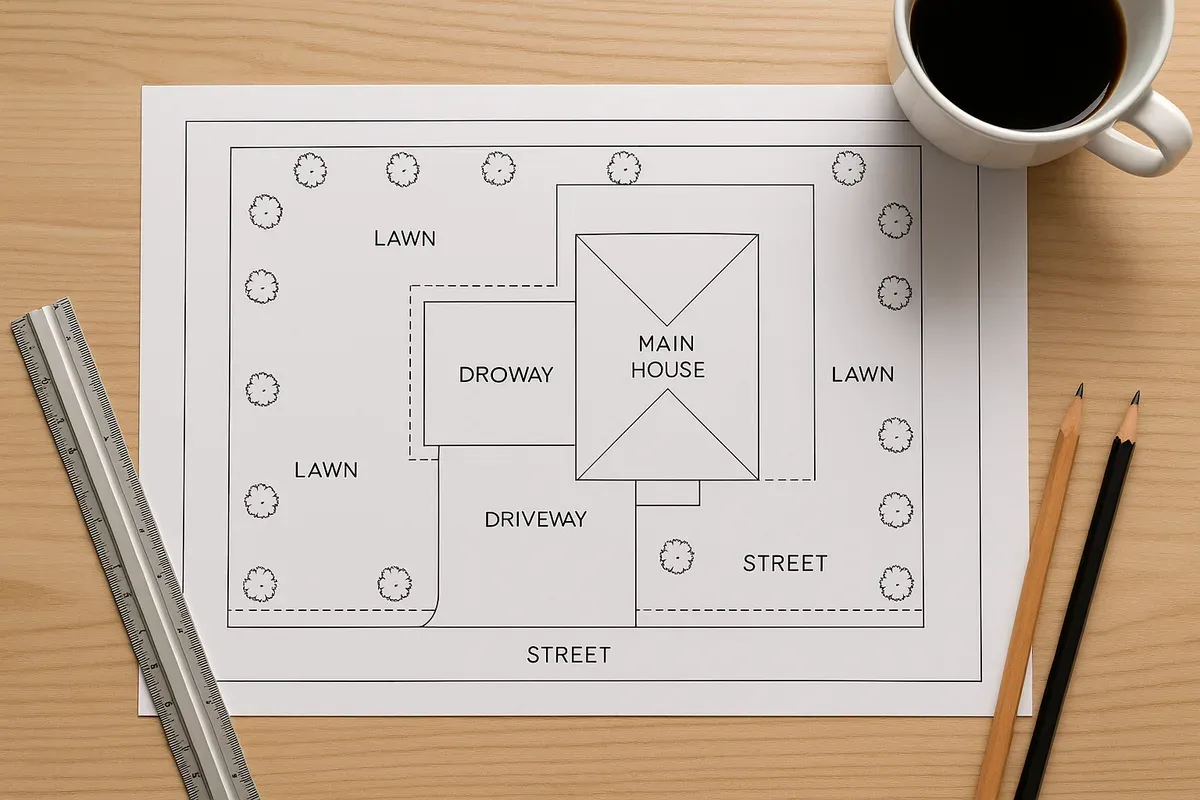
<p>This is perhaps the most important constant. Every Florida county requires a <strong>site plan</strong> as part of a shed permit application. The site plan must show:</p>
<ul>
<li>Your property's boundaries and dimensions</li>
<li>The location and footprint of all existing structures (house, garage, pool, etc.)</li>
<li>The proposed shed location and footprint</li>
<li>Setback dimensions from the shed to all property lines</li>
<li>Any easements on the property</li>
<li>North arrow and scale indicator</li>
<li>Address and parcel identification</li>
</ul>
<p>A hand-drawn sketch on a napkin won't cut it. Most counties require the site plan to be drawn to scale, and many now require digital submission. This is exactly where tools like <strong><a href="/">Site Plan Creator</a></strong> save applicants hours of frustration — you can generate a professional, permit-ready site plan without CAD software or a drafting background.</p>
<h3>2. Setbacks Are Always Enforced</h3>
<p>Every county enforces <a href="/setback-guide">setback requirements</a> — the minimum distances between a structure and property lines. The specific distances vary, but the enforcement is universal. Placing a shed too close to a property line is the number one reason shed permits are denied or require revision.</p>
<h3>3. Wind Load Compliance Is Always Required</h3>
<p>Every county in Florida requires that sheds meet the wind load requirements for their specific wind speed zone. This means either purchasing a shed that's been pre-engineered and certified to Florida's standards, or having a licensed engineer stamp drawings for a custom structure.</p>
<h3>4. Flood Zone Rules Always Apply</h3>
<p>If your property is in a FEMA Special Flood Hazard Area, additional requirements apply in every county. The American Planning Association has excellent resources on floodplain management that can help you understand the broader regulatory context.</p>
<h3>5. HOA Rules Layer on Top of Government Requirements</h3>
<p>If you live in a community with a <a href="/homeowners">Homeowners</a> Association, HOA approval is typically required in addition to — not instead of — the county building permit. HOAs can restrict shed size, color, placement, and materials beyond what the county requires. Always check with your HOA before submitting a permit application.</p>
<hr>
<h2>How to Prepare a Permit-Ready Application: A Step-by-Step Approach</h2>
<p>Regardless of which county you're in, a well-prepared permit application follows the same general structure.</p>
<h3>Step 1: Research Your Specific Zoning District</h3>
<p>Your county's property appraiser website or GIS portal will show your zoning classification. Once you know your zone (e.g., R-1, RS-1, RU-1), look up the specific setback requirements and size limitations for that zone in your county's land development code.</p>
<h3>Step 2: Check Your Flood Zone Status</h3>
<p>Use FEMA's Flood Map Service Center to determine if your property is in a Special Flood Hazard Area. If it is, contact your county's floodplain administrator before proceeding — additional requirements will apply.</p>
<h3>Step 3: Determine Your Wind Speed Zone</h3>
<p>Your county's building department website will typically publish wind speed zone maps. This determines what structural certification your shed needs.</p>
<h3>Step 4: Choose a Code-Compliant Shed</h3>
<p>If you're purchasing a pre-built shed, verify that it has Florida Product Approval (for HVHZ counties, Miami-Dade NOA approval). If you're building custom, you'll need engineered drawings from a Florida-licensed engineer.</p>
<h3>Step 5: Create Your Site Plan</h3>
<p>This is the step where most applicants either save or lose significant time. Your site plan needs to be:</p>
<ul>
<li>Drawn to scale (typically 1"=20' or 1"=30' for residential lots)</li>
<li>Showing all existing and proposed structures</li>
<li>Clearly labeling all setback dimensions</li>
<li>Including a north arrow, scale bar, and property address</li>
<li>Formatted for digital submission if required by your county</li>
</ul>
<p>Using a purpose-built tool like Site Plan Creator allows you to input your property dimensions, place structures accurately, and generate a professional PDF that meets county requirements — in a fraction of the time it would take to create manually.</p>
<h3>Step 6: Gather Supporting Documents</h3>
<p>Depending on your county, you may also need:</p>
<ul>
<li>Proof of property ownership (deed)</li>
<li>Contractor license information (if using a contractor)</li>
<li>Product approval documentation for the shed</li>
<li>Engineered drawings (for custom or HVHZ structures)</li>
<li>HOA approval letter</li>
</ul>
<h3>Step 7: Submit and Follow Up</h3>
<p>Most Florida counties now accept online permit applications. Submit your complete package and track the application status through the county portal. If a reviewer requests additional information, respond promptly — delays in response extend your timeline significantly.</p>
<hr>
<h2>Common Reasons Shed Permits Are Rejected in Florida</h2>
<p>Learning from others' mistakes can save you weeks of back-and-forth. Here are the most common reasons shed permit applications are rejected or returned:</p>
<ol>
<li><strong>Incomplete or non-scaled site plan</strong> — The single most common issue. Reviewers need to verify setback compliance visually, and a sketch without scale makes that impossible.</li>
<li><strong>Setback violations</strong> — The proposed shed location is too close to a property line, easement, or other structure.</li>
<li><strong>Missing product approval documentation</strong> — Especially in HVHZ counties, failing to include Florida Product Approval or NOA documentation stops the review immediately.</li>
<li><strong>Flood zone non-compliance</strong> — Proposing a shed in a flood zone without addressing elevation or floodproofing requirements.</li>
<li><strong>Wrong permit type</strong> — Submitting a zoning application when a building permit is needed, or vice versa.</li>
<li><strong>Exceeding lot coverage limits</strong> — The proposed shed pushes total impervious surface or structure coverage over the allowed percentage for the zoning district.</li>
<li><strong>Missing contractor information</strong> — Some counties require licensed contractor information even for owner-builder projects above certain sizes.</li>
</ol>
<hr>
<h2>A Note on Unpermitted Sheds in Florida</h2>
<p>It's worth addressing the elephant in the room: many Florida homeowners have sheds that were never permitted. This is a common situation, especially with older properties or sheds installed by previous owners.</p>
<p>The risks of an unpermitted shed are real:</p>
<ul>
<li>When you sell the property, unpermitted structures are typically flagged during the buyer's inspection or title search and must be permitted retroactively or removed</li>
<li>Insurance claims related to an unpermitted structure may be denied</li>
<li>If a neighbor complains or a code enforcement officer notices the structure, you may face fines and a mandatory permit-or-remove order</li>
<li>Retroactive permitting (called an "after-the-fact permit" in Florida) is more expensive and more complicated than getting a permit upfront</li>
</ul>
<p>If you have an unpermitted shed, the best path is to proactively contact your county's building department about the after-the-fact permit process. Most counties have a defined process for this, and approaching them voluntarily typically results in better outcomes than being reported.</p>
<hr>
<h2>Conclusion: Get Your Site Plan Right, and the Rest Falls Into Place</h2>
<p>Florida's shed permit requirements are genuinely complex — shaped by hurricane risk, diverse local governments, and a building code that's more demanding than most of the country. But the complexity is manageable once you understand the framework: the Florida Building Code sets the floor, and each county builds on top of it.</p>
<p>What never changes, no matter which of Florida's 67 counties you're in, is the need for a professional, accurate site plan. It's the document that ties your entire application together — proving setback compliance, showing your property layout, and giving reviewers what they need to say yes.</p>
<p>That's exactly what <strong>Site Plan Creator</strong> was built for. Whether you're pulling a permit in Miami-Dade's demanding HVHZ environment or navigating Orange County's online portal, you can generate a permit-ready, to-scale site plan in minutes — without CAD software, without a drafting background, and without the frustration of a rejected application. Visit <a href="https://www.siteplancreator.com">siteplancreator.com</a> to create your site plan today and give your shed permit application the best possible chance of approval on the first submission.</p>