Deck Builders: Site Plan Requirements Across Different Cities
Deck builders working across multiple cities face a patchwork of permit requirements, setback rules, and site plan standards that can slow down projects and frustrate clients. This guide breaks down exactly what contractors need to know to stay compliant, win more permits, and keep jobs moving.
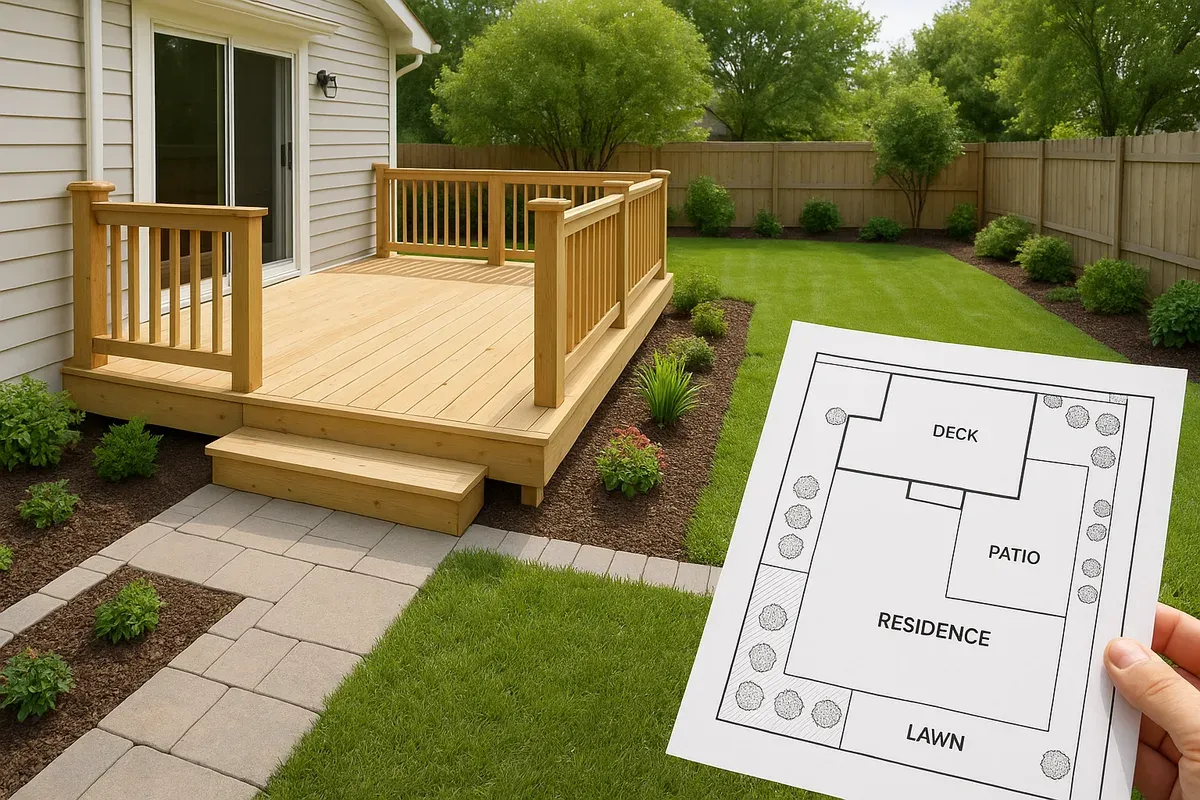
<h2>Why Deck Permit Requirements Vary So Dramatically by City</h2>
<p>If you've been building decks for more than a season or two, you already know the frustration: a site plan that sailed through the permit office in one city gets kicked back in the next town over because the scale is wrong, the setbacks aren't labeled, or the building footprint doesn't match the assessor's records. Welcome to the reality of multi-city deck contracting.</p>
<p>The United States has over 19,000 incorporated municipalities, and while many adopt model codes like the <a href="https://www.iccsafe.org/products-and-events/i-codes/" rel="nofollow noopener" target="_blank">International Residential Code (IRC) published by the ICC</a>, local amendments, zoning overlays, and administrative preferences mean that no two permit offices are exactly alike. For deck builders, this creates a genuine operational challenge: how do you produce permit-ready documentation efficiently when the rules keep changing depending on which jurisdiction you're working in?</p>
<p>This article is a practical field guide for deck <a href="/contractors">contractors</a> who want to master the site plan side of permitting across multiple cities. We'll cover what most jurisdictions require, where the big differences tend to show up, how to build a documentation workflow that scales, and how tools like <a href="/">Site Plan Creator</a> can help you turn around accurate, professional site plans without hiring a drafter for every job.</p>
<hr>
<h2>The Foundation: What Most Jurisdictions Require for a <a href="/fence-deck-site-plans">Deck Permit</a></h2>
<p>Before diving into the differences between cities, it helps to establish a baseline. The majority of residential deck permits, regardless of city, require some version of the following documentation.</p>
<h3>A Site Plan Showing the Property and Proposed Deck</h3>
<p>Almost every building department will ask for a site plan that shows:</p>
<ul>
<li><strong>Property boundaries</strong> with dimensions</li>
<li>The existing house footprint (or all existing structures)</li>
<li>The proposed deck footprint with dimensions</li>
<li>Setbacks from all property lines, including rear, side, and front yards</li>
<li>Distance from the deck to any easements, utility corridors, or drainage features</li>
<li>North arrow and scale bar</li>
<li>Street name and address</li>
</ul>
<p>This is the document that tells the plan reviewer how the deck fits on the lot and whether it respects the zoning envelope. Getting this right is non-negotiable in virtually every city.</p>
<h3>Construction Drawings</h3>
<p>Beyond the site plan, most jurisdictions require structural drawings that show:</p>
<ul>
<li>Footing size, depth, and spacing</li>
<li>Beam and joist sizing</li>
<li>Ledger attachment details (if the deck is attached to the house)</li>
<li>Guardrail and handrail specifications</li>
<li>Stair design if applicable</li>
</ul>
<p>The IRC Chapter 5 provides prescriptive standards for decks that many jurisdictions accept directly, but local amendments can change footing depth requirements, beam span tables, and attachment methods.</p>
<h3>Zoning Compliance Documentation</h3>
<p>Some cities require a separate zoning compliance form or ask that the site plan explicitly call out the applicable zoning district, lot coverage calculations, and impervious surface percentages. This is especially common in areas with stormwater management programs or HOA overlay districts.</p>
<hr>
<h2>Where City-to-City Deck Permit Requirements Diverge</h2>
<p>Now for the part that trips up even experienced contractors. Here are the most common areas where deck permit requirements differ significantly between cities.</p>
<h3>Setback Rules</h3>
<p>Setbacks are the single biggest variable you'll encounter. A deck that's perfectly legal 5 feet from the rear property line in one suburb might require a variance in the neighboring city where the minimum rear setback is 15 feet.</p>
<p>Common setback variations include:</p>
<ul>
<li><strong>Rear yard setbacks</strong> ranging from 5 feet to 25 feet for accessory structures</li>
<li><strong>Side yard setbacks</strong> that differ from the main dwelling setbacks</li>
<li><strong>Corner lot rules</strong> that treat one side yard as a front yard</li>
<li><strong>Waterfront and riparian setbacks</strong> that can extend 50 to 100 feet from a shoreline</li>
<li><strong>Easement buffers</strong> that prohibit structures even within the buildable area</li>
</ul>
<p>Always pull the zoning code for the specific parcel before drawing a single line. Many cities publish their zoning codes online through municipal portals or through services like <a href="https://library.municode.com/" rel="nofollow noopener" target="_blank">Municode</a>, which aggregates local ordinances from thousands of jurisdictions.</p>
<h3>Lot Coverage Limits</h3>
<p>Many residential zones cap the total impervious or structural coverage of a lot at a percentage, often between 30% and 50%. Decks count toward this total in most jurisdictions, and some cities treat elevated decks differently than ground-level patios when calculating coverage.</p>
<p>When working in a city with tight lot coverage rules, your site plan needs to show:</p>
<ul>
<li>The footprint area of the existing house</li>
<li>Any existing impervious surfaces (driveway, patios, sheds)</li>
<li>The proposed deck footprint area</li>
<li>A calculation showing total coverage as a percentage of lot area</li>
</ul>
<p>Skipping this calculation is one of the most common reasons deck permit applications get rejected on the first review.</p>
<h3>Footing Depth and Frost Line Requirements</h3>
<p>This is a structural issue, not a site plan issue, but it directly affects your permit drawings. Frost line depths vary enormously by geography:</p>
<ul>
<li>Southern states may require only 12 inches</li>
<li>Midwestern states often require 36 to 42 inches</li>
<li>Northern states and mountain regions can require 48 to 60 inches</li>
</ul>
<p>Always verify the local frost depth with the building department or check the <a href="https://www.fema.gov/" rel="nofollow noopener" target="_blank">FEMA frost depth maps</a> and local soil data before finalizing your footing design.</p>
<h3>Ledger Attachment and Waterproofing Requirements</h3>
<p>Some cities have adopted stricter ledger attachment standards than the baseline IRC, particularly after high-profile deck collapses in their jurisdiction. You may encounter requirements for:</p>
<ul>
<li>Specific lag bolt patterns and spacing</li>
<li>Mandatory flashing details with waterproofing membranes</li>
<li>Third-party inspection of ledger attachment before decking is installed</li>
<li>Requirements that the ledger attachment be shown explicitly on the construction drawing</li>
</ul>
<h3>Permit Fees and Valuation Methods</h3>
<p>This doesn't affect your site plan directly, but it affects your client relationship. Permit fees for decks are typically calculated one of three ways:</p>
<ol>
<li><strong>Flat fee</strong> based on project type (common for smaller municipalities)</li>
<li><strong>Valuation-based fee</strong> calculated as a percentage of the estimated project cost</li>
<li><strong>Square footage fee</strong> charged per square foot of deck area</li>
</ol>
<p>Knowing the fee structure in advance helps you give clients accurate project timelines and total cost estimates.</p>
<h3>HOA and Architectural Review Requirements</h3>
<p>In many suburban subdivisions, getting a <a href="/construction-permit-site-plans">building permit</a> is only half the battle. HOA approval often requires its own site plan submission, sometimes with additional requirements like color renderings or elevation drawings. Some cities with design review overlay districts have similar requirements for properties in historic neighborhoods or planned unit developments.</p>
<hr>
<h2>Building a Multi-City Permitting Workflow as a Deck Contractor</h2>
<p>The contractors who handle deck builder permit requirements most efficiently aren't necessarily the ones with the most experience. They're the ones with the best systems. Here's how to build a workflow that scales across multiple jurisdictions.</p>
<h3>Step 1: Create a Pre-Project Jurisdiction Checklist</h3>
<p>Before you pull a permit in any new city, run through a standard research checklist:</p>
<ol>
<li>Download or bookmark the city's zoning code</li>
<li>Identify the zoning district for the subject parcel</li>
<li>Note the applicable setbacks (rear, side, front, corner)</li>
<li>Record the maximum lot coverage percentage</li>
<li>Check for any overlay districts (flood zone, historic, HOA)</li>
<li>Download the building department's permit application and checklist</li>
<li>Note the plan review turnaround time and any pre-application meeting requirements</li>
<li>Record the fee schedule</li>
</ol>
<p>Keep this checklist in a shared folder or project management tool so your team has access to it before the first site visit.</p>
<h3>Step 2: Conduct a Thorough Site Measurement</h3>
<p>Accurate field measurements are the foundation of a compliant site plan. For a deck project, you need:</p>
<ul>
<li>Overall lot dimensions (verify against the deed or plat survey)</li>
<li>House footprint dimensions and position on the lot</li>
<li>Distance from house to all property lines</li>
<li>Location of any existing structures, utilities, or easements</li>
<li>Proposed deck location and dimensions</li>
<li>Any grade changes or drainage features near the deck location</li>
</ul>
<p>A laser distance measure and a good plat map will get you most of what you need for a standard residential lot. For complex lots with irregular shapes or significant grade changes, consider having a licensed surveyor confirm the property corners.</p>
<h3>Step 3: Produce a Professional Site Plan</h3>
<p>This is where many deck contractors either lose time or lose money. The options are:</p>
<ul>
<li><strong>Hire a drafter or architect:</strong> Accurate but expensive and slow, often $300 to $800+ per plan set</li>
<li><strong>Use AutoCAD or similar software:</strong> Powerful but requires significant training and licensing costs</li>
<li><strong>Use a purpose-built site plan tool:</strong> Fast, affordable, and designed specifically for permit applications</li>
</ul>
<p>Site Plan Creator is built for exactly this use case. It's a browser-based CAD-style application that lets you draw property boundaries, place building footprints, add setback lines, and produce a scaled, permit-ready site plan without any CAD training. For deck contractors handling multiple projects across multiple cities, the ability to produce a professional site plan in under an hour is a genuine competitive advantage.</p>
<h3>Step 4: Tailor Each Plan to the Local Requirements</h3>
<p>Once you have a base site plan template for a project, adjust it to meet the specific requirements of the jurisdiction:</p>
<ul>
<li>Add or remove required notes based on the city's checklist</li>
<li>Adjust the scale if the building department specifies a minimum scale (common scales are 1"=20' and 1"=30')</li>
<li>Include lot coverage calculations if required</li>
<li>Add the correct zoning district label</li>
<li>Include any required flood zone notation if the property is in a FEMA Special Flood Hazard Area</li>
</ul>
<h3>Step 5: Submit and Track Reviews</h3>
<p>Many cities now offer online permit submission, which speeds up the process considerably. Whether you're submitting online or in person:</p>
<ul>
<li>Keep a copy of every document you submit</li>
<li>Note the assigned plan reviewer's name and contact information</li>
<li>Follow up proactively if you haven't received a response within the stated review window</li>
<li>Respond to correction notices quickly and completely to avoid going to the back of the review queue</li>
</ul>
<hr>
<h2>Deck Permit by City: A Look at How Requirements Differ in Practice</h2>
<p>To make this concrete, here's a look at how deck permit requirements play out differently across a few representative city types. These are generalizations based on common patterns rather than official guidance from any specific municipality.</p>
<h3>Dense Urban Cities</h3>
<p>In cities with high population density, lot coverage limits tend to be strict and setbacks are often measured from both property lines and from existing structures on adjacent lots. Plan review can be slow due to high application volume, and many urban building departments require a licensed architect or engineer to stamp structural drawings. Site plans in these jurisdictions often need to show the relationship of the proposed deck to neighboring structures, not just to property lines.</p>
<h3>Suburban Municipalities</h3>
<p>Suburban building departments are often the most standardized. Many have adopted the IRC with minimal amendments and publish clear permit checklists that tell you exactly what to include in your site plan. Turnaround times tend to be faster, and plan reviewers are often more accessible for pre-application questions. However, HOA requirements in suburban subdivisions can add a parallel approval process that takes as long as the city permit itself.</p>
<h3>Rural and Unincorporated Areas</h3>
<p>Some rural areas have minimal building code enforcement or operate under county jurisdiction rather than a city building department. In these areas, permit requirements may be less stringent, but that doesn't mean you can skip the site plan. County zoning ordinances still apply, and properties near water, wetlands, or agricultural zones often have specific setback and coverage requirements that are strictly enforced.</p>
<h3>Resort and Vacation Communities</h3>
<p>Cities with significant vacation rental or resort activity, think mountain towns and coastal communities, often have design review requirements that go well beyond standard building codes. Site plans in these areas may need to show landscaping buffers, material specifications, and deck height above grade to ensure the project meets community aesthetic standards.</p>
<hr>
<h2>Common Mistakes Deck Contractors Make with Site Plans</h2>
<p>After reviewing thousands of permit applications, building departments see the same errors repeatedly. Avoid these to keep your projects moving.</p>
<h3>Not Drawing to Scale</h3>
<p>A site plan that isn't drawn to a consistent, stated scale will be rejected by virtually every building department. Always include a scale bar and note the drawing scale in the title block.</p>
<h3>Missing Setback Dimensions</h3>
<p>Labeling the deck dimensions is not enough. You must show the distance from the deck to each relevant property line. Many contractors draw the deck correctly but forget to dimension the setback distances themselves.</p>
<h3>Using Outdated Property Information</h3>
<p>Using an old plat map or the client's memory of their property lines is a recipe for problems. Always verify property dimensions against current county assessor records or a recent survey.</p>
<h3>Ignoring Easements</h3>
<p>Utility easements, drainage easements, and access easements are often not visible on the ground but are recorded on the plat. Building a deck over an easement can result in a stop-work order and a costly removal.</p>
<h3>Submitting Incomplete Application Packages</h3>
<p>A missing site plan, missing construction drawing, or missing fee payment sends your application to the back of the line. Use the building department's checklist as a literal checklist before every submission.</p>
<hr>
<h2>How to Use Site Plan Creator for Deck Contractor Site Plans</h2>
<p>For deck contractors handling multiple projects across different cities, the ability to produce accurate, professional site plans quickly is a direct business advantage. Here's how Site Plan Creator fits into a real deck contracting workflow.</p>
<p>The tool runs entirely in your browser, meaning no software installation, no compatibility issues, and access from any device. You start by entering the property dimensions to create an accurate property boundary, then place the existing house footprint and any other structures on the lot. Adding the proposed deck is as simple as drawing a rectangle or polygon to the correct dimensions.</p>
<p>Setback lines can be drawn and labeled directly on the plan, and the tool produces output at a consistent scale with a proper title block, north arrow, and scale bar. The finished plan exports as a PDF that meets the presentation standards expected by building departments.</p>
<p>For contractors working in multiple cities, the ability to quickly adjust setback labels, add jurisdiction-specific notes, and reproduce a clean plan for each project is exactly the kind of efficiency that separates high-volume contractors from those who get bogged down in paperwork.</p>
<hr>
<h2>Staying Current with Changing Deck Permit Requirements</h2>
<p>Building codes and local zoning ordinances change regularly. In 2026, many jurisdictions are in the process of adopting or have recently adopted the 2024 IRC, which includes updates to deck construction standards. Local amendments to the 2024 IRC are being added by cities throughout the year.</p>
<p>To stay current:</p>
<ul>
<li>Subscribe to your state's building code update notifications</li>
<li>Join your local or state chapter of a contractor association, which often tracks code changes for members</li>
<li>Build relationships with plan reviewers at the building departments you use most frequently. A quick call before submitting a complex project can save days of back-and-forth</li>
<li>Check the ICC website periodically for updates to the model codes that affect deck construction</li>
</ul>
<hr>
<h2>Conclusion: Build Your Reputation on Permit-Ready Documentation</h2>
<p>In a competitive market, deck contractors who consistently deliver clean, permit-ready site plans and documentation have a real advantage. Clients notice when permits come back approved on the first submission. Building departments notice when a contractor's applications are always complete and accurate. That reputation compounds over time into faster approvals, better relationships with inspectors, and more referrals.</p>
<p>The key is building a documentation workflow that's systematic, scalable, and adaptable to the different requirements you'll encounter across cities. That means a solid jurisdiction research process, accurate field measurements, and a reliable way to produce professional site plans without spending hours or hundreds of dollars on each one.</p>
<p>Site Plan Creator is designed to be that reliable tool for deck contractors and other trade professionals who need permit-ready site plans fast. Whether you're pulling your first deck permit in a new city or managing a full pipeline of projects across multiple jurisdictions, the platform gives you everything you need to produce accurate, professional documentation that meets building department standards.</p>
<p>Ready to stop losing time on site plan revisions and start winning permits on the first submission? Try Site Plan Creator today and see how fast you can go from field measurements to a permit-ready plan.</p>