Columbus Ohio Garage Permit Requirements: What to Know
Before you build a detached garage in Columbus, Ohio, you need more than lumber and a contractor. This guide breaks down every permit requirement, setback rule, and site plan document you need to get approved and build with confidence.
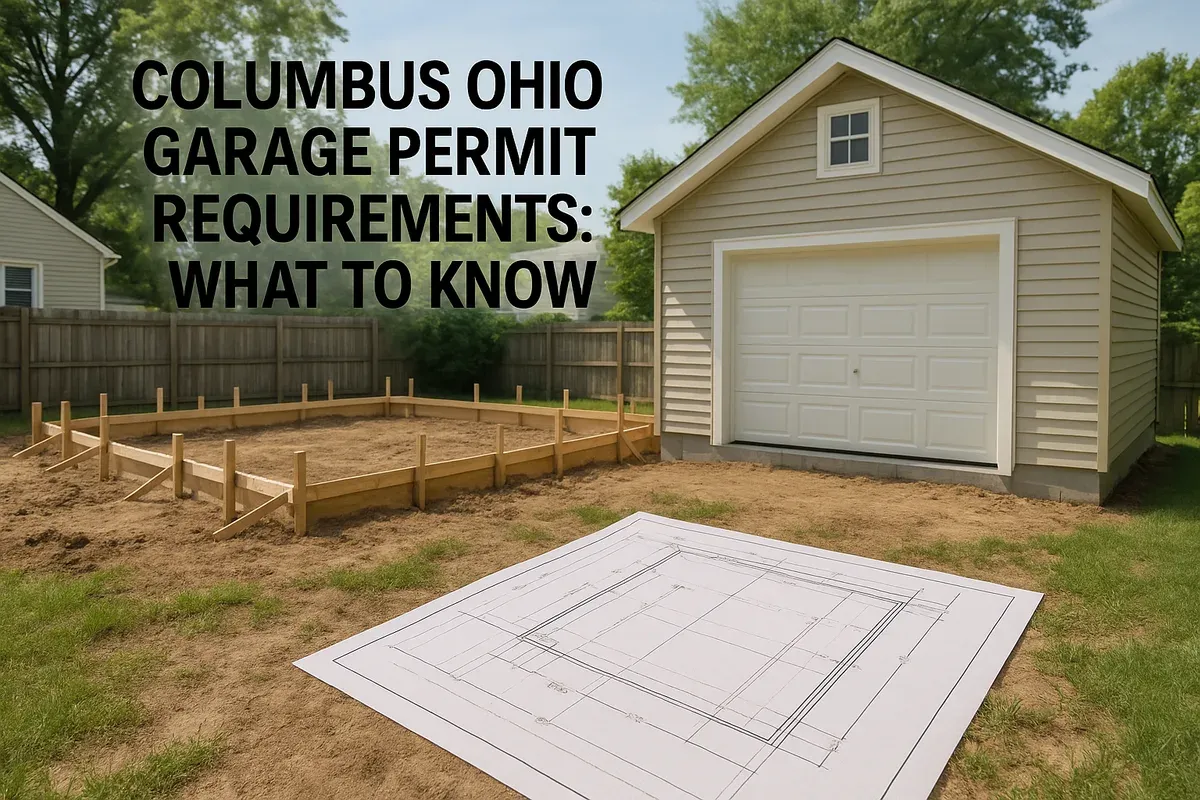
<h2>What You Need to Know Before Building a Garage in Columbus, Ohio</h2>
<p>Building a garage in Columbus, Ohio sounds straightforward until you call the city's permit office. Suddenly you're hearing terms like "impervious surface limits," "rear yard setbacks," and "accessory structure footprint ratios," and your simple weekend project starts to feel like a bureaucratic maze.</p>
<p>You are not alone. Thousands of Columbus <a href="/homeowners">homeowners</a> attempt to build garages every year, and a significant number run into delays, stop-work orders, or outright rejections because they didn't understand the permit process before breaking ground. The good news is that the Columbus building permit system is navigable once you know the rules.</p>
<p>This guide covers everything you need: zoning requirements, setback rules, what documents to submit, how site plans factor into approval, typical fees, and the fastest path from idea to approved permit. Whether you're planning a single-car detached garage or a two-story accessory structure with a loft, this is your starting point.</p>
<hr>
<h2>Why You Need a Permit for a Garage in Columbus</h2>
<p>Ohio law and Columbus city code both require permits for any structure that involves a foundation, framing, electrical work, or permanent attachment to the ground. A detached garage almost always triggers this requirement. Skipping the permit isn't just a technical violation; it creates real problems down the road.</p>
<h3>Consequences of Building Without a Permit</h3>
<ul>
<li><strong>Resale complications:</strong> Unpermitted structures must be disclosed during <a href="/real-estate">real estate</a> transactions and can kill a sale or reduce your home's appraised value.</li>
<li><strong>Insurance gaps:</strong> If your unpermitted garage burns down or collapses, your homeowner's insurance may deny the claim entirely.</li>
<li><strong>Forced demolition:</strong> Columbus code enforcement has the authority to require you to tear down any structure built without proper permits.</li>
<li><strong>Stop-work orders:</strong> If a neighbor reports your project, the city can halt construction mid-build.</li>
<li><strong>Retroactive permit fees and penalties:</strong> Getting a permit after the fact typically costs more than doing it correctly upfront.</li>
</ul>
<p>The permit process exists to protect you as much as it protects the city. Inspections catch structural problems, electrical hazards, and drainage issues before they become expensive disasters.</p>
<hr>
<h2>Columbus Zoning: The Foundation of Your Garage Project</h2>
<p>Before you apply for a Columbus building permit, you need to confirm your zoning district. Columbus uses a detailed zoning code administered by the Department of Building and Zoning Services (BZS). Your zoning district determines whether a detached garage is a permitted use on your property, how large it can be, and where it can sit on your lot.</p>
<h3>How to Find Your Zoning District</h3>
<p>You can look up your property's zoning classification using the Columbus GIS mapping portal, which provides parcel-level zoning data, overlay districts, and flood zone information. This should be your first stop before any planning.</p>
<p>Most single-family residential properties in Columbus fall under R-1 through R-4 zoning classifications. Detached garages are generally permitted as accessory structures in all residential zones, but the specific rules vary by classification.</p>
<h3>Accessory Structure Rules in Columbus</h3>
<p>Columbus city code defines a detached garage as an <strong>accessory structure</strong>, and several size and placement rules apply:</p>
<ul>
<li>Accessory structures cannot exceed 50% of the square footage of the primary dwelling's footprint in most residential zones.</li>
<li>The total lot coverage (all structures combined) typically cannot exceed 40% of the total lot area, though this varies by zone.</li>
<li>Accessory structures over 200 square feet generally require a full building permit.</li>
<li>Structures under 200 square feet may qualify for a simpler permit process, but this does not mean no permit is required.</li>
</ul>
<p>Always verify these thresholds with Columbus BZS directly, as code amendments in 2025 and 2026 have updated some of these figures for specific overlay districts.</p>
<hr>
<h2>Setback Requirements for Detached Garages in Columbus</h2>
<p>Setbacks are the required minimum distances between your structure and your property lines. Getting setbacks wrong is one of the most common reasons permit applications are rejected in Columbus.</p>
<h3>Standard Setback Rules</h3>
<p>For a typical single-family residential lot in Columbus, detached garage setbacks generally follow these guidelines:</p>
<ul>
<li><strong>Rear yard setback:</strong> 5 feet minimum from the rear property line for accessory structures (this is more permissive than the primary dwelling requirement).</li>
<li><strong>Side yard setback:</strong> 3 to 5 feet from the side property line, depending on your zoning district and lot width.</li>
<li><strong>Front yard setback:</strong> Detached garages generally cannot be located in the front yard or forward of the primary dwelling's front building line.</li>
<li><strong>Distance from primary structure:</strong> Some Columbus zoning rules require a minimum separation between your home and a detached accessory structure, typically 6 feet, to satisfy fire code.</li>
</ul>
<h3>Overlay Districts and Special Setback Rules</h3>
<p>Columbus has numerous overlay districts, including historic preservation overlays, urban commercial overlays, and neighborhood design overlays, that can impose additional or different <a href="/setback-guide">setback requirements</a>. If your property is in one of these areas, standard setbacks may not apply.</p>
<p>Common Columbus overlay districts that affect garage permits include:</p>
<ul>
<li><strong>Historic District Overlays</strong> (German Village, Victorian Village, Olde Towne East): These areas require additional architectural review and may restrict garage placement, materials, and door styles.</li>
<li><strong>Neighborhood Design Overlays:</strong> These impose design standards that can affect where a garage door faces and how the structure relates to the street.</li>
<li><strong>Flood Plain Overlays:</strong> Properties in FEMA-designated flood zones face additional requirements. You can check your flood zone status using <a href="https://msc.fema.gov/portal/home" rel="nofollow noopener" target="_blank">FEMA's Flood Map Service Center</a>.</li>
</ul>
<hr>
<h2>What Documents You Need to Submit</h2>
<p>This is where many Columbus homeowners hit their first major roadblock. The Columbus BZS requires a complete application package before they will review your project. An incomplete submission means delays, sometimes weeks of them.</p>
<h3>Required Documents for a Columbus Garage Permit</h3>
<ol>
<li><strong>Completed permit application form:</strong> Available through the Columbus BZS online portal or in person at 111 N. Front Street.</li>
<li><strong>Site plan:</strong> A scaled drawing showing your entire property, including property lines, existing structures, proposed garage location, dimensions, and setback measurements.</li>
<li><strong>Construction drawings:</strong> Detailed plans showing the garage's foundation type, framing, roof design, and any electrical or plumbing work.</li>
<li><strong>Elevation drawings:</strong> Views of each side of the proposed structure, showing height, door placement, and exterior materials.</li>
<li><strong>Contractor information:</strong> If you're using a licensed contractor, their Ohio contractor's license number and contact information.</li>
<li><strong>Property survey or legal description:</strong> To confirm property boundaries and lot dimensions.</li>
</ol>
<h3>The Site Plan: Your Most Important Document</h3>
<p>Of all the documents in a Columbus garage permit application, the site plan is the one that most frequently causes delays. Columbus reviewers use the site plan to verify setbacks, lot coverage, drainage patterns, and compliance with zoning rules. A vague or inaccurate site plan will send your application back for revision.</p>
<p>A compliant <a href="/site-plans/columbus-oh">Columbus site plan</a> for a detached garage permit should include:</p>
<ul>
<li>Accurate property boundary dimensions with north arrow</li>
<li>Location and dimensions of the existing home and any other structures</li>
<li>Proposed garage location with precise dimensions and distances to all property lines</li>
<li>Driveway and impervious surface areas</li>
<li>Any easements, utility lines, or drainage features on the property</li>
<li>Scale bar or noted drawing scale</li>
<li>Street name and address</li>
</ul>
<p>Creating this document used to require hiring a surveyor or draftsperson. Today, tools like <strong><a href="/">Site Plan Creator</a></strong> allow homeowners and <a href="/contractors">contractors</a> to produce permit-ready site plans in a browser, without CAD software or professional drafting experience. You can draw your property boundaries, place structures accurately, measure setbacks, and export a scaled PDF that meets Columbus BZS formatting expectations.</p>
<hr>
<h2>Columbus Garage Permit Fees in 2026</h2>
<p>Permit fees in Columbus are calculated based on the estimated construction value of your project. The city uses a tiered fee schedule, and fees are updated periodically.</p>
<h3>Typical Fee Ranges</h3>
<p>For a standard detached garage in Columbus in 2026, you can generally expect:</p>
<ul>
<li><strong>Plan review fee:</strong> Typically $50 to $150 for residential accessory structures, depending on complexity.</li>
<li><strong>Building permit fee:</strong> Calculated as a percentage of construction value. For a $20,000 garage, expect a building permit fee in the range of $200 to $400.</li>
<li><strong>Electrical permit:</strong> If your garage includes lighting, outlets, or a subpanel, a separate electrical permit is required. Fees typically range from $75 to $200.</li>
<li><strong>Zoning compliance fee:</strong> Some Columbus applications require a separate zoning review, which may carry its own fee.</li>
</ul>
<p>These figures are estimates. Always confirm current fees with Columbus BZS before submitting your application, as fee schedules are subject to annual revision.</p>
<h3>Fee Calculation Tips</h3>
<ul>
<li>Be honest about your construction value. Understating costs to reduce fees can result in penalties and delays.</li>
<li>Ask whether your project qualifies for any expedited review options. Columbus BZS offers some fast-track services for straightforward residential projects.</li>
<li>Budget for re-review fees if your initial submission is returned for corrections.</li>
</ul>
<hr>
<h2>The Columbus Permit Application Process: Step by Step</h2>
<p>Understanding the sequence of the permit process helps you plan your project timeline and avoid frustrating surprises.</p>
<h3>Step 1: Confirm Zoning and Overlay Requirements</h3>
<p>Before anything else, look up your parcel on the Columbus GIS portal. Confirm your zoning district, check for overlay districts, and note any special conditions on your property. If your parcel is in a historic overlay or near a flood plain, budget extra time for additional review steps.</p>
<h3>Step 2: Prepare Your Site Plan</h3>
<p>Using a tool like Site Plan Creator, draft your site plan with accurate dimensions. Measure your lot, locate your existing structures, and plot your proposed garage with all setback distances clearly labeled. This is the document that will drive your entire application, so invest time in getting it right.</p>
<h3>Step 3: Prepare Construction Drawings</h3>
<p>Either work with your contractor to produce construction drawings or hire a draftsperson. Columbus BZS requires enough detail to verify structural adequacy, foundation type, and compliance with the Ohio Building Code. For a simple detached garage, pre-engineered building plans from a kit manufacturer may be acceptable if they include Ohio-specific engineering stamps.</p>
<h3>Step 4: Submit Your Application</h3>
<p>Columbus BZS accepts applications online through their ePlans system for most residential projects. Upload your site plan, construction drawings, and completed application form. Pay your plan review fee at submission.</p>
<h3>Step 5: Plan Review</h3>
<p>Columbus BZS staff will review your submission for zoning compliance, setbacks, lot coverage, and code compliance. Review times for residential accessory structures typically range from 5 to 15 business days, though this can vary based on application volume. If reviewers have questions or require revisions, they will issue correction comments through the ePlans portal.</p>
<h3>Step 6: Permit Issuance</h3>
<p>Once your plans are approved, you pay the remaining permit fees and receive your building permit. Post the permit card at the job site before any work begins.</p>
<h3>Step 7: Inspections</h3>
<p>Columbus requires inspections at key stages of construction. For a detached garage, typical required inspections include:</p>
<ul>
<li><strong>Footing inspection:</strong> Before concrete is poured for the foundation.</li>
<li><strong>Framing inspection:</strong> After framing is complete but before insulation or sheathing is applied.</li>
<li><strong>Electrical rough-in inspection:</strong> If electrical work is included, before walls are closed.</li>
<li><strong>Final inspection:</strong> After all work is complete. This triggers the issuance of your certificate of occupancy or completion.</li>
</ul>
<p>Schedule inspections through the Columbus BZS online portal or by phone. Failing to schedule required inspections can result in your permit expiring or your project being flagged as incomplete.</p>
<hr>
<h2>Special Situations: When Your Garage Project Gets More Complicated</h2>
<p>Not every garage project is a standard detached structure on a flat suburban lot. Several common scenarios add complexity to the Columbus permit process.</p>
<h3>Attached vs. Detached Garages</h3>
<p>If your garage shares a wall with your home or is connected by a breezeway, it may be classified as an <strong>attached garage</strong> rather than an accessory structure. Attached garages are subject to the primary dwelling's setback rules, which are typically more restrictive than accessory structure setbacks. They also trigger additional fire separation requirements between the living space and the garage.</p>
<h3>Garages with Living Space Above</h3>
<p>A garage with a finished loft, apartment, or <a href="/adu-feasibility-software">accessory dwelling unit</a> (ADU) above it is a significantly more complex project. Columbus has specific regulations governing ADUs, including owner-occupancy requirements and utility connection rules. If you plan to include a living space, consult with Columbus BZS before finalizing your design.</p>
<h3>HOA Restrictions</h3>
<p>If your property is governed by a homeowners association, you may face design restrictions that go beyond city code. HOA approval is separate from the city permit process. Many Columbus HOAs restrict garage door materials, exterior finishes, roof pitch, and even the number of garage bays. Get written HOA approval before submitting your city permit application.</p>
<h3>Variance Requests</h3>
<p>If your desired garage location doesn't meet setback requirements, you may be able to apply for a variance through the Columbus Board of Zoning Adjustment (BZA). Variance applications require a separate fee, a public hearing, and a demonstration that strict application of the code creates an undue hardship. The process typically adds 6 to 10 weeks to your project timeline.</p>
<hr>
<h2>Common Mistakes Columbus Homeowners Make</h2>
<p>After reviewing hundreds of permit applications, a few mistakes come up again and again. Avoid these to keep your project moving.</p>
<h3>Underestimating the Importance of the Site Plan</h3>
<p>Many homeowners submit a hand-drawn sketch that doesn't show accurate dimensions, doesn't include setback measurements, or omits existing structures. Columbus reviewers will return these applications immediately. A proper, scaled site plan is not optional.</p>
<h3>Ignoring Impervious Surface Limits</h3>
<p>Adding a garage often means adding a concrete driveway or apron, which increases your lot's impervious surface coverage. Columbus stormwater regulations limit how much of your lot can be covered by impervious materials. If your project pushes you over the limit, you may need to add permeable paving, a rain garden, or other stormwater mitigation features.</p>
<h3>Starting Work Before Permit Issuance</h3>
<p>This is the most common and most costly mistake. Columbus BZS inspectors regularly drive neighborhoods and will issue stop-work orders for construction that began before a permit was issued. In some cases, you may be required to uncover completed work for inspection, which means tearing out framing or concrete that was already done.</p>
<h3>Not Accounting for Utility Easements</h3>
<p>Many Columbus lots have utility easements running along the rear or sides of the property. You cannot build a permanent structure within an easement. Your property survey will show these easements, and your site plan must reflect them.</p>
<h3>Forgetting the Electrical Permit</h3>
<p>Homeowners often pull a building permit for the garage but forget that any electrical work, even a single outlet or light fixture, requires a separate electrical permit and separate inspections. This oversight frequently comes to light at the final inspection.</p>
<hr>
<h2>Resources for Columbus Garage Permit Applicants</h2>
<p>Navigating the Columbus permit process is much easier when you know where to look for authoritative information.</p>
<ul>
<li><strong>Columbus Department of Building and Zoning Services:</strong> The primary office for all Columbus <a href="/construction-permit-site-plans">building permits</a>. Located at 111 N. Front Street, Columbus, OH 43215. Their online ePlans portal handles most residential permit submissions.</li>
<li><strong>Columbus GIS Portal:</strong> For parcel-level zoning, overlay district, and property boundary information.</li>
<li><strong>Ohio Building Code:</strong> Administered through the Ohio Board of Building Standards. The current Ohio Building Code is based on the <a href="https://www.iccsafe.org/products-and-events/i-codes/" rel="nofollow noopener" target="_blank">International Building Code</a>, published by the International Code Council. Understanding the IBC framework helps you interpret Ohio's requirements.</li>
<li><strong>FEMA Flood Map Service Center:</strong> For flood zone determinations that affect your permit application and construction requirements.</li>
<li><strong>Columbus Board of Zoning Adjustment:</strong> For variance applications when your project doesn't meet standard setback requirements.</li>
</ul>
<hr>
<h2>How Site Plan Creator Simplifies the Columbus Permit Process</h2>
<p>The single biggest bottleneck in most Columbus garage permit applications is the site plan. It's the document that reviewers scrutinize most closely, and it's the one that most frequently causes revision requests and delays.</p>
<p>Site Plan Creator was built specifically to solve this problem. The browser-based application lets you:</p>
<ul>
<li>Draw accurate property boundaries using your lot dimensions from your survey or deed</li>
<li>Place existing structures (your home, shed, fences, driveways) with precise measurements</li>
<li>Add your proposed garage with setback lines automatically calculated</li>
<li>Label all dimensions and distances in a format Columbus BZS reviewers expect</li>
<li>Export a scaled, print-ready PDF suitable for permit submission</li>
</ul>
<p>You don't need CAD experience, a professional license, or expensive software. Most homeowners complete a permit-ready site plan in under an hour. Contractors use Site Plan Creator to streamline their permit submissions across multiple projects, saving time on every job.</p>
<p>For a Columbus detached garage permit Ohio applicants frequently find that a clean, professional site plan is the difference between a first-pass approval and weeks of back-and-forth with the city.</p>
<hr>
<h2>Conclusion: Build Your Columbus Garage the Right Way</h2>
<p>A detached garage is one of the best investments you can make in a Columbus property. It adds storage, protects vehicles, increases home value, and can even create additional living or workspace. But none of those benefits materialize if your project stalls in permit review or gets shut down by code enforcement.</p>
<p>The path to a smooth Columbus Ohio garage permit starts with understanding your zoning district, knowing your setbacks, and preparing a complete, accurate application package. The site plan is the cornerstone of that package, and getting it right from the start saves you time, money, and frustration.</p>
<p>If you're ready to move your garage project forward, start with your site plan. Visit <strong>Site Plan Creator</strong> at siteplancreator.com to build a permit-ready site plan for your Columbus property today. It's the fastest way to go from idea to approved permit, and it's designed for exactly this kind of project.</p>