Chicago Garage Permit Requirements: What You Need to Know
Building a garage in Chicago involves navigating one of the most detailed municipal permitting processes in the Midwest. This guide breaks down exactly what the City of Chicago requires — from zoning approvals to site plan submissions — so you can move forward with confidence.
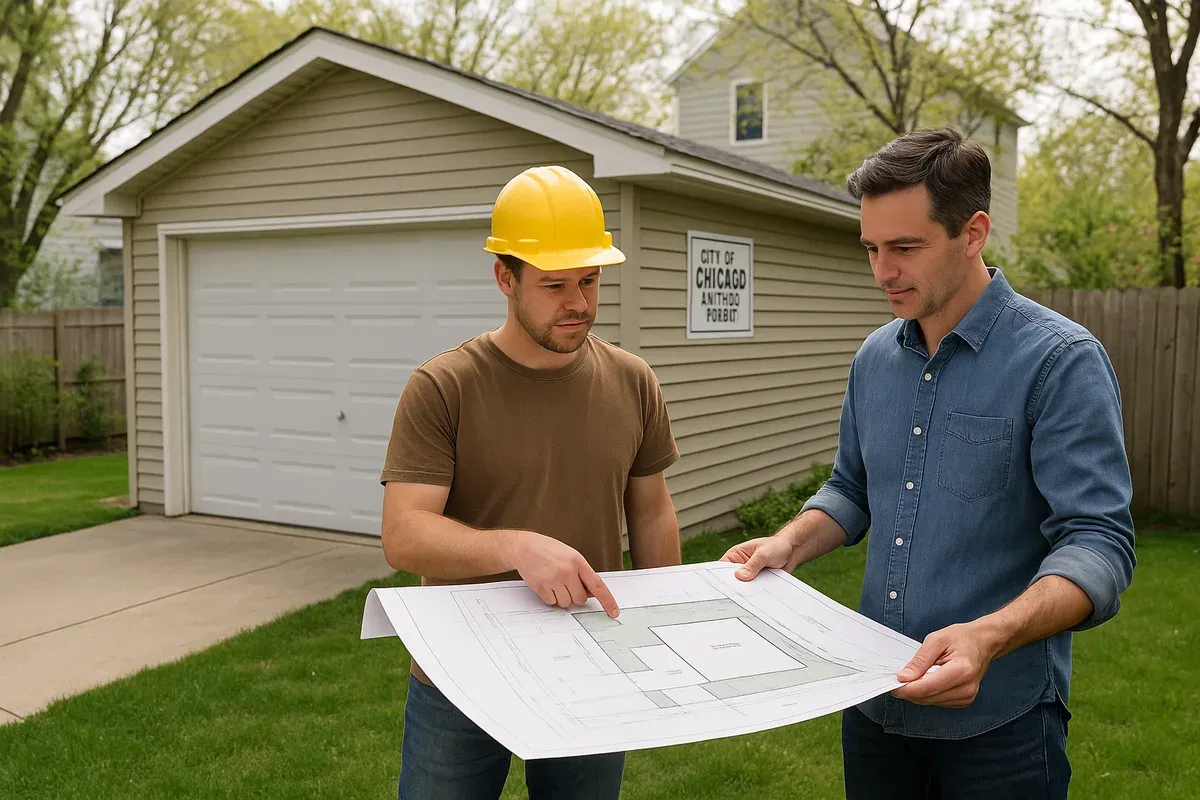
<h2>Chicago Garage Permit Requirements: What the City Needs Before You Build</h2>
<p>Building a detached garage in Chicago sounds straightforward enough — you need more storage, a protected place to park, maybe a workshop. But anyone who has attempted to pull a permit in the City of Chicago knows that the process is anything but simple. Chicago operates under one of the most comprehensive municipal building codes in the country, and the Department of Buildings takes compliance seriously. Miss a step, submit the wrong document, or underestimate your <a href="/setback-guide">setback requirements</a>, and you could be looking at weeks of delays, costly revisions, or even a stop-work order after construction begins.</p>
<p>The good news? Once you understand what the city actually needs — and why — the process becomes much more manageable. This guide walks you through every major requirement for a <strong>Chicago garage permit</strong> in 2026, from zoning research and site plan preparation to final inspection. Whether you're a homeowner tackling this for the first time or a contractor who wants a reliable reference, this is the comprehensive overview you've been looking for.</p>
<hr>
<h2>Why Chicago's Permitting Process Is More Complex Than You Might Expect</h2>
<p>Chicago is a city of 77 distinct neighborhoods, each with its own character, lot configurations, and sometimes its own overlay zoning districts. The city's building code is based on the <a href="https://www.iccsafe.org/products-and-events/i-codes/" rel="nofollow noopener" target="_blank">International Building Code (IBC)</a> but includes significant local amendments that affect everything from foundation depths to fire separation requirements between structures.</p>
<p>Additionally, Chicago's Department of Buildings (DOB) uses an online permitting portal called the <strong>Chicago Building Portal</strong>, which has been updated and expanded in recent years. Understanding how to navigate this system — and what documents to upload in what format — is itself a skill.</p>
<p>For detached garages specifically, several layers of regulation apply simultaneously:</p>
<ul>
<li><strong>Zoning regulations</strong> from the Chicago Zoning Ordinance (Title 17 of the Municipal Code)</li>
<li><strong>Building code requirements</strong> from the Chicago Building Code (Title 14B)</li>
<li><strong>Electrical code requirements</strong> if the garage will have lighting or outlets</li>
<li><strong>Green permit requirements</strong> in some cases</li>
<li><strong>Landmark or historic district rules</strong> if your property falls within a designated area</li>
</ul>
<p>All of these must be satisfied before a permit is issued. Let's break them down one by one.</p>
<hr>
<h2>Step 1: Verify Your Zoning and Lot Classification</h2>
<p>Before you draw a single line or call a contractor, you need to know your property's zoning classification. In Chicago, residential properties are typically zoned RS (Residential Single-Unit), RT (Residential Two-Flat), RM (Residential Multi-Unit), or one of several other categories. Each classification has its own rules about what accessory structures — including garages — are permitted.</p>
<h3>How to Look Up Your Zoning</h3>
<p>The City of Chicago provides a free Chicago Zoning Map through the Department of Planning and Development. You can enter your address and see your exact zoning classification, any overlay districts, and links to the relevant sections of the zoning ordinance.</p>
<h3>What Zoning Determines for Your Garage</h3>
<p>Your zoning classification will dictate:</p>
<ol>
<li><strong>Maximum garage size</strong> — In most RS zones, a detached garage cannot exceed 600 square feet (though this varies by lot size and zoning sub-district).</li>
<li><strong>Maximum height</strong> — Typically 14 feet for a single-story detached garage in residential zones, though rooftop decks or habitable space above the garage trigger additional requirements.</li>
<li><strong>Lot coverage limits</strong> — The combined footprint of your house, garage, and other structures cannot exceed a defined percentage of your total lot area.</li>
<li><strong>Permitted locations on the lot</strong> — Most Chicago residential zones require the garage to be located in the rear yard, behind the rear building line of the primary structure.</li>
</ol>
<p>If your property is in a Planned Development (PD) district or a landmark district, you may need additional approvals before even applying for a <a href="/construction-permit-site-plans">building permit</a>.</p>
<hr>
<h2>Step 2: Understand Chicago's Setback Requirements for Detached Garages</h2>
<p>Setbacks are the minimum distances that a structure must maintain from property lines, alleys, and other buildings. For detached garages in Chicago, setback rules are specific and strictly enforced.</p>
<h3>Typical Setback Rules for Chicago Detached Garages</h3>
<ul>
<li><strong>Rear setback from the alley:</strong> In Chicago, most residential lots back up to an alley. Garages accessed from the alley must typically be set back at least 2 feet from the alley property line. Some areas require more.</li>
<li><strong>Side yard setbacks:</strong> A detached garage must generally maintain a minimum of 2 feet from interior side lot lines. Corner lots have additional requirements for the exterior side yard.</li>
<li><strong>Separation from the primary structure:</strong> There must be a minimum fire separation distance between the garage and the main house — typically at least 3 feet, though this can vary based on construction type and wall openings.</li>
<li><strong>Separation from neighboring structures:</strong> If an adjacent property already has a garage close to the shared lot line, your new garage may need additional fire-rated construction.</li>
</ul>
<p>These setbacks must be clearly documented on your <strong>site plan</strong> — which is one of the most critical documents in your permit application. Getting the setbacks wrong on paper is one of the most common reasons permit applications are rejected or sent back for revision.</p>
<hr>
<h2>Step 3: Prepare Your Site Plan — The Document the City Scrutinizes Most</h2>
<p>If there is one document that can make or break a <strong>Chicago building permit</strong> application for a garage, it's the site plan. The Chicago Department of Buildings requires a site plan that accurately depicts the property and proposed construction in sufficient detail for reviewers to verify zoning and code compliance.</p>
<h3>What Must Appear on a Chicago Garage Site Plan</h3>
<p>Your site plan for a <strong>Chicago detached garage permit</strong> must typically include:</p>
<ol>
<li><strong>Property boundaries</strong> with accurate dimensions — the full lot width and depth</li>
<li><strong>The footprint of the existing primary structure</strong> (your house or two-flat) with dimensions</li>
<li><strong>The proposed garage footprint</strong> with exact dimensions and square footage</li>
<li><strong>All setback distances</strong> — from the garage to each property line, to the alley, and to the primary structure</li>
<li><strong>Lot coverage calculation</strong> — showing that the combined impervious footprint does not exceed zoning limits</li>
<li><strong>North arrow and scale</strong> — the plan must be drawn to a recognizable scale</li>
<li><strong>Driveway or apron location</strong> if applicable</li>
<li><strong>Any existing accessory structures</strong> on the lot (sheds, decks, etc.)</li>
<li><strong>Utility easements or encroachments</strong> if they exist</li>
</ol>
<h3>Common Site Plan Mistakes That Delay Chicago Permits</h3>
<ul>
<li>Submitting a hand-drawn sketch that isn't to scale</li>
<li>Omitting the existing house footprint</li>
<li>Failing to show all four setback dimensions</li>
<li>Using the wrong lot dimensions (always verify against your property survey or the Cook County Assessor's records)</li>
<li>Not including the lot coverage calculation</li>
</ul>
<p>Using a professional tool like <strong><a href="/">Site Plan Creator</a></strong> eliminates most of these errors. The platform lets you input your lot dimensions, place your building footprints accurately, and auto-calculate setbacks and lot coverage — producing a clean, to-scale PDF that meets the formatting expectations of Chicago's Department of Buildings.</p>
<hr>
<h2>Step 4: Gather Your Construction Documents</h2>
<p>Beyond the site plan, Chicago requires a set of construction drawings for most garage projects. The level of detail required depends on the complexity and size of the garage.</p>
<h3>Required Construction Documents</h3>
<p><strong>Floor plan:</strong> Shows the interior layout of the garage, including any proposed utility rough-ins, doors, and windows.</p>
<p><strong>Foundation plan:</strong> Chicago's frost depth is approximately 42 inches, meaning footings must extend well below grade. Your foundation plan must reflect this. Slab-on-grade construction is common for garages, but the slab thickness and reinforcement must be specified.</p>
<p><strong>Elevations:</strong> Front, rear, and side elevation drawings showing the exterior appearance of the garage, roof pitch, eave height, and ridge height.</p>
<p><strong>Roof framing plan:</strong> Showing rafter or truss layout, spacing, and span.</p>
<p><strong>Electrical plan (if applicable):</strong> If the garage will have lighting, outlets, or an EV charging station, a separate electrical permit is required and an electrical plan must be submitted.</p>
<h3>When Can You Use a Self-Certification or Easy Permit?</h3>
<p>Chicago's Easy Permit Program allows certain small, straightforward projects to be permitted without full plan review. However, detached garages — particularly new construction — generally do not qualify for the Easy Permit Program. You will typically need to go through standard plan review.</p>
<p>For projects that do qualify for self-certification, a licensed architect or engineer stamps the drawings and certifies compliance, which can speed up the process significantly.</p>
<hr>
<h2>Step 5: Understand Chicago's Specific Garage Construction Requirements</h2>
<p>Chicago's building code includes several requirements specific to garage construction that go beyond what many other jurisdictions require.</p>
<h3>Fire Separation and Wall Construction</h3>
<p>One of the most important — and often overlooked — requirements involves fire-rated construction. If your proposed garage is within 3 feet of a property line, the wall facing that property line must be constructed as a <strong>fire-rated wall</strong> (typically 1-hour fire resistance rating). This affects your choice of framing, sheathing, and any openings in that wall.</p>
<p>Windows and doors are generally not permitted in fire-rated walls, which can affect your design if you were planning windows on a side wall close to the lot line.</p>
<h3>Foundation Requirements</h3>
<p>As noted, Chicago's frost depth requires footings at approximately 42 inches below grade. This is deeper than many suburban jurisdictions and significantly affects excavation costs. The city's building inspectors will verify frost depth compliance during the foundation inspection.</p>
<h3>Rooftop Decks Above Garages</h3>
<p>Rooftop decks on garages have become increasingly popular in Chicago's denser neighborhoods. If you want a deck above your garage, this triggers a substantially more complex permit process, including:</p>
<ul>
<li>Structural engineering for the deck framing and guardrails</li>
<li>Waterproofing specifications</li>
<li>Stair and egress requirements</li>
<li>Additional zoning review for height and lot coverage</li>
</ul>
<p>Plan for additional time and cost if a rooftop deck is part of your project.</p>
<h3>Green Permit Program</h3>
<p>Chicago's Green Permit Program offers expedited review for projects that incorporate sustainable design features. While most standard garage projects won't qualify, if you're planning solar panels, a green roof, or other sustainability features, it's worth investigating whether you can access the expedited track.</p>
<hr>
<h2>Step 6: Submit Through the Chicago Building Portal</h2>
<p>All permit applications in Chicago are submitted electronically through the Chicago Building Portal. As of 2026, the portal has been significantly updated to streamline document uploads and track application status in real time.</p>
<h3>What You'll Need to Submit Electronically</h3>
<ul>
<li>Completed permit application form</li>
<li>Site plan (PDF format, to scale)</li>
<li>Construction drawings (PDF format)</li>
<li>Electrical permit application (if applicable)</li>
<li>Property survey (if required for your specific project)</li>
<li>Contractor information and license numbers</li>
<li>Homeowner affidavit (if the homeowner is acting as their own general contractor)</li>
</ul>
<h3>Permit Fees</h3>
<p>Chicago's permit fees are calculated based on the estimated construction value of the project. For a typical detached garage, fees generally range from a few hundred to over a thousand dollars depending on size and complexity. The city also charges a plan review fee for projects that require standard review.</p>
<p>You can estimate your fees using the Department of Buildings' fee schedule, which is published on the city's website.</p>
<h3>Timeline Expectations</h3>
<p>Standard plan review for a detached garage in Chicago typically takes <strong>4 to 8 weeks</strong> from the date of a complete submission. Incomplete submissions — missing documents, incorrect formats, or insufficient detail — reset the clock and can add months to your project timeline. This is why getting your site plan and construction documents right the first time is so important.</p>
<hr>
<h2>Step 7: Post-Permit Requirements — Inspections and Final Approval</h2>
<p>Receiving your permit is not the end of the process. Chicago requires a series of inspections during and after construction.</p>
<h3>Required Inspections for a Chicago Garage</h3>
<ol>
<li><strong>Foundation inspection</strong> — Before concrete is poured, an inspector must verify that footings are at the correct depth and properly formed.</li>
<li><strong>Rough framing inspection</strong> — After the structure is framed but before insulation or drywall is installed.</li>
<li><strong>Rough electrical inspection</strong> — If electrical work is included, before walls are closed.</li>
<li><strong>Final inspection</strong> — After all work is complete, to verify that the finished structure matches the approved plans.</li>
</ol>
<p>Inspections are scheduled through the Chicago Building Portal or by phone. You must have a copy of your approved permit and plans on site during each inspection.</p>
<h3>Certificate of Occupancy</h3>
<p>For a detached garage, a formal Certificate of Occupancy is not always required, but a <strong>final inspection sign-off</strong> is mandatory. Without it, the permit remains open and can create complications when you sell the property.</p>
<hr>
<h2>Special Situations: What Changes Your Permit Requirements</h2>
<p>Not every garage project is straightforward. Several circumstances can significantly change what the city requires.</p>
<h3>Replacing an Existing Garage</h3>
<p>If you're tearing down an existing garage and building a new one, you need a <strong>demolition permit</strong> in addition to your building permit. The demolition permit process is separate and requires its own application and fee. Importantly, if the existing garage is non-conforming (doesn't meet current setback or size requirements), you may not be able to rebuild it in the same footprint — the new structure must comply with current zoning.</p>
<h3>Garage Conversions</h3>
<p>Converting a garage to habitable space (an <a href="/adu-feasibility-software">ADU</a>, home office, or living area) is a separate and more complex permit type that involves different code requirements for insulation, egress, ventilation, and potentially plumbing.</p>
<h3>Historic Districts and Landmark Properties</h3>
<p>If your property is in a Chicago Landmark District or is itself a designated landmark, you must obtain approval from the Commission on Chicago Landmarks before applying for a building permit. This adds a layer of review that can take additional weeks or months.</p>
<h3>Flood Zone Considerations</h3>
<p>Some Chicago properties — particularly near the lakefront, the Chicago River, or low-lying areas — fall within FEMA-designated flood zones. You can check your property's flood zone status using the <a href="https://msc.fema.gov/portal/home" rel="nofollow noopener" target="_blank">FEMA Flood Map Service Center</a>. Properties in Special Flood Hazard Areas (SFHAs) may require elevation certificates and additional construction requirements.</p>
<hr>
<h2>How a Professional Site Plan Saves You Time and Money</h2>
<p>One of the most consistent sources of permit delays in Chicago is an inadequate site plan. Reviewers at the Department of Buildings see hundreds of applications per week, and a site plan that is unclear, missing information, or drawn to an unrecognizable scale will be flagged for correction immediately.</p>
<p>A professional-quality site plan:</p>
<ul>
<li>Demonstrates that you understand the zoning requirements</li>
<li>Makes it easy for reviewers to verify setbacks and lot coverage at a glance</li>
<li>Reduces the likelihood of correction notices that delay your timeline</li>
<li>Provides a clear record for your inspectors during construction</li>
</ul>
<p><strong>Site Plan Creator</strong> is specifically designed for exactly this kind of application. It's a browser-based CAD-style tool that allows <a href="/homeowners">homeowners</a>, <a href="/contractors">contractors</a>, and architects to create accurate, permit-ready site plans without needing expensive desktop CAD software or professional drafting experience. You can input your lot dimensions, place your proposed garage footprint, add setback dimensions, calculate lot coverage, and export a clean PDF — all in a fraction of the time it would take to produce the same document manually.</p>
<p>For Chicago projects specifically, the platform's ability to produce clearly dimensioned, to-scale drawings in a format the DOB expects is a genuine competitive advantage when submitting your application.</p>
<hr>
<h2>Chicago Garage Permit Checklist: Quick Reference</h2>
<p>Before you submit your application, use this checklist to make sure you have everything in order:</p>
<ul>
<li><input disabled="" type="checkbox"> Zoning classification confirmed and garage use verified as permitted</li>
<li><input disabled="" type="checkbox"> Lot dimensions verified against survey or assessor records</li>
<li><input disabled="" type="checkbox"> Setback requirements researched for your specific zoning district</li>
<li><input disabled="" type="checkbox"> Site plan prepared showing lot boundaries, existing structures, proposed garage footprint, all setbacks, and lot coverage calculation</li>
<li><input disabled="" type="checkbox"> Foundation plan prepared with frost depth compliance</li>
<li><input disabled="" type="checkbox"> Floor plan, elevations, and roof framing plan completed</li>
<li><input disabled="" type="checkbox"> Electrical permit application prepared (if applicable)</li>
<li><input disabled="" type="checkbox"> Contractor license numbers collected</li>
<li><input disabled="" type="checkbox"> Demolition permit applied for (if replacing existing garage)</li>
<li><input disabled="" type="checkbox"> Landmark or historic district approval obtained (if applicable)</li>
<li><input disabled="" type="checkbox"> Flood zone status checked</li>
<li><input disabled="" type="checkbox"> All documents converted to PDF and formatted for portal upload</li>
<li><input disabled="" type="checkbox"> Permit fees estimated and payment method ready</li>
</ul>
<hr>
<h2>Conclusion: Build It Right the First Time</h2>
<p>The City of Chicago's garage permitting process exists for good reasons — fire safety, structural integrity, neighborhood compatibility, and property rights. Understanding and respecting that process isn't just a bureaucratic obligation; it protects you, your neighbors, and your investment.</p>
<p>The homeowners and contractors who navigate Chicago's permitting process most successfully are the ones who do their homework upfront: verifying zoning, understanding setbacks, and preparing complete, professional documentation before they ever log into the Chicago Building Portal. The ones who struggle are typically those who underestimate the detail required or try to shortcut the site plan.</p>
<p>If you're ready to build your garage in Chicago and want to start with a permit-ready site plan that meets the city's expectations, <strong>Site Plan Creator</strong> is the fastest and most affordable way to get there. Create your property layout, add your proposed garage, verify your setbacks, and export a professional PDF — all from your browser, without CAD experience. Visit <a href="https://www.siteplancreator.com">siteplancreator.com</a> to start your site plan today and take the first step toward getting your Chicago garage permit approved.</p>