Build a Contractor Referral Network Using Permit Expertise
Building a contractor referral network takes more than handing out business cards. Discover how permit expertise can position you as the go-to professional in your trade community, driving consistent word-of-mouth referrals and long-term business growth.
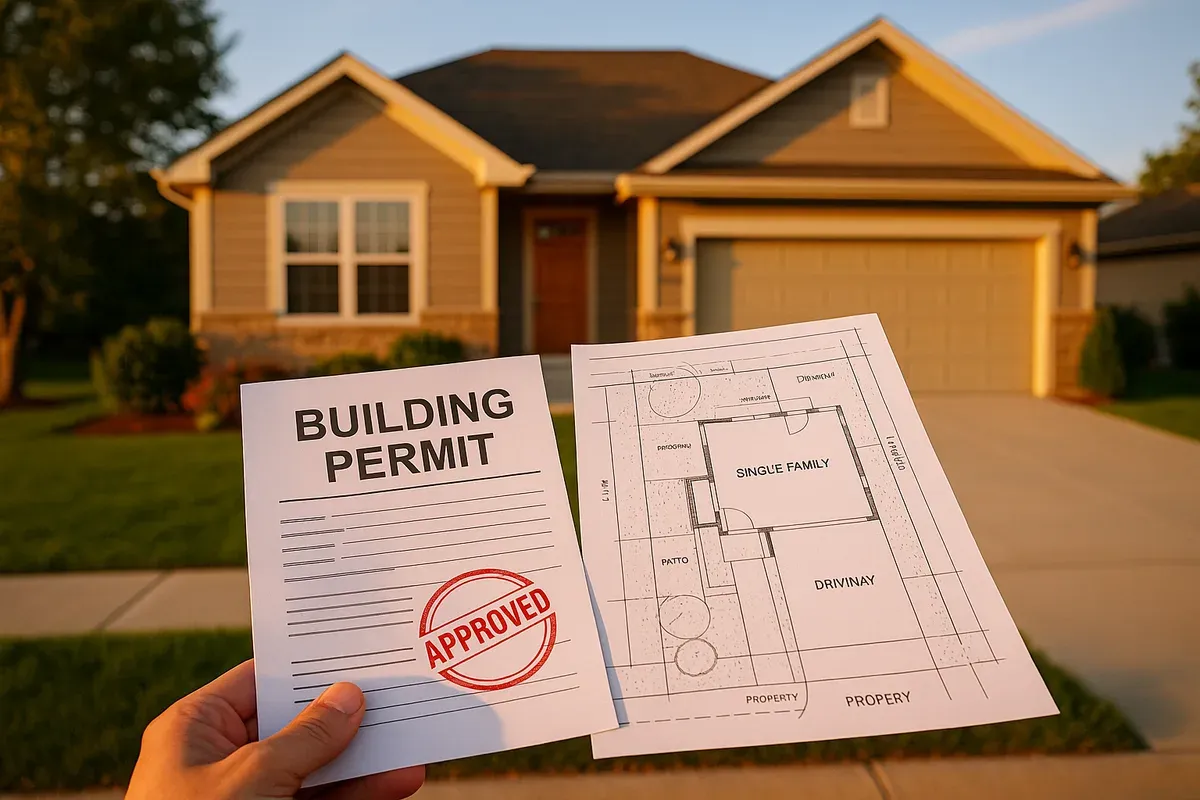
<h2>Why Permit Expertise Is Your Most Underrated Referral Tool</h2>
<p>Most <a href="/contractors">contractors</a> think about referrals in a narrow way: a happy homeowner tells a neighbor, the neighbor calls, and a new job appears. That model works, but it is slow, unpredictable, and entirely dependent on residential goodwill. The contractors who build genuinely durable businesses do something different. They position themselves as the most knowledgeable professional in the room, and one of the fastest ways to earn that reputation is through permit expertise.</p>
<p>Permit knowledge is rare. Most <a href="/homeowners">homeowners</a> have no idea how the permit process works, and frankly, neither do a surprising number of tradespeople. When you are the contractor who walks into a project already knowing the required setbacks, the local zoning classifications, the inspection sequence, and exactly what a permit-ready site plan needs to include, you stand out immediately. That standing-out is the foundation of a contractor referral network that actually produces consistent work.</p>
<p>This article walks you through a practical, step-by-step approach to building your referral network by leveraging what you know about permits, site plans, and the local approval process. Whether you are a general contractor, a landscaper, an electrician, or a deck builder, the principles apply across trades.</p>
<hr>
<h2>Understanding the Anatomy of a Strong Contractor Referral Network</h2>
<p>Before diving into tactics, it helps to understand what a referral network actually looks like for a trade contractor. It is not a single list of contacts. It is a layered ecosystem of relationships, each providing a different type of referral opportunity.</p>
<h3>The Three Layers of a Trade Contractor Referral Network</h3>
<p><strong>Layer 1: Adjacent Trade Contractors</strong>
These are the people doing work that complements yours. A deck builder refers to a landscaper. An electrician refers to a general contractor. A plumber refers to a bathroom remodeler. These relationships are mutually beneficial and often the most productive source of consistent leads.</p>
<p><strong>Layer 2: Professional Service Providers</strong>
Real estate agents, architects, surveyors, title companies, and home inspectors all interact with homeowners at critical decision points. When a <a href="/real-estate">real estate</a> agent is working with a buyer who needs a fence installed before closing, or an architect needs a reliable contractor to execute their design, they reach for their trusted list. Getting on that list is a major business growth lever.</p>
<p><strong>Layer 3: Municipal and Regulatory Contacts</strong>
This one surprises many contractors. Building department staff, permit technicians, and plan reviewers interact with homeowners who are lost in the permit process every single day. When a homeowner walks into a permit office confused about what they need to submit, a staff member who knows your name and knows you produce clean, accurate site plans is an incredibly powerful referral source.</p>
<hr>
<h2>How Permit Expertise Becomes a Relationship-Building Asset</h2>
<p>Here is the core insight that drives everything else in this article: permit expertise gives you something valuable to <em>give</em> before you ever ask for anything in return. In relationship-based business development, that is everything.</p>
<h3>Solving the Problem Nobody Else Wants to Touch</h3>
<p>Permits are confusing, time-consuming, and stressful for homeowners and even for some contractors. When you are the person who can explain the process clearly, help someone understand what a site plan needs to include, or flag a zoning issue before it becomes an expensive problem, you become genuinely useful. Genuinely useful people get remembered and recommended.</p>
<p>Consider a few scenarios:</p>
<ul>
<li>A real estate agent has a client who wants to add an <a href="/adu-feasibility-software">accessory dwelling unit</a> (ADU) to a property they are about to purchase. The agent has no idea whether the lot can accommodate one. You can look at the property dimensions, explain <a href="/setback-guide">setback requirements</a>, and give them a realistic answer in minutes. That agent will call you again.</li>
<li>A landscaping contractor wins a job but realizes the project requires a grading permit. They have no idea where to start. You walk them through the process and refer them to the right resources. You have just made a loyal trade partner.</li>
<li>A homeowner calls your competitor first, but your competitor cannot explain what a permit-ready site plan needs to look like. The homeowner finds you, you explain it clearly, and you get the job. Your competitor eventually learns to refer clients your way because you make them look good by association.</li>
</ul>
<h3>Making Permit Knowledge Part of Your Brand Identity</h3>
<p>Permit expertise should not be a hidden skill. It should be a visible, communicated part of how you present yourself in the market. This means:</p>
<ol>
<li><strong>Mentioning it in your initial consultations.</strong> Tell prospects upfront that you handle the permit process, that you know what local inspectors look for, and that your site plans are prepared to meet local requirements.</li>
<li><strong>Including it in your marketing materials.</strong> Your website, your Google Business Profile, and your social media should reference your permit knowledge and your track record of clean approvals.</li>
<li><strong>Talking about it in trade circles.</strong> When you are at a supplier, at a trade association meeting, or even just chatting with another contractor on a job site, let permit expertise come up naturally. It differentiates you.</li>
</ol>
<p>The <a href="https://www.planning.org" rel="nofollow noopener" target="_blank">American Planning Association</a> notes that community development and land use planning literacy is increasingly valuable for contractors working in infill, ADU, and renovation markets. Contractors who invest in understanding local planning frameworks consistently outperform those who treat permits as an afterthought.</p>
<hr>
<h2>Step-by-Step: Building Your Referral Network Through Permit Expertise</h2>
<h3>Step 1: Master Your Local Permit Landscape</h3>
<p>You cannot leverage permit knowledge you do not have. Start by becoming genuinely expert in your local jurisdiction's requirements. This means:</p>
<ul>
<li>Downloading and reading your local zoning ordinance, at least the sections relevant to your trade</li>
<li>Introducing yourself to the building department staff and asking about common submission errors they see</li>
<li>Attending any free workshops or webinars your local building department offers</li>
<li>Understanding the difference between over-the-counter permits, plan-checked permits, and projects that require engineering review</li>
<li>Learning which projects in your area require a site plan and what that site plan must show (property boundaries, building footprints, setbacks, north arrow, scale, and neighboring structures)</li>
</ul>
<p>This investment of time pays dividends for years. The <a href="https://www.iccsafe.org" rel="nofollow noopener" target="_blank">International Code Council (ICC)</a> publishes model building codes adopted by most U.S. jurisdictions, and their online resources are a good starting point for understanding code fundamentals before diving into your specific local amendments.</p>
<h3>Step 2: Identify Your Ideal Referral Partners</h3>
<p>Not every contractor or professional in your area is a good referral partner. You want people who:</p>
<ul>
<li>Serve the same customer demographic you do</li>
<li>Have a reputation for quality and professionalism</li>
<li>Are not direct competitors</li>
<li>Are active enough in the market to actually send you work</li>
</ul>
<p>Make a list of 15 to 20 potential referral partners across the three layers described earlier. Prioritize adjacent trade contractors first, because those relationships tend to produce the fastest results.</p>
<h3>Step 3: Lead with Value, Not with Asking</h3>
<p>The most common mistake contractors make when trying to build a referral network is leading with the ask. They meet someone, hand over a card, and say something like, "Send me your overflow work and I will do the same for you." That approach rarely works because it gives the other person no reason to trust you.</p>
<p>Instead, lead with your permit expertise. Here are some specific ways to do this:</p>
<ul>
<li><strong>Host a free lunch-and-learn.</strong> Invite five or six adjacent contractors to lunch and spend 30 minutes walking them through the permit process for a common project type in your area. Bring sample site plans. Show them what a clean submission looks like versus a problematic one. You will be the most memorable person in the room.</li>
<li><strong>Share useful information proactively.</strong> When your jurisdiction updates its permit requirements, send a quick note to your referral network contacts letting them know. This positions you as a connected insider.</li>
<li><strong>Help them solve a permit problem.</strong> When a potential referral partner mentions they are struggling with a permit issue, offer to help. Even a 15-minute phone call where you share what you know creates significant goodwill.</li>
</ul>
<h3>Step 4: Create a Formal Referral Process</h3>
<p>Word-of-mouth referrals are wonderful, but they are fragile if you do not have a system around them. Once you have established relationships with referral partners, create a simple, reliable process:</p>
<ol>
<li><strong>Agree on how referrals will be communicated.</strong> Will your partner text you? Email? Call? Make it easy and consistent.</li>
<li><strong>Follow up on every referral promptly.</strong> Nothing damages a referral relationship faster than a partner sending you a lead and never hearing what happened. Call every referred prospect within 24 hours.</li>
<li><strong>Close the loop with your referral partner.</strong> Let them know how the conversation went. Even if you did not win the job, thank them for the introduction and tell them you appreciated it.</li>
<li><strong>Track your referrals.</strong> Use a simple spreadsheet or CRM to note who sent you referrals, when, and what the outcome was. This data helps you identify your most valuable partners and invest in those relationships appropriately.</li>
</ol>
<h3>Step 5: Reciprocate Consistently and Intentionally</h3>
<p>A contractor referral network only works if it flows in both directions. Be proactive about sending referrals to your partners. When a client mentions they need a trade that is not yours, do not just say, "I know a guy." Make a warm introduction. Send a text connecting both parties. That level of care sets you apart and ensures your partners prioritize you when opportunities arise on their end.</p>
<hr>
<h2>Leveraging Site Plans as a Networking Tool</h2>
<p>One of the most practical, tangible ways to demonstrate permit expertise is through professional site plans. A site plan is often the document that makes or breaks a permit application, and most homeowners and even some contractors have no idea how to produce one correctly.</p>
<h3>What a Permit-Ready Site Plan Demonstrates About You</h3>
<p>When you show up to a consultation or a referral partner meeting with a clean, professional site plan, you communicate several things at once:</p>
<ul>
<li>You understand what the permit office requires</li>
<li>You are organized and detail-oriented</li>
<li>You have invested in professional tools and processes</li>
<li>You are less likely to create delays or complications on a shared project</li>
</ul>
<p>A site plan that clearly shows property boundaries, building footprints, setback distances, driveways, easements, and other required elements is a tangible proof point of your professionalism. It is also a conversation starter. When you show a real estate agent or an architect what a proper site plan looks like, they immediately understand the value you bring.</p>
<h3>Using Site Plans to Educate Referral Partners</h3>
<p>Many of your referral partners, especially those who are not general contractors or builders, may have almost no familiarity with site plans. This is an opportunity. Walk them through a sample site plan and explain:</p>
<ul>
<li>Why the permit office requires it</li>
<li>What information it must contain</li>
<li>What happens when a site plan is incomplete or inaccurate (delays, resubmission fees, frustrated clients)</li>
<li>How having a contractor who handles this correctly saves everyone time and money</li>
</ul>
<p>This educational approach reinforces your expertise and makes your referral partners more confident sending clients your way. They know you will not embarrass them.</p>
<h3>Tools That Make Site Plan Production Faster and More Professional</h3>
<p>Producing professional, permit-ready site plans used to require expensive CAD software and significant technical training. That is no longer the case. Browser-based tools like <a href="/">Site Plan Creator</a> allow contractors to produce accurate, scaled, permit-ready site plans without CAD experience. This means you can turn around a site plan quickly, which impresses clients and referral partners alike, and you can do it at a cost that makes sense for your business.</p>
<p>For contractors who want to use permit expertise as a business development tool, having a reliable, professional site plan workflow is not optional. It is the infrastructure that makes the strategy work.</p>
<hr>
<h2>Building Credibility with the Building Department</h2>
<p>This is the referral source most contractors completely overlook. Building department staff are not supposed to recommend specific contractors, and most of them will not do so directly. But they do talk to homeowners every day who are confused, overwhelmed, and looking for guidance. The contractors who are known at the building department for submitting clean, complete applications get mentioned in conversations. That is a form of referral.</p>
<h3>How to Build a Positive Reputation at Your Local Permit Office</h3>
<ul>
<li>Introduce yourself to the permit technicians and plan reviewers. Be friendly, respectful, and professional.</li>
<li>When you submit applications, make sure they are complete and accurate. Do not waste the reviewers' time with incomplete submissions.</li>
<li>When you receive correction comments, respond promptly and without argument. Reviewers remember contractors who are easy to work with.</li>
<li>Ask questions when you are genuinely uncertain. Reviewers appreciate contractors who want to get it right rather than contractors who assume they already know everything.</li>
<li>Thank staff when a project goes smoothly. A simple, genuine acknowledgment goes a long way.</li>
</ul>
<p>Over time, this approach builds a reputation that is worth more than any advertising you could buy. When a homeowner mentions they are looking for a contractor who knows the permit process, your name is the one that comes to mind.</p>
<hr>
<h2>Contractor Business Growth Tips: Sustaining and Expanding Your Network</h2>
<p>Building a referral network is not a one-time project. It requires ongoing attention and investment. Here are some contractor business growth tips for keeping your network active and productive over the long term.</p>
<h3>Stay Visible in Your Trade Community</h3>
<p>Join your local chapter of a trade association. Attend supplier events. Show up at industry meetups. The contractors who are visible in their trade community consistently generate more referrals than those who work in isolation. You do not need to attend every event, but a regular, predictable presence in two or three venues is enough to stay top of mind.</p>
<h3>Create Content That Demonstrates Your Permit Knowledge</h3>
<p>A simple blog, a YouTube channel, or even a series of posts on your Google Business Profile can establish your permit expertise publicly. Topics like "What to Expect from the Permit Process for a Deck Addition" or "Why Your Site Plan Got Rejected and How to Fix It" attract homeowners who are actively searching for help. They also attract other contractors who are looking for knowledgeable partners.</p>
<p>You do not need to produce content every week. Two or three genuinely useful pieces per month is enough to build a meaningful online presence over time.</p>
<h3>Ask for Referrals at the Right Moment</h3>
<p>Even with a strong network and a great reputation, sometimes you need to ask directly. The right moment is immediately after a successful project completion, when your client is most satisfied and most likely to be thinking about other people who might benefit from your services. A simple, direct ask works well:</p>
<p>"I am really glad this project went smoothly. If you know anyone else who has a project like this coming up, I would love an introduction. Referrals are the backbone of my business."</p>
<p>That kind of honest, low-pressure ask is effective and does not damage the relationship.</p>
<h3>Nurture Your Network During Slow Periods</h3>
<p>When business is slower, resist the temptation to go quiet. Slow periods are actually the best time to invest in relationship-building. Reach out to referral partners just to check in. Share a useful piece of information about a permit change or a new code requirement. Offer to meet for coffee. The contractors who stay connected during slow periods are the ones who emerge from them with a stronger pipeline.</p>
<hr>
<h2>Measuring the Health of Your Referral Network</h2>
<p>You cannot improve what you do not measure. Set aside time quarterly to review the health of your referral network.</p>
<p>Ask yourself:</p>
<ol>
<li>How many referrals did I receive this quarter, and from whom?</li>
<li>How many referrals did I send to partners this quarter?</li>
<li>Which referral sources produced the highest-quality leads?</li>
<li>Are there relationships I have been neglecting that need attention?</li>
<li>Are there new potential partners I should be pursuing?</li>
</ol>
<p>This quarterly review does not need to take more than an hour. The discipline of doing it consistently is what makes the difference between a referral network that grows and one that quietly atrophies.</p>
<hr>
<h2>Conclusion: Permit Expertise Is a Business Development Strategy</h2>
<p>The contractors who build the most durable, profitable businesses are rarely the ones with the lowest prices or the flashiest marketing. They are the ones who are genuinely trusted by their clients, their trade partners, and their local professional community. Permit expertise is one of the most reliable paths to earning that trust.</p>
<p>When you know the permit process inside and out, when you can produce a clean, accurate, permit-ready site plan without drama, and when you use that knowledge to help the people around you, you become the contractor everyone wants to work with and refer to. That reputation compounds over time. Every referral you send strengthens a relationship. Every permit problem you solve adds to your credibility. Every professional site plan you produce demonstrates your commitment to quality.</p>
<p>If you are ready to make permit expertise a real competitive advantage, start by upgrading the quality of your site plans. Site Plan Creator is a professional, browser-based tool built specifically for contractors and property owners who need accurate, permit-ready site plans without the complexity of traditional CAD software. It is fast, affordable, and designed to produce the kind of clean, professional output that impresses building departments and referral partners alike.</p>
<p>Your referral network starts with your reputation. Your reputation starts with the quality of your work. And for permit-related projects, the quality of your work starts with a great site plan.</p>